

Affiliate Traffic Sources: Best Free and Paid Channels That Actually Convert
The hardest part of affiliate marketing isn’t picking a product. It’s getting the right people to click your link.
You can have the best offer in the world, but without traffic, nothing happens. In this guide, you’ll see the real affiliate traffic sources that work, both free and paid, and how to pick the ones that actually fit your goals.
Key Takeaways: Affiliate Traffic Sources
- Affiliate traffic sources are the channels you use to send visitors to your affiliate links, and the source matters more than the offer itself.
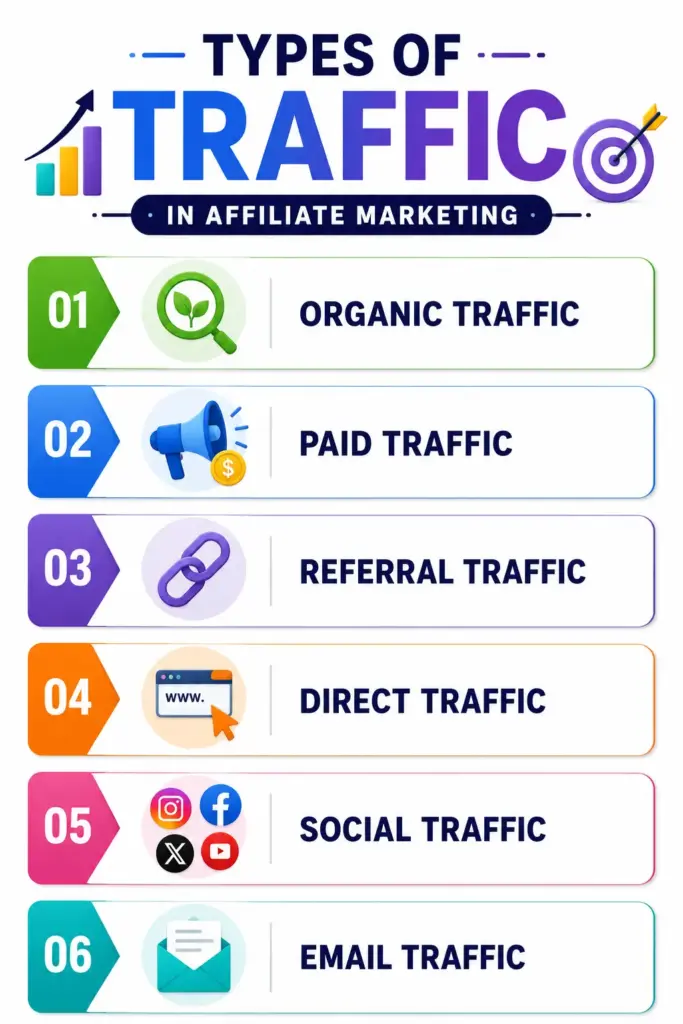
- The six main types of traffic in affiliate marketing are organic, paid, referral, direct, social, and email.
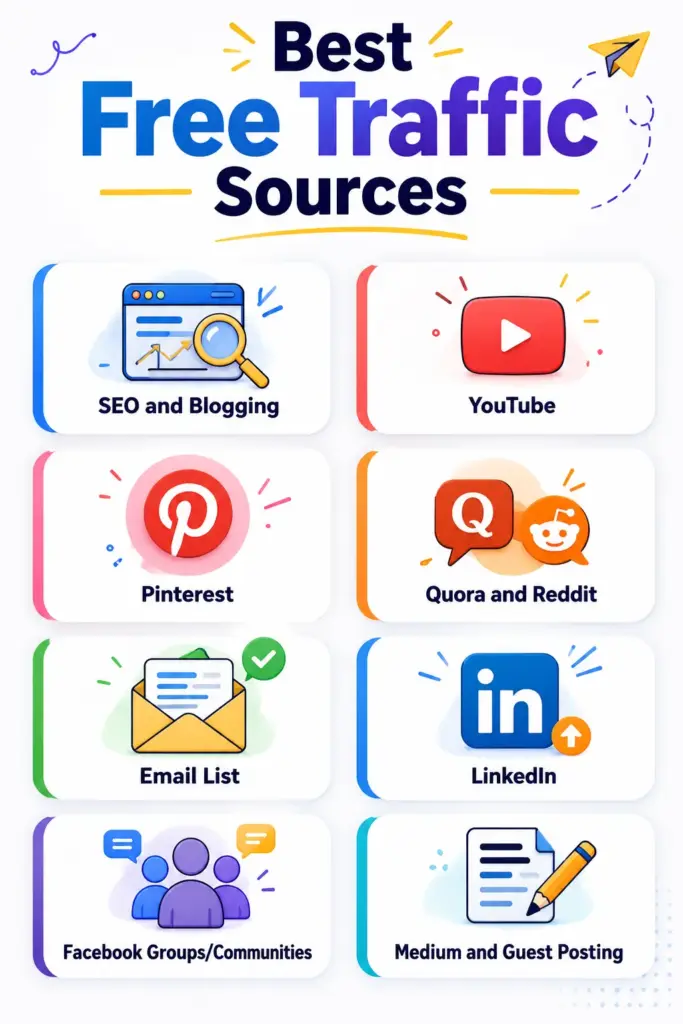
- The best free traffic sources for affiliate marketing in 2026 are SEO blogging, YouTube, Pinterest, Quora, Reddit, email lists, LinkedIn, Facebook groups, and Medium.
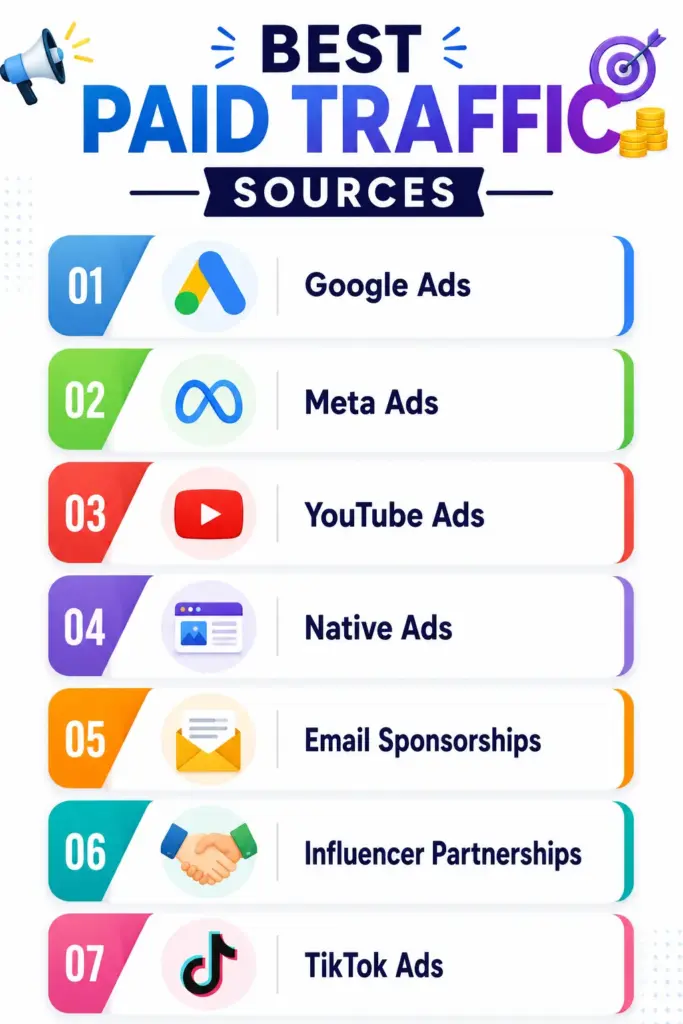
- The best paid traffic sources for affiliate marketing are Google Ads, Facebook and Instagram Ads, YouTube Ads, native ads, solo ads, influencer partnerships, and TikTok Ads.
- Beginners should start with free traffic to test their message, then add paid traffic once they know what converts.
- Email traffic usually has the highest conversion rate because subscribers already trust the sender.
- Without proper tracking through UTM tags or a tool like FluentAffiliate, scaling affiliate traffic becomes guesswork.
What Are Affiliate Traffic Sources in Affiliate Marketing?
Affiliate traffic sources are simply the channels you use to send visitors to your affiliate links or landing pages. Think of them as the road that leads buyers to the offer.
Some roads are free but slow. Others are fast but cost money. And a few are somewhere in the middle.
Here’s the part most beginners miss. Your traffic source matters more than the offer itself. A great product promoted on the wrong channel will flop. A decent product promoted on the right channel can quietly print money for years.
So before you pick a niche or a network, you really need to understand where your traffic is coming from and why it matters.
Types of Traffic in Affiliate Marketing
Before we get into specific platforms, let’s look at the main types of traffic in affiliate marketing. Most channels fall into one of these buckets.
Organic Traffic
This is traffic that comes from search engines like Google or Bing without you paying for ads. People type a question, find your blog post or video, and click through.
Organic traffic takes time to build, but it keeps working long after you publish. A single blog post can bring in clicks for years.
Paid Traffic
Paid traffic is exactly what it sounds like. You pay a platform to put your content or ad in front of people. Google Ads, Facebook Ads, and YouTube Ads all fall in this bucket.
It’s fast, predictable, and scalable. But if your offer doesn’t convert, you can burn money quickly.
Referral Traffic
Referral traffic comes from other websites linking to yours. Think guest posts, forums, directories, or a friendly mention on someone else’s blog.
It’s great for trust and SEO because real humans are recommending your content.
Direct Traffic
Direct traffic is when someone types your URL straight into their browser or clicks a saved bookmark. This usually comes from people who already know your brand.
It’s a small slice for most affiliates, but a strong signal that your brand is sticking.
Social Traffic
Social traffic comes from platforms like Facebook, Instagram, X, LinkedIn, TikTok, and Pinterest. These are the modern word-of-mouth machines.
Some social traffic is organic. Some is paid. Both can convert really well when matched to the right offer.
Email Traffic
This is traffic from your email list. It’s probably the most underrated source on this list.
Email subscribers chose to hear from you. So when you send them an affiliate recommendation, they actually pay attention. That’s why email is often the highest converting traffic source affiliates have.
Free vs Paid Affiliate Traffic: Which One Should You Pick?
Quick answer? Start with free. Add paid later.
Free traffic teaches you something paid traffic can’t, which is whether your message actually resonates. If your blog post or video can pull in clicks and conversions without any spend, then scaling it with ads later becomes much easier.
Paid traffic, on the other hand, is great when:
- You already know your offer converts
- You have a tested landing page
- You have a clear budget and can afford to lose money while testing
- You need traffic fast, like during a product launch
Here’s a simple way to think about it. Free traffic builds an asset. Paid traffic rents attention. Most successful affiliates use both, but they start with free to learn the game.
Best Free Traffic Sources for Affiliate Marketing
These are the best free traffic sources for affiliate marketing in 2026. They take effort, not money. But the returns can be massive if you stick with them.
SEO and Blogging
If you want long-term affiliate income, SEO is still king. Write helpful blog posts that answer real questions, target buyer-intent keywords, and naturally include your affiliate links.
A few ideas that work well:
- Product reviews
- Comparison posts like “Tool A vs Tool B”
- “Best of” roundups
- How-to tutorials that mention your affiliate product as a tool
The trick is to focus on keywords with clear buying intent. “Best email marketing plugin for WordPress” is much more valuable than “what is email marketing.”
YouTube
YouTube is a search engine, just one with videos instead of articles. Tutorials, product reviews, and walkthroughs do really well here because people want to see the product in action before buying.
You can add your affiliate links in the video description, in pinned comments, or even on screen. And because YouTube videos stay searchable for years, one good video can bring in clicks for a long time.
People love to call Pinterest a social network. It’s really a visual search engine.
Affiliates use Pinterest by creating pins that link to blog posts, landing pages, or affiliate offers. It works especially well for niches like home decor, fashion, finance, food, weddings, and digital products.
The best part? Pins keep getting traffic months after you post them.
Quora and Reddit
Quora and Reddit are gold mines if you use them the right way. The wrong way is dropping affiliate links on every post. That gets you banned fast.
The right way is to genuinely help people. Answer questions in your niche, build a reputation, and link back to your own helpful content when it actually fits. Over time, that traffic adds up.
Email List
Building an email list is one of the smartest moves any affiliate can make. You don’t own your Instagram followers. You don’t own your YouTube subscribers. But you do own your email list.
Once you have subscribers, you can recommend products, share tutorials, and send affiliate offers anytime. Conversion rates from email regularly beat every other channel.
Start with a simple lead magnet, a basic signup form, and a welcome sequence. That’s enough to begin.
If you’re in B2B niches like SaaS, marketing tools, courses, or coaching, LinkedIn is one of the best traffic sources you can tap.
Share posts that talk about real problems your audience faces. Drop helpful insights. Then point readers to your blog or affiliate content where it makes sense. Decision makers actually read this stuff.
Facebook Groups and Communities
Facebook isn’t dead. Groups are where the activity has moved. Join active groups in your niche, answer questions, and become known as the go-to person for that topic.
You can also build your own group around a specific niche and recommend products inside it. Just don’t spam. Communities punish that fast.
Medium and Guest Posting
Writing on Medium or guest posting on niche blogs can pull in steady referral traffic. You borrow someone else’s audience and send some of them back to your site.
It also helps build authority. The more your name shows up in trusted places, the more trust your own content earns.
Best Paid Traffic Sources for Affiliate Marketing
Now let’s talk about the best paid traffic sources for affiliate marketing. These cost money, but they bring volume and speed. Use them once you know what offer works and what message converts.
Google Ads
Google Ads is the classic paid channel. You bid on keywords, your ad shows up at the top of search results, and you pay per click.
The big advantage is intent. Someone Googling “best WordPress affiliate plugin” is much closer to buying than someone scrolling Instagram. That makes Google Ads a strong fit for affiliates who promote tools, software, or solutions to specific problems.
Just check the rules. Some affiliate networks restrict direct linking, so you may need to send traffic to a review page or blog post first.
Facebook and Instagram Ads
Meta Ads still drive serious affiliate volume in 2026. The targeting is deep and the ad formats are flexible.
Affiliates usually run these for lifestyle products, info products, ecommerce, courses, and finance offers. The catch is that affiliate links can get flagged, so most experienced affiliates send traffic to a content page or quiz funnel first.
YouTube Ads
YouTube Ads work really well for affiliates who can shoot a decent video. You can target by keyword, interest, or even specific channels.
Video ads do a great job of pre-selling. By the time someone clicks through, they already trust you a bit. That usually means higher conversion rates compared to text-only ads.
Native Ads (Taboola and Outbrain)
Native ads are the “sponsored content” boxes you see at the bottom of news sites and blogs. They blend in with regular articles, so people click them without feeling like they’re being sold to.
These work great for finance, health, lifestyle, and curiosity-driven offers. The trick is matching the ad headline with the kind of article the reader was already engaged with.
Solo Ads and Email Sponsorships
Solo ads are when you pay someone with an email list to send an email promoting your offer. Sponsorships are similar but inside newsletters.
This works because you’re borrowing the trust of the sender. If you’re in niches like make-money-online, marketing, or self-improvement, solo ads can move traffic fast. Just vet the seller carefully because list quality varies a lot.
Influencer Partnerships
Sometimes the fastest way to reach an audience is to pay someone who already has one. You pay an influencer to share your affiliate offer with their followers.
Pricing depends on the platform, niche, and audience size. Micro-influencers with smaller but loyal audiences often convert better than huge accounts, especially in niches like fitness, fashion, tech, and beauty.
TikTok Ads
TikTok is still one of the biggest opportunities in 2026. The cost per view is low, the algorithm is generous to new creators, and short-form video can sell really well.
For affiliate marketers, TikTok Ads work best with products that are visual, demonstrable, or emotionally appealing. Think gadgets, beauty, fitness gear, courses, and ecommerce.
How to Pick the Right Traffic Source for Your Affiliate Offer
Not every source fits every offer. So here’s a simple framework you can use.
Ask yourself these four questions:
- What is my budget? If it’s small, start with free traffic and one paid test channel.
- What is my skill set? If you’re good at writing, lean into SEO. If you’re comfortable on camera, lean into YouTube or TikTok.
- Where does my audience hang out? Promote where they already spend time, not where you wish they did.
- How fast do I need results? Free traffic is slow. Paid traffic is fast. Pick based on your timeline.
A new affiliate with no budget? Start with SEO blogging, YouTube, or Pinterest. Pick one. Master it.
A business owner with a budget but no time? Start with Google Ads or influencer partnerships. Buy speed.
The point is to match the source to your situation. Trying to do everything at once usually leads to doing nothing well.
How to Track Affiliate Traffic the Right Way
Here’s the truth most affiliates ignore. If you don’t track your traffic, you’re just guessing. And guessing is expensive.
You want to know:
- Which sources bring in the most clicks
- Which sources actually convert into sales
- What your conversion rate is per channel
- Which campaigns are worth scaling and which to drop
For affiliates, tools like Google Analytics and UTM tags do the heavy lifting. You add UTM parameters to your links so you can see exactly where traffic is coming from.
For affiliate program owners, things get a little more involved. You need to track visits, referrals, conversions, and payouts across every affiliate. That’s where a proper tool like FluentAffiliate comes in.
With FluentAffiliate, you can see every visit your affiliates generate, including the URL, referrer, UTM campaign, UTM medium, and UTM source. You can also see which clicks turned into actual sales. That kind of visibility is what helps you decide which affiliates and which sources are worth more support.
Bottom line, if you’re serious about affiliate marketing, set up tracking before you scale traffic. Not after.

Get the Best Affiliate Tracker for WordPress
Common Mistakes That Kill Affiliate Traffic
A lot of affiliates lose money or time on things that are easy to avoid. Watch out for these.
- Promoting on too many channels at once instead of going deep on one
- Sending cold traffic directly to affiliate links without a warm-up page
- Ignoring search intent and stuffing keywords for the sake of SEO
- Spamming Reddit, Quora, or Facebook groups with links
- Skipping email list building because it feels slow
- Running paid ads without proper tracking in place
- Picking products with low cookie duration or poor conversion rates
- Copying someone else’s strategy without testing it for your audience
Most of these come down to one thing. Trying to shortcut the process. Affiliate marketing rewards patience and focus way more than hustle for the sake of hustle.
Final Thoughts
Affiliate traffic doesn’t need to feel complicated. Pick one free source you enjoy and one paid source that fits your budget. Get good at both. Track everything. Then scale what works.
If you’re running an affiliate program yourself, traffic visibility is even more important. You need to see which affiliates bring real buyers and which just bring clicks. FluentAffiliate makes that easy with built-in visit tracking, UTM data, referral logs, and clean reporting inside your WordPress dashboard.
Ready to grow your affiliate program with better tracking and smarter decisions? Get started with FluentAffiliate and turn your traffic data into real revenue.
Frequently Asked Questions
Here are some of the most commonly asked questions:
What is the best traffic source for affiliate marketing?
There’s no single best source. SEO blogging is the best for long-term, hands-off income. Email is the best for conversions. Paid ads like Google or Meta are best for speed. The right answer depends on your budget, skills, and niche.
Which free traffic source works fastest for affiliates?
Pinterest and YouTube tend to bring traffic faster than SEO blogging, especially for visual niches. Quora and Reddit answers can also drive quick clicks if your answers genuinely help people.
Is paid traffic worth it for new affiliates?
Paid traffic is worth it only after you’ve tested your offer with free traffic. Without a proven funnel, you’ll likely burn through your budget before you learn what works. Start small, test, then scale.
How much traffic do I need to make money from affiliate marketing?
It depends on your conversion rate and commission size. As a rough guide, 1,000 targeted visitors a month can be enough to start earning if your offer converts well and the commission is decent. Quality matters more than volume.
How do I track where my affiliate traffic is coming from?
Use UTM parameters on your links and check the data in Google Analytics. If you run your own affiliate program, use a tool like FluentAffiliate to track visits, referrers, UTM data, and conversions for every affiliate inside your WordPress dashboard.



Leave a Reply