

What is an Affiliate Network (+ Real Examples)

So, you’ve decided to try affiliate marketing. Sounds exciting, right?
But then reality comes in front!
You’re sitting there thinking, “Where do I even find products to promote?” Every guide talks about earning commissions, but no one clearly explains where everything actually starts.
That’s where affiliate networks come in.
In this guide, I’ll break it all down in the simplest way possible. You’ll learn what an affiliate network really is, see real examples, and understand exactly how it works step by step.
Key Takeaways: Affiliate Network
- An affiliate network is a platform that connects businesses and affiliates, making it easier to find products to promote in one place.
- It acts as a middleman, handling tracking, reporting, and payments between brands and affiliates.
- Affiliate networks simplify getting started, especially for beginners with no direct brand connections.
- Popular networks like Amazon Associates and ClickBank offer different types of products, from physical goods to digital courses.
- You get access to hundreds of offers at once, allowing you to test niches and find what works best.
- Built-in tools like dashboards and analytics help track performance, so you can improve your strategy over time.
- Success in affiliate networks comes from choosing the right niche and building trust, not just sharing links.
What Is an Affiliate Network? (Simple Explanation)
An affiliate network is a platform that connects businesses with people who want to promote their products.
In simple terms, it acts as a middleman.
Instead of you going out and finding brands one by one, the network brings everything into one place. Businesses list their products, and affiliates like you can browse and choose what to promote.
Think of it like a matchmaking app for brands and marketers. Businesses are looking for promoters. Affiliates are looking for products. The network connects both sides.
Or even simpler, it’s like an online marketplace for promotions. You walk in, pick an offer you like, and start earning when people buy through your link.
How Does an Affiliate Network Work? (Step-by-Step)
Alright, let’s make this super clear.
Here’s what happens behind the scenes…
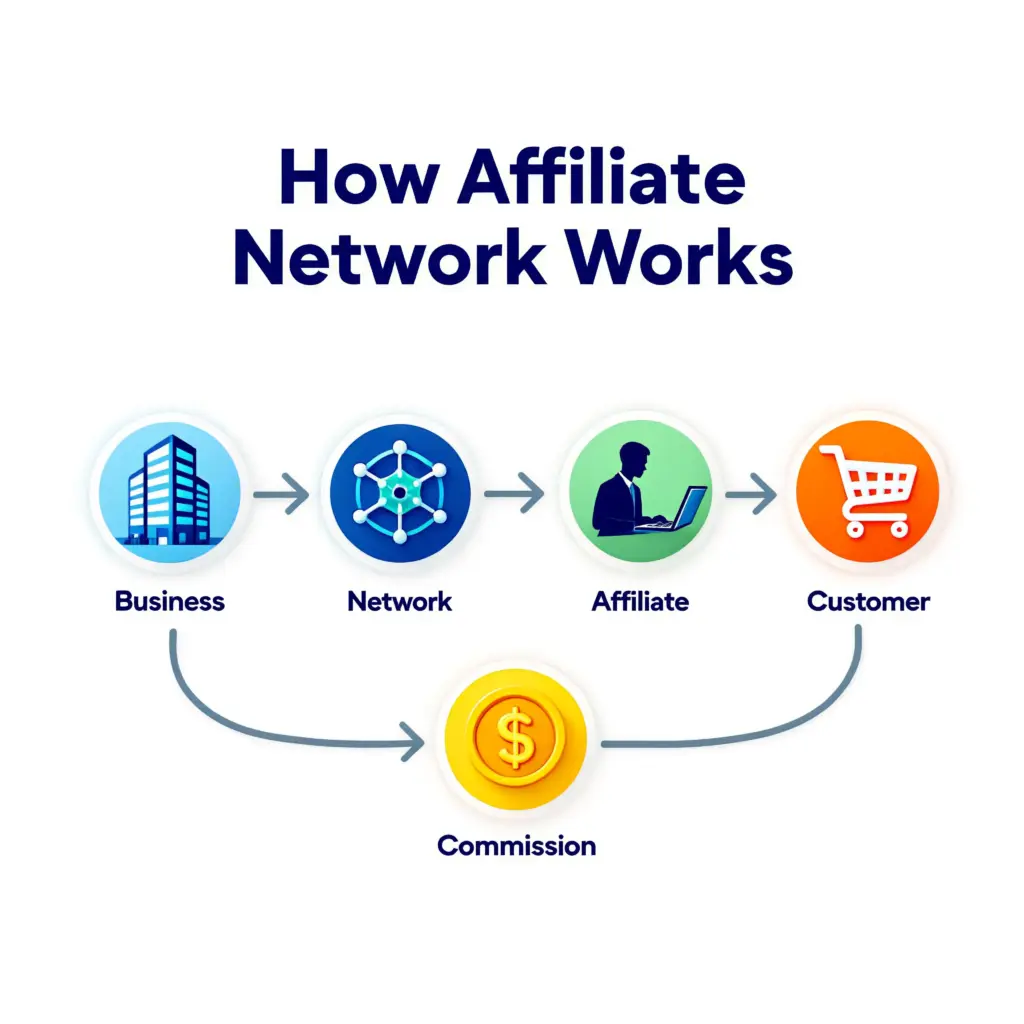
- Business Joins the Network
A company signs up on an affiliate network to promote its products. This could be anything from physical items to software or online courses.
- They List Their Products
The business adds its offers inside the platform, along with commission details, like how much affiliates will earn per sale.
- Affiliate Signs Up
You (the affiliate) create an account on the network and browse available offers.
- You Get a Tracking Link
Once you join a program, the network gives you a unique link. This link tracks every click and sale you generate.
- You Promote the Product
You share your link through blogs, YouTube, social media, or email. Anyone who clicks it gets tracked.
- You Earn a Commission
When someone buys through your link, the network records it and pays you your commission.
Quick way to picture it
Business → Network → Affiliate → Customer → Commission
Simple, right? Once you understand this flow, everything else in affiliate marketing starts to make sense.
Real Examples of Affiliate Networks
Now that you understand the concept, let’s look at some real-world affiliate networks. This is where things start to click.
Example 1: Amazon Associates
Amazon Associates is one of the biggest and most beginner-friendly affiliate networks in the world.
- Who should use it: Perfect for beginners, bloggers, and content creators just getting started.
- Type of products: Mostly physical products. Think gadgets, home items, fashion, books, and more.
Why it stands out: Almost everyone trusts Amazon, so conversions are easier.
Example 2: ShareASale
ShareAScale is a large marketplace with thousands of brands across different industries.
- Who should use it: Great for intermediate affiliates who want more variety and niche products.
- Type of products: Mix of physical and digital products, including fashion, tools, and services.
Why it stands out: Huge variety, so you can find offers that match your niche.
Example 3: CJ Affiliate
CJ Affiliate is known for working with well-known, high-quality brands.
- Who should use it: Best for serious affiliates who want to promote established companies.
- Type of products: Mostly big-brand products and services like finance tools, travel, and retail.
Why it stands out: Strong reputation and reliable payouts.
Example 4: ClickBank
ClickBank is known for digital products with high commission rates.
- Who should use it: Ideal for marketers focusing on online courses, ebooks, and software.
- Type of products: Mostly digital. Courses, memberships, and downloadable content.
Why it stands out: High commissions, sometimes up to 50% or more.
Types of Affiliate Networks (This Makes It Unique)
Not all affiliate networks are the same. In fact, they come in different “flavors” depending on what they offer.
Understanding these types helps you pick the right one faster.
1. Retail Networks
These are the most common types.
They focus on physical products like electronics, clothing, home goods, and more. A great example is Amazon Associates.
Best for: Bloggers, reviewers, and niche website owners
Why choose it: Easy to promote everyday products people already buy
Think product reviews, “best of” lists, and comparison blogs.
2. Digital Product Networks
These networks specialize in digital products.
We’re talking about online courses, ebooks, memberships, and downloadable tools. Platforms like ClickBank fall into this category.
Best for: Content creators, YouTubers, and email marketers
Why choose it: Higher commissions, often 30% to 70%
Great if you’re in education, self-improvement, or online business niches.
3. SaaS Affiliate Networks
These are focused on software and subscription-based tools.
Think website builders, marketing tools, or productivity apps. Some networks and platforms, like CJ Affiliate, include many SaaS offers.
Best for: Tech bloggers, marketers, and B2B audiences
Why choose it: Recurring commissions and long-term income
You earn not just once, but sometimes every month a user stays subscribed.
4. Niche Networks
These networks focus on specific industries.
For example:
- Finance
- Travel
- Health
- Gaming
Some platforms, like ShareASale, include niche-specific programs within their marketplace.
Best for: People with a focused audience
Why choose it: More targeted offers and better conversions
Perfect if you run a niche blog or community.
Read More: Affiliate Network vs Affiliate Program
Key Features of Affiliate Networks
Affiliate networks aren’t just “places to find products.” They come packed with tools that make your life a whole lot easier.
Let’s break down the key features you’ll actually use.
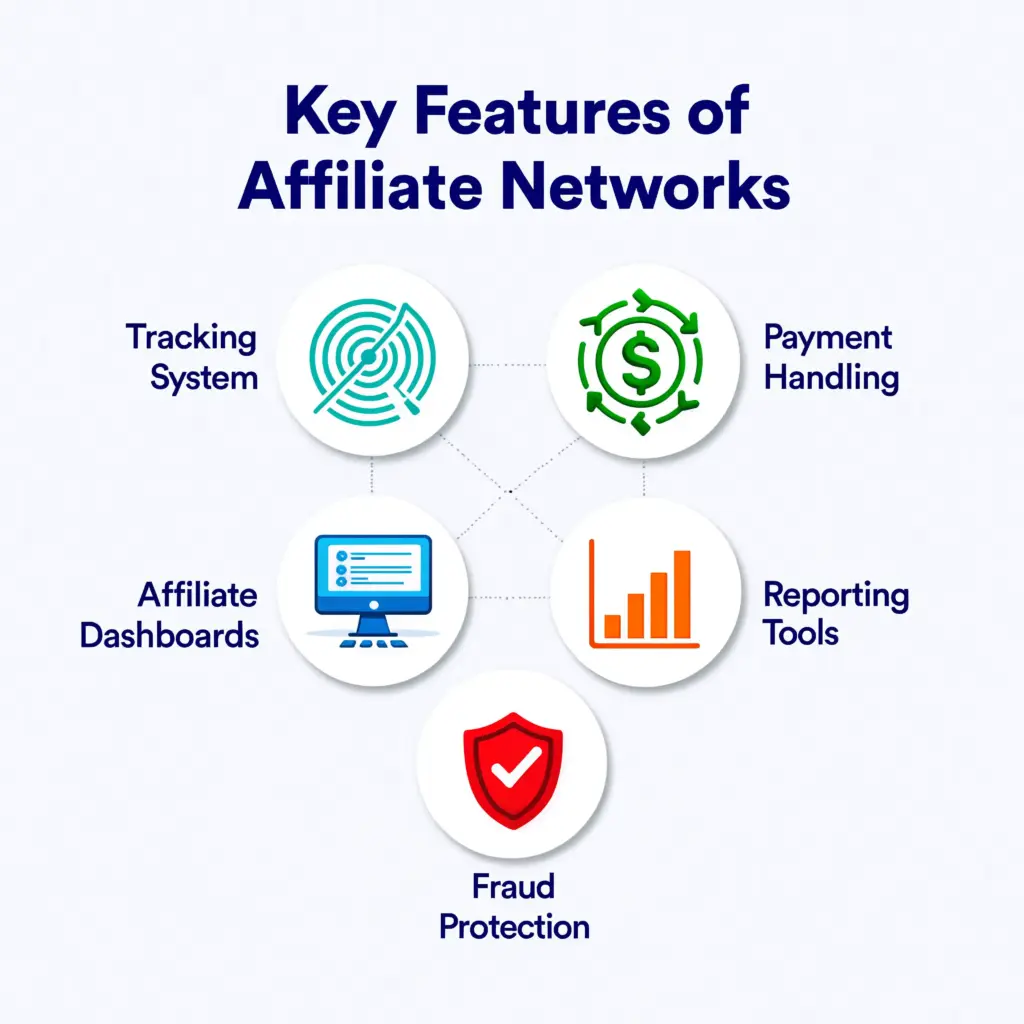
1. Tracking System
This is the backbone of everything.
Every affiliate gets a unique tracking link. When someone clicks it and makes a purchase, the network records it automatically.
No guessing. No manual tracking. Everything is tracked in real time.
2. Payment Handling
One of the biggest headaches in affiliate marketing is getting paid.
Affiliate networks solve this by handling all payments for you. They collect money from businesses and pay affiliates on a fixed schedule.
You don’t have to chase payments or deal with multiple companies.
3. Affiliate Dashboards
Each affiliate gets a personal dashboard.
This is where you can:
- See clicks and sales
- Track your earnings
- Monitor performance
It’s like your control panel for everything.
4. Reporting Tools
Want to know what’s working and what’s not?
Networks provide detailed reports that show:
- Which links convert best
- Where your traffic comes from
- Which products perform well
This helps you make smarter decisions and improve results.
5. Fraud Protection
Not all traffic is real. Some people try to game the system.
Affiliate networks use fraud detection systems to block fake clicks, duplicate sales, or suspicious activity.
This protects both businesses and honest affiliates like you.
Benefits of Using an Affiliate Network
So why do so many beginners start with affiliate networks?
Simple. They remove a lot of the hard parts.
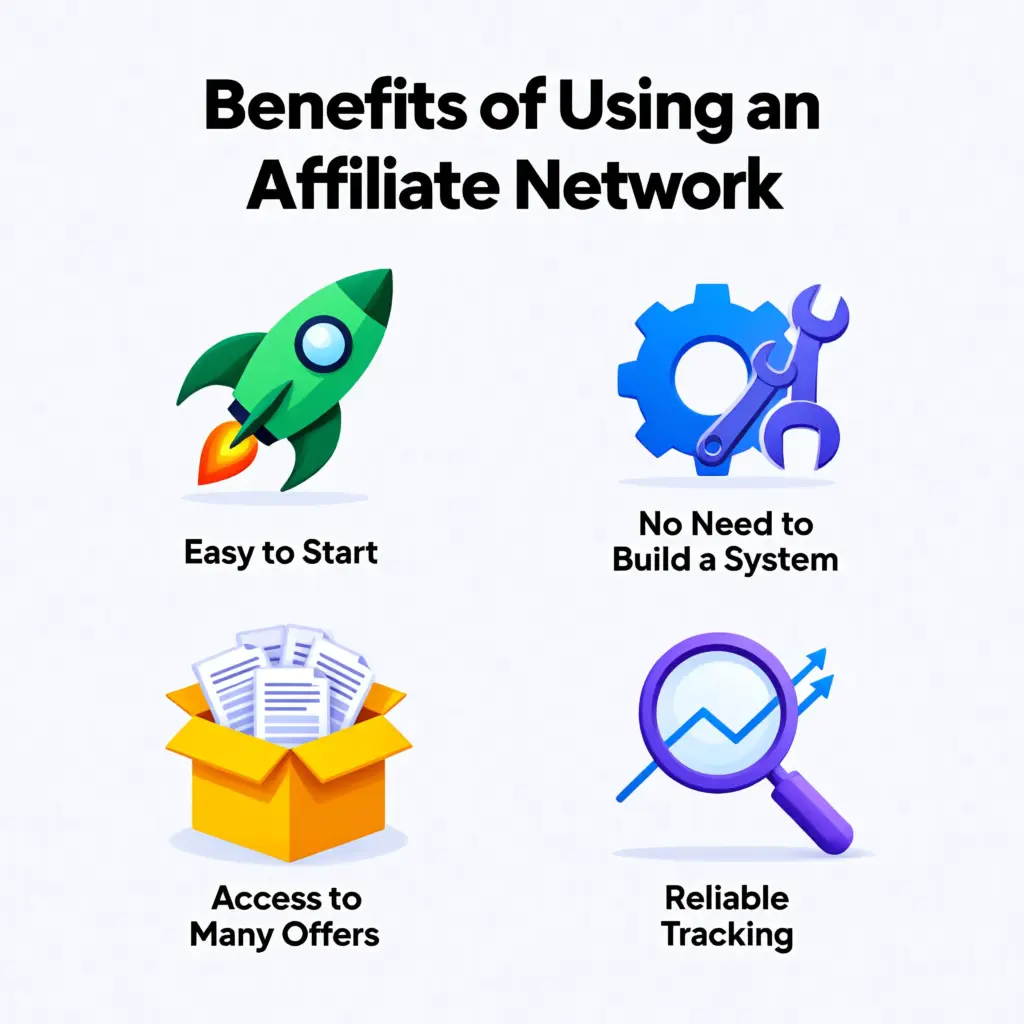
Easy to Start
You don’t need any advanced skills to begin.
Just sign up, pick a product, grab your link, and start promoting. It’s one of the fastest ways to enter affiliate marketing.
No Need to Build a System
Creating your own tracking system, payment setup, and dashboard can be complicated.
Affiliate networks already have everything in place.
You skip the technical headaches and focus on what matters most, which is promoting.
Access to Many Offers
Instead of working with one company, you get access to hundreds or even thousands of products in one place.
This makes it easy to test different niches and find what works for you.
Reliable Tracking
Affiliate networks use tested systems to track clicks and sales accurately.
You don’t have to worry about missing commissions or broken tracking.
Everything is recorded properly, so you get paid for the work you do.
Limitations You Should Know
Affiliate networks make things easier, no doubt. But they’re not perfect. There are a few downsides you should be aware of before jumping in.
Platform Fees
Most affiliate networks charge fees.
This could be:
- A percentage of each sale
- Setup or transaction fees
Over time, these cuts can reduce your overall earnings.
Less Control
You’re working on someone else’s platform.
That means:
- You must follow their rules
- Limited flexibility in commissions or promotions
- Risk of account restrictions
You don’t fully own the system.
Approval Processes
Not every program is open to everyone.
Some offers require approval before you can promote them. And sometimes, getting approved can take time or even get rejected.
This can slow you down, especially in the beginning.
Competition
You’re not the only affiliate promoting those products.
Thousands of others might be using the same links, targeting the same audience.
Standing out requires better content, strategy, and consistency.
Who Should Use Affiliate Networks?
Affiliate networks aren’t for everyone. But for certain people, they can be a perfect starting point.
Let’s see if you fall into one of these groups.
1. Beginners
If you’re just getting started, affiliate networks are the easiest way in.
You don’t need connections, tools, or experience. Everything is ready for you.
Just sign up, pick a product, and start learning by doing.
2. Bloggers
Got a blog? Then you’re already in a great position.
Affiliate networks give you access to products you can:
- Review
- Recommend
- Compare
Perfect for turning your content into income.
3. Influencers
If you have an audience on social media, networks make monetization simple.
You can quickly find offers that match your niche and share them with your followers.
No need to contact brands one by one.
4. Businesses Testing Affiliate Marketing
Not sure if affiliate marketing will work for your business?
Affiliate networks are a low-risk way to test the waters.
You can launch quickly, see results, and decide if you want to scale later.
How to Choose the Right Affiliate Network
Not all affiliate networks are created equal. Picking the right one can save you time, effort, and even boost your earnings.
Here’s what you should look at before joining any network.
1. Niche Relevance
First things first. Does the network match your niche?
If you run a tech blog, you need tech-related offers. If you’re in fitness, you want health products.
The closer the match, the easier it is to promote and convert.
2. Commission Rates
Not all programs pay the same.
Some offer low commissions with high volume. Others offer high commissions but fewer sales.
Find a balance that works for your content and audience.
3. Payment Terms
When and how will you get paid?
Check things like:
- Minimum payout threshold
- Payment methods (bank, PayPal, etc.)
- Payment frequency
You don’t want surprises when it’s time to cash out.
4. Reputation
Trust matters a lot here.
Stick with networks that are known for:
- Paying on time
- Accurate tracking
- Good support
A bad network can cost you both money and motivation.
5. Ease of Use
If the platform feels confusing, it’ll slow you down.
Look for:
- Simple dashboards
- Easy link generation
- Clear reports
The easier it is to use, the faster you can start earning.
Quick Tips to Succeed in Affiliate Networks
Getting started is easy. But actually making money? That’s where most people struggle.
Here are a few simple tips that can make a big difference.
Choose Niche Offers
Don’t try to promote everything.
Pick products that match your content and audience. The more relevant the offer, the higher your chances of getting clicks and sales.
A focused approach always beats random promotion.
Build Trust-Based Content
People don’t click links. They trust recommendations.
So instead of just dropping links, create helpful content:
- Honest reviews
- Tutorials
- Personal experiences
When people trust you, they’re more likely to buy through your link.
Track Your Performance
Don’t just promote and hope for the best.
Keep an eye on:
- Which links get clicks
- Which products convert
- Where your traffic comes from
This helps you double down on what works.
Focus on Quality Over Quantity
More links don’t mean more money.
A single well-written article or video can outperform dozens of low-quality posts.
Put effort into content that truly helps your audience.
Closing Notes
Affiliate networks might sound complicated at first, but they’re actually pretty simple once you get the hang of it. They connect you with products, handle the technical stuff, and let you focus on promoting and earning.
The best part? You don’t need to wait.
Pick a network, choose a product in your niche, and start sharing it today. You’ll learn faster by doing than by overthinking. So go ahead, take that first step and get started.






Add your first comment to this post