

What Is an Affiliate Program & What It Means in 2026

Ever noticed how people often mix up affiliate marketing and affiliate programs? It happens all the time. But honestly, they are not the same thing.
Affiliate marketing is the strategy. An affiliate program is the system that makes that strategy possible.
Think about it. Imagine inviting hundreds of people to promote your product. Sounds exciting, right? But without a system to track who sent the sale, calculate commissions, and manage partners, things would fall apart quickly. Total chaos.
That is exactly where an affiliate program comes in. It creates the structure that keeps everything organized, fair, and scalable.
Key Takeaways: Affiliate Program
- An affiliate program is the system behind affiliate marketing. It allows businesses to track referrals, manage partners, and pay commissions for successful sales.
- Affiliate marketing and affiliate programs are different. Affiliate marketing is the promotion strategy, while the affiliate program is the infrastructure that makes it work.
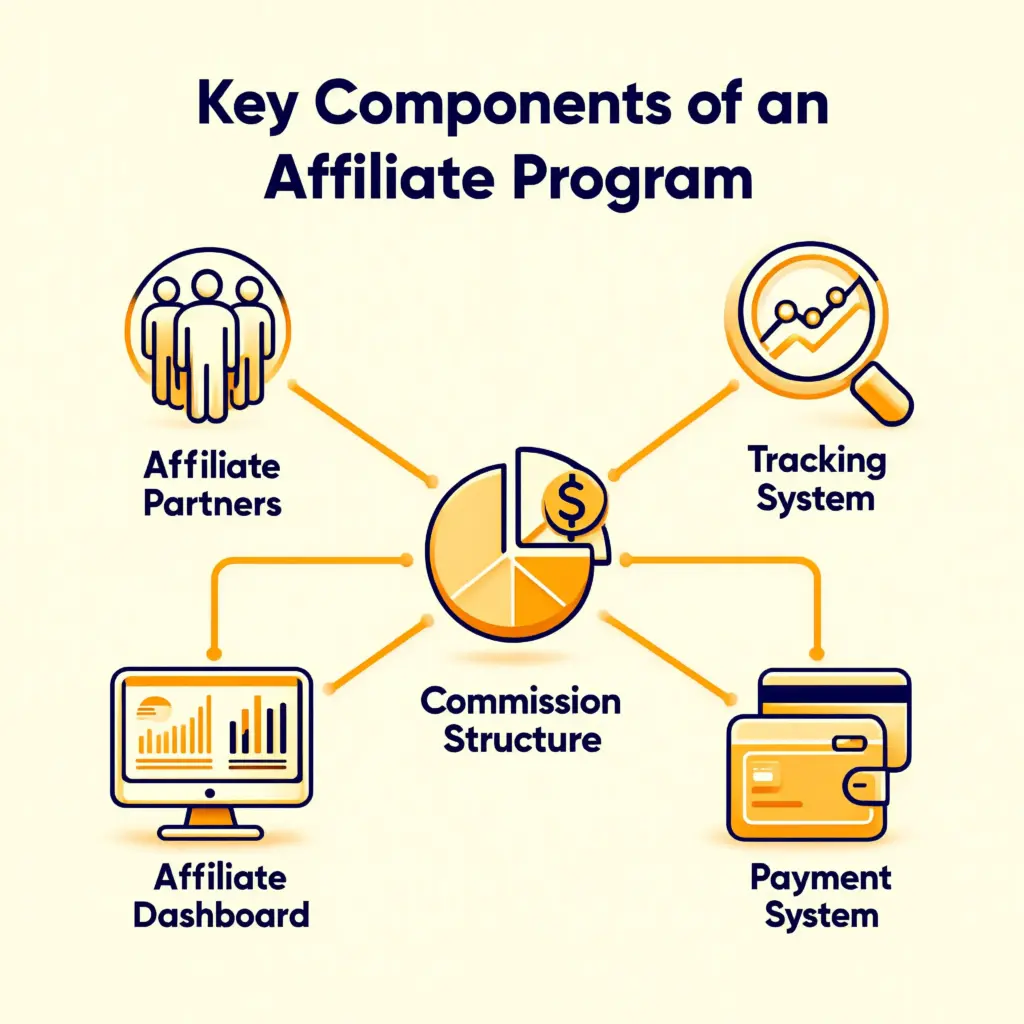
- Affiliate programs rely on several core components, including affiliate partners, tracking systems, commission structures, dashboards, and payment systems.
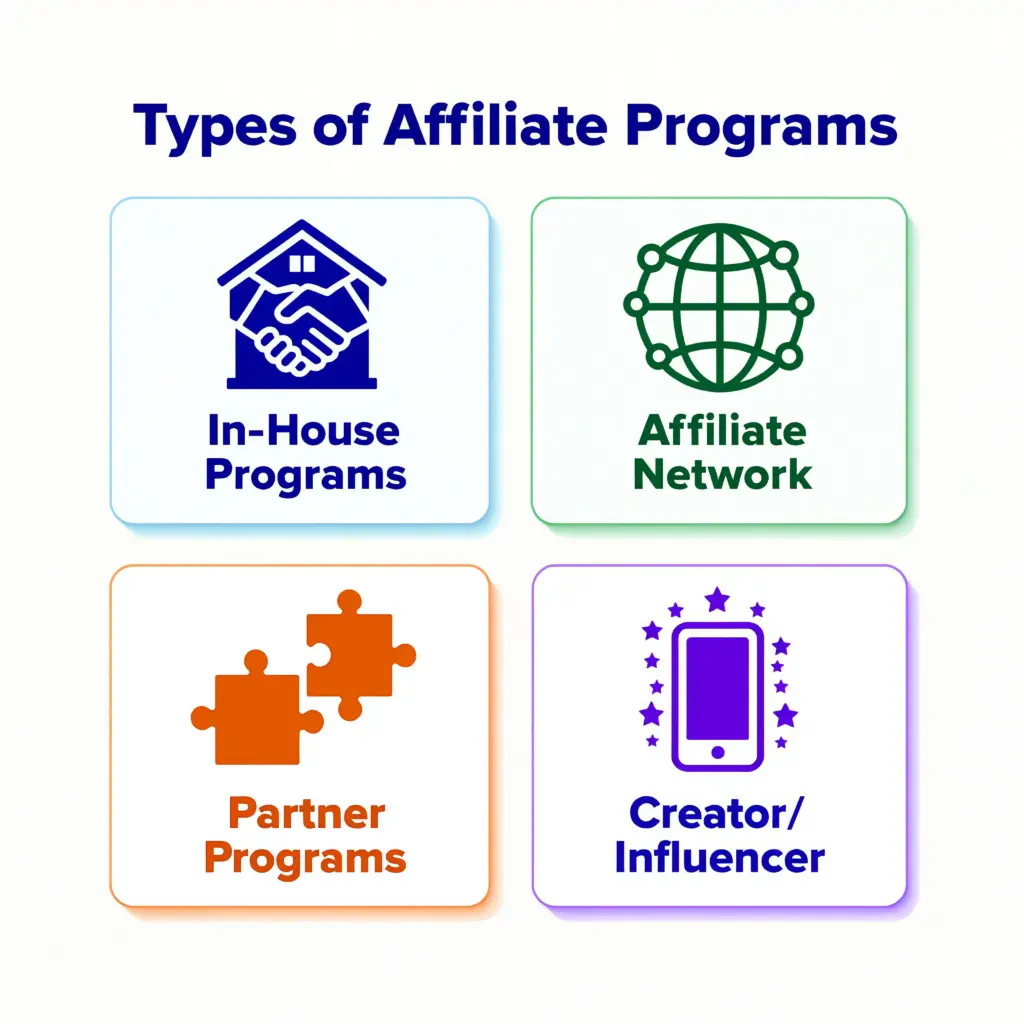
- Businesses can run different types of affiliate programs, such as in house programs, affiliate network programs, partner programs, and creator driven programs.
- Many well known companies run affiliate programs, including Amazon Associates, Shopify, HubSpot, and WordPress tool companies.
- Affiliate programs are attractive because they are performance based, meaning businesses only pay when real conversions happen.
- In 2026, affiliate programs are evolving fast, driven by AI powered tracking, creator led promotion, recurring commissions, and first party tracking solutions.
What Is an Affiliate Program?
An affiliate program is a structured system that allows people to promote a company’s products and earn a commission for every successful referral they generate.
In simple terms, a business invites partners to help spread the word about its products. These partners are called affiliates. When an affiliate promotes the product, and someone makes a purchase through their unique link, the affiliate earns a reward. Usually, that reward is a percentage of the sale or a fixed commission.
The idea is simple, but the system behind it keeps everything organized and fair for everyone involved.
At its core, an affiliate program works like this:
- Businesses create the program to allow others to promote their products.
- Affiliates join the program and receive special tracking links.
- Tracking technology records referrals whenever someone clicks the affiliate link and makes a purchase.
- Commissions are calculated and paid to affiliates for successful sales.
Without this system, managing dozens or even hundreds of partners would be extremely difficult. Imagine trying to manually track every referral and payment. That would quickly turn into a nightmare.
An affiliate program solves that problem. It creates a reliable structure where businesses can grow through partnerships while affiliates earn money by recommending products they trust.
Affiliate Program vs Affiliate Marketing
This is where many people get confused. The terms affiliate marketing and affiliate program are often used interchangeably, but they represent two different things.
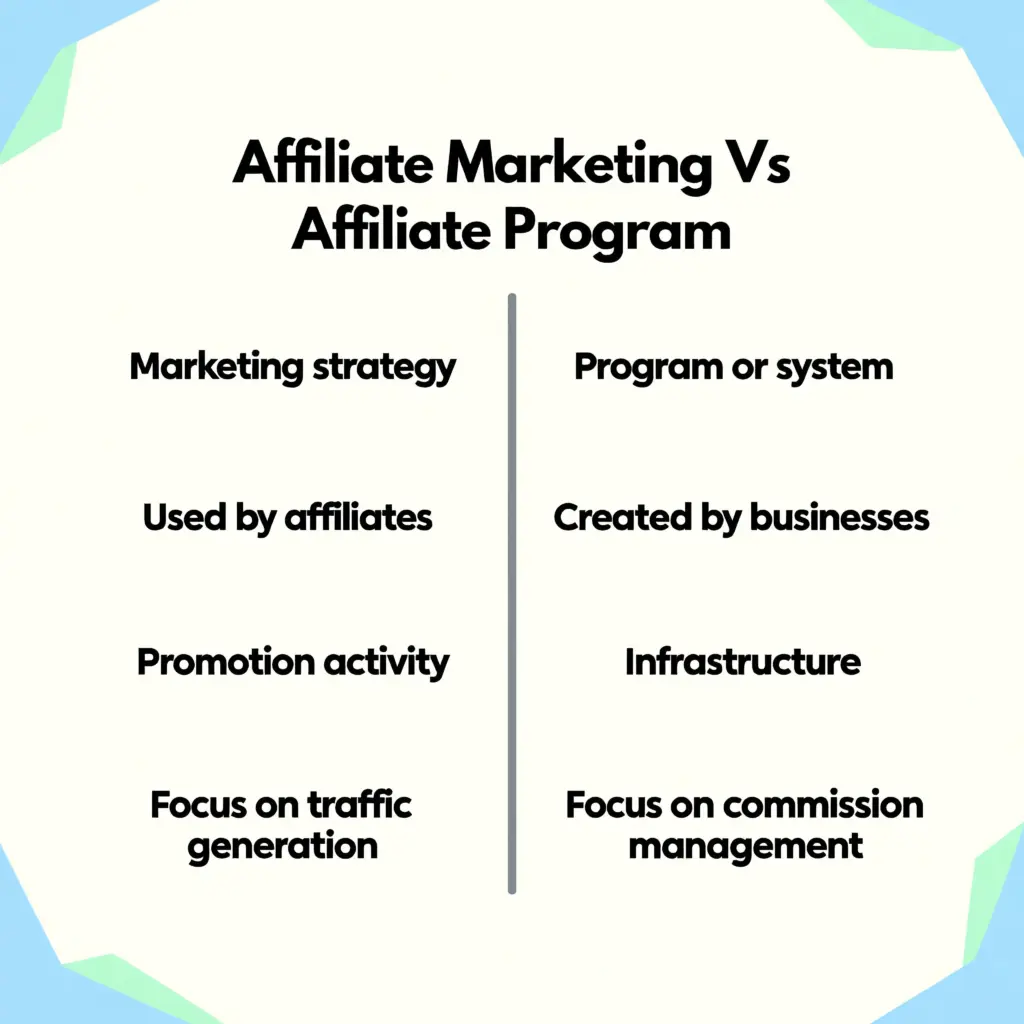
Think of it this way. One is the strategy, the other is the system that powers that strategy.
Affiliate marketing refers to the promotional activity done by affiliates. It includes creating content, sharing links, recommending products, and driving traffic. On the other hand, an affiliate program is the infrastructure that allows businesses to manage affiliates, track referrals, and pay commissions.
Here is a simple comparison to make it clearer.
| Affiliate Marketing | Affiliate Program |
| Marketing strategy | Program or system |
| Used by affiliates | Created by businesses |
| Promotion activity | Infrastructure |
| Focus on traffic generation | Focus on commission management |
When an affiliate writes a blog post, records a YouTube review, or shares a product link on social media, that is affiliate marketing in action.
But behind the scenes, the affiliate program is doing the heavy lifting. It tracks clicks, records sales, calculates commissions, and ensures that affiliates get paid accurately.
Here is the key takeaway.
Affiliate marketing cannot exist without an affiliate program.
Without the program structure, there would be no reliable way to track referrals or reward partners. The strategy and the system work together. One drives promotion, the other keeps everything organized and fair.
Read in detail: What Is Affiliate Marketing? And What It Means in 2026
Key Components of an Affiliate Program
An affiliate program may sound simple on the surface, but several key components work together behind the scenes to make it function smoothly. Think of it like a small ecosystem. Each part has a role, and when everything works together, the program becomes scalable and easy to manage.
Let’s break down the core building blocks of a typical affiliate program.
Component 1: Affiliate Partners
Affiliate partners are the people who promote a business’s products or services.
These partners can come from many backgrounds, such as:
- Bloggers who review products
- Content creators on YouTube or TikTok
- Social media influencers
- Niche website owners
- Email marketers
- Online publishers
Each partner receives a unique affiliate link that tracks the traffic or sales they generate. The more effectively they promote the product, the more commission they can earn.
In many successful programs, affiliates act like an extended marketing team for the business.
Component 2: Tracking System
The tracking system is the technology that records every referral made by affiliates.
Without proper tracking, businesses would have no way to know which affiliate generated a sale. That would make commission payments nearly impossible.
Tracking usually works through:
- Unique affiliate links assigned to each partner
- Cookies that store referral information when a user clicks a link
- Attribution models that determine which affiliate receives credit for the sale
For example, if someone clicks an affiliate link today but purchases three days later, the system still attributes that sale to the correct affiliate if the cookie is still active.
This technology ensures transparency and fairness for both businesses and affiliates.
Component 3: Commission Structure
The commission structure defines how affiliates get paid for their referrals.
Different businesses choose different models depending on their products and pricing.
Common commission types include:
- Percentage commission (for example, 10 percent of each sale)
- Flat fee commission (a fixed amount per sale or lead)
- Recurring commission for subscription products like SaaS tools
For instance, many software companies offer recurring commissions, meaning affiliates earn a percentage every month as long as the referred customer remains active.
A clear commission structure helps attract affiliates and motivates them to promote the product consistently.
Component 4: Affiliate Dashboard
The affiliate dashboard is where partners monitor their performance and earnings.
Think of it as the affiliate’s command center.
Inside the dashboard, affiliates can usually see:
- Total clicks
- Number of conversions
- Commission earned
- Payment history
- Promotional materials and tracking links
This transparency builds trust between businesses and affiliates. When partners can clearly see their performance, they feel more confident promoting the program.
Component 5: Payment System
Finally, every affiliate program needs a reliable payment system to reward partners for their work.
Most programs handle payments through:
- Monthly payouts
- Minimum payout thresholds (for example, $50 or $100)
- Payment methods like PayPal, bank transfer, or digital wallets
Once affiliates reach the minimum payout amount, the system processes the payment according to the program’s schedule.
A smooth payment process is crucial. If affiliates know they will be paid on time and accurately, they are far more likely to keep promoting the product.
Together, these components create the foundation of a functional affiliate program. Without them, managing partnerships, tracking referrals, and paying commissions would quickly become overwhelming. With the right structure in place, however, businesses can run large affiliate programs efficiently while partners earn rewards for their promotional efforts.
Types of Affiliate Programs
Not all affiliate programs are built the same way. Businesses design their programs differently depending on their goals, audience, and technical setup.
Some companies run their programs independently. Others rely on affiliate networks to manage partnerships. And recently, many brands have started working directly with creators and influencers.
Understanding these different types will help you see how flexible affiliate programs can be.
1. In-House Affiliate Programs
An in-house affiliate program is managed directly by the business itself.
Instead of relying on an external network, the company runs its own system for affiliate registration, tracking, and commission payments. This usually happens through dedicated affiliate software or plugins.
In this model, businesses have full control over:
- Commission rates
- Affiliate approval process
- Tracking rules
- Payment schedules
- Partner relationships
Many SaaS and ecommerce companies prefer this approach because it allows them to build closer relationships with affiliates.
Well known examples include the affiliate programs from Shopify and ConvertKit. These companies manage their own affiliate ecosystems and work directly with partners who promote their tools.
2. Affiliate Network Programs
Affiliate networks act as a middle layer between businesses and affiliates.
Instead of creating their own system, companies join a network where thousands of affiliates are already active. The network handles tracking, reporting, and payments.
This makes it easier for businesses to launch an affiliate program quickly and reach a large pool of potential partners.
Popular affiliate networks include:
- Amazon Associates
- ShareASale
- CJ Affiliate
- Rakuten Advertising
For affiliates, networks are convenient because they can promote multiple brands from a single dashboard.
For businesses, networks provide instant exposure to a large community of publishers and marketers.
3. Partner Programs
Partner programs are a more strategic version of traditional affiliate programs.
Instead of focusing only on referral commissions, these programs often involve deeper collaborations between businesses and partners.
Partners may include:
- Agencies
- SaaS integrations
- consultants
- technology providers
In many cases, partners promote a product while also integrating it into their own services or solutions.
For example, a digital agency might recommend a specific e-commerce platform to clients and receive commissions or revenue sharing from referrals.
Because these partnerships are more strategic, they often involve higher commissions and longer-term relationships.
4. Creator and Influencer Affiliate Programs
In recent years, creator-driven affiliate programs have grown rapidly.
Brands are increasingly partnering with content creators who already have engaged audiences on platforms like:
- YouTube
- TikTok
- Podcasts
- niche newsletters
These creators promote products through tutorials, reviews, demonstrations, and social media content.
Unlike traditional affiliates who rely heavily on SEO or paid ads, creators leverage community trust and personal branding to drive conversions.
For example, a YouTuber reviewing tech tools might include affiliate links in the video description. When viewers purchase through those links, the creator earns a commission.
This model has become extremely powerful in the creator economy. Many modern affiliate programs now design their systems specifically to support influencers and content creators.
As you can see, affiliate programs come in many forms. Some are fully managed by companies, others operate through networks, and many now revolve around creators and strategic partnerships.
The core idea stays the same though. Businesses reward partners for driving real results. The structure simply changes depending on how the program is designed.
Why Businesses Launch Affiliate Programs
Many businesses launch affiliate programs because they offer a cost-effective and scalable way to grow. Instead of spending large budgets on ads, companies can partner with people who promote their products and only pay when real results happen.
Here are some key reasons businesses adopt affiliate programs.
- Performance-Based Marketing
Affiliate programs work on a pay-for-results model. Businesses only pay commissions when a sale, signup, or lead happens.
According to industry reports, affiliate marketing drives around 16 percent of global ecommerce sales, making it one of the most effective performance marketing channels.
- Scalable Growth
Affiliate programs allow businesses to work with dozens or even thousands of partners. Bloggers, influencers, and creators can promote the same product across different audiences, helping brands grow their reach quickly.
- Low Risk Customer Acquisition
Since companies pay commissions only after conversions, affiliate programs reduce wasted marketing spend. This makes them especially attractive for startups and growing e-commerce brands.
- Creator Economy Partnerships
The rise of the creator economy has made affiliate programs even more powerful. Brands now collaborate with YouTubers, TikTok creators, and niche content creators who recommend products to loyal audiences.
This combination of performance marketing and creator partnerships is one reason the global affiliate marketing industry has grown to over $17 billion, according to industry estimates.
Real World Affiliate Program Examples
Affiliate programs exist across almost every industry today. From e-commerce platforms to software companies, many brands use affiliates to reach new audiences and drive consistent sales.
Here are a few well-known affiliate programs and how they typically operate.
Amazon Associates
The Amazon Associates program is one of the largest affiliate programs in the world.
It allows bloggers, website owners, and creators to promote millions of products listed on Amazon. Affiliates simply generate special tracking links for products and share them in their content.
When someone clicks the link and purchases a product, the affiliate earns a small percentage of the sale.
One interesting feature of this program is that affiliates often earn commissions on any item purchased during the session, not just the product they promoted. This makes it attractive for content creators who recommend products through blog posts, review videos, or gift guides.
Shopify Affiliate Program
The Shopify Affiliate Program focuses mainly on entrepreneurs, educators, and content creators who help people start online stores.
Affiliates promote Shopify through tutorials, courses, blog posts, and YouTube content about e-commerce. When someone signs up for Shopify through an affiliate link and becomes a paying customer, the affiliate receives a commission.
This program is particularly popular among e-commerce educators and digital marketing bloggers because Shopify is widely used by online businesses.
HubSpot Affiliate Program
The HubSpot Affiliate Program is designed for marketers, agencies, and business consultants.
HubSpot offers CRM and marketing software, so affiliates often promote it through educational content such as marketing guides, SEO tutorials, and business growth strategies.
One key aspect of this program is its high commission potential, especially for software subscriptions. Since HubSpot products can be used long-term by businesses, affiliates can earn significant rewards when they refer qualified customers.
WPManageNinja Affiliate Program
The WPManageNinja Affiliate Program is popular within the WordPress ecosystem.
WPManageNinja develops WordPress tools and plugins used by website owners, developers, and businesses. Affiliates usually promote these tools through WordPress tutorials, plugin comparisons, and blog reviews.
When someone purchases a plugin through an affiliate link, the affiliate receives a commission from the sale. Many WordPress bloggers and YouTube educators participate in such programs because their audience already looks for tools that improve website functionality.
These examples show how affiliate programs operate across different industries. While the products and audiences may vary, the core structure remains the same. Businesses invite partners to promote their products, track referrals through affiliate links, and reward successful promotions with commissions.
What Affiliate Programs Look Like in 2026
Affiliate programs have changed a lot over the past few years. What started as simple referral systems has evolved into a more advanced partnership model powered by technology, creators, and smarter tracking.
Here are a few trends shaping what affiliate programs look like in 2026.
AI-Powered Affiliate Tracking
Modern affiliate programs are increasingly using AI-driven tracking systems.
These tools help businesses understand where conversions truly come from. AI can analyze user behavior, track multiple touchpoints, and improve attribution accuracy. Instead of giving credit only to the last click, advanced systems can now identify the entire customer journey.
This helps businesses reward the right affiliates and optimize their programs more effectively.
Creator Led Affiliate Economy
Creators are now a major force in affiliate marketing.
YouTubers, TikTok creators, newsletter writers, and niche community builders often drive large portions of affiliate revenue. Their audiences trust their recommendations, which leads to higher conversions compared to traditional advertising.
As a result, many brands now design their affiliate programs specifically for creators, offering easier onboarding, custom links, and better commission incentives.
SaaS Recurring Commissions
Subscription-based businesses have changed the affiliate landscape.
Many SaaS companies now offer recurring commissions, meaning affiliates earn a percentage every month while the referred customer stays subscribed.
Some programs even offer lifetime commissions. This creates long-term earning opportunities for affiliates and encourages them to promote products consistently.
First Party Tracking
The decline of third-party cookies is also reshaping affiliate programs.
Privacy regulations and browser restrictions have forced businesses to adopt first-party tracking solutions. These systems track referrals directly through the company’s own platform rather than relying on external cookies.
As privacy standards continue evolving, first-party tracking is becoming a key part of modern affiliate program infrastructure.
In 2026, affiliate programs are no longer just simple referral systems. They are smarter, creator-driven, and powered by better tracking technology, making them a central growth channel for many online businesses.
Read in detail: 25 Affiliate Marketing Trends [Latest Strategies & Statistics]
Who Should Start an Affiliate Program?
Many online businesses can benefit from launching an affiliate program, especially those that sell products people naturally recommend. If customers, bloggers, or creators already talk about your product, an affiliate program can turn those recommendations into a structured growth channel.
Here are some businesses that benefit the most:
- SaaS Companies: Software tools are often promoted through tutorials, reviews, and comparison articles. Many SaaS brands offer recurring commissions to motivate affiliates.
- Ecommerce Brands: Product reviewers, influencers, and niche bloggers can promote physical products to targeted audiences and drive new sales.
- Digital Product Creators: Online courses, templates, memberships, and ebooks work well with affiliates because creators and educators can recommend them easily.
- WordPress Businesses: Plugin developers, theme creators, and WordPress tool companies often rely on affiliates since WordPress bloggers frequently recommend tools to their readers.
In short, if your product solves a real problem and people are willing to recommend it, an affiliate program can help you scale those recommendations into consistent growth.
Common Misconceptions About Affiliate Programs
Affiliate programs are popular, but they are often misunderstood. Many businesses hesitate to start one because of a few common myths. Let’s clear up some of the biggest misconceptions.
Affiliate Programs Are Only for Big Companies
Many people think affiliate programs are something only large companies like Amazon or Shopify can run.
That is not true.
Today, small businesses, startups, and even solo creators run successful affiliate programs. With modern affiliate software and WordPress plugins, launching a program has become much easier and more affordable.
In fact, smaller brands often benefit the most because affiliates help them reach new audiences quickly.
Affiliates Will Spam Your Product
Another common concern is that affiliates will promote products in spammy ways.
In reality, most successful affiliates focus on trust and quality content. Bloggers write honest reviews, creators publish tutorials, and influencers recommend products that fit their audience.
Businesses can also control how affiliates promote their products by setting program guidelines and approving partners before they join.
Affiliate Programs Are Hard to Manage
Years ago, managing affiliates could be complicated. Tracking links, calculating commissions, and handling payments manually took a lot of effort.
But modern affiliate tools have changed that completely.
Today, businesses can automate tracking, reporting, and payouts through dedicated platforms. Once the system is set up, affiliate programs can run smoothly with minimal manual work.
Understanding these misconceptions helps businesses see affiliate programs more clearly. When managed properly, they are not risky or complicated. Instead, they are one of the most practical ways to grow through partnerships.
Conclusion
An affiliate program is a system that allows businesses to partner with affiliates who promote their products and earn commissions for successful referrals. While affiliate marketing focuses on promotion and traffic generation, the affiliate program provides the structure that tracks referrals, manages partners, and handles payouts.
In 2026, affiliate programs are becoming more powerful than ever. With AI-driven tracking, creator-led promotion, and recurring commission models, businesses now have smarter ways to grow through partnerships.
If your product already solves a real problem and people are recommending it, an affiliate program can turn those recommendations into a consistent growth engine. Start exploring how an affiliate program could expand your reach and bring new customers to your business.





Add your first comment to this post