

Affiliate Marketing Programs for Small Businesses

Ever feel like you’re pouring money into ads, but sales still come in… slowly? You’re not alone. Many small business owners struggle to grow without burning through their limited budget. Honestly, it can feel like shouting into the void and hoping someone hears you.
That’s where affiliate marketing comes in. Think of it as building a team of promoters who only get paid when they bring you results. No upfront risk. No wasted spend.
In this guide, you’ll discover the best affiliate marketing programs for small businesses and learn exactly how to start your own, step by step.
Key Takeaways: Affiliate Commission Structure
- Affiliate marketing lets small businesses grow without upfront costs since you only pay for actual results.
- Choosing the right program type matters. In-house gives control, networks offer ease, and influencers bring trust.
- Your commission structure can make or break your program. Keep it competitive but profitable.
- The right tools simplify everything, from tracking sales to managing affiliates efficiently.
- Strong relationships with affiliates lead to better performance and long-term growth.
- Tracking data is essential. It helps you understand what’s working and where to improve.
- Start simple, stay consistent, and optimize over time. That’s how successful affiliate programs are built.
What Is an Affiliate Marketing Program
Let’s keep this super simple.
An affiliate marketing program is a system where other people promote your products, and you pay them a commission only when they bring you a sale. No sale, no payment. Pretty fair, right?
How It Works
There are three key players involved:
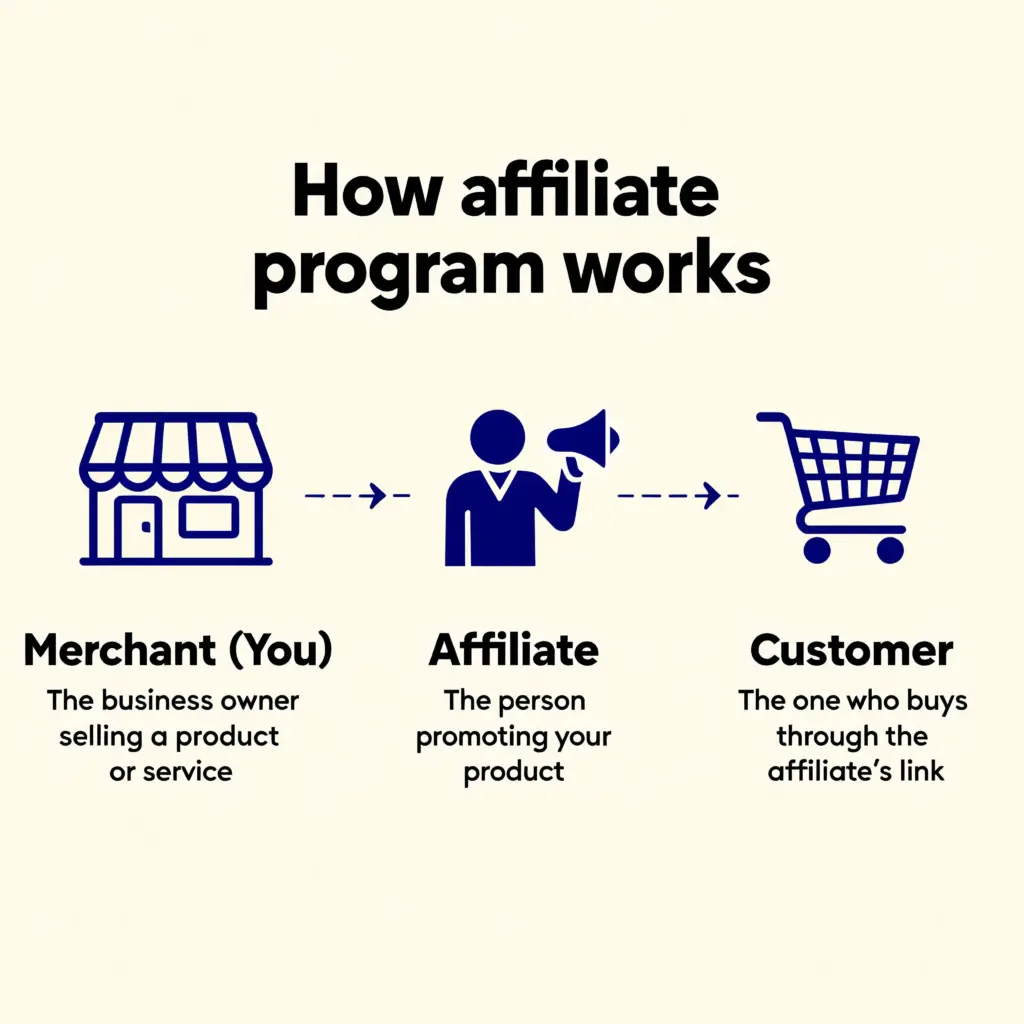
- Merchant (You): The business owner selling a product or service
- Affiliate: The person promoting your product
- Customer: The one who buys through the affiliate’s link
Here’s the flow:
An affiliate shares your product using a special tracking link. A customer clicks it and makes a purchase. The system tracks it, and you reward the affiliate with a commission. Simple and clean.
A Real-Life Analogy
Think of it like this.
Imagine you own a small coffee shop. You tell your friends, “Bring me customers, and I’ll give you a cut from every sale.” Your friends spread the word. New customers walk in. You make money, and your friends get rewarded.
That’s affiliate marketing.
Except now, instead of a few friends, you can have hundreds of people promoting your business online.
Why Affiliate Marketing Is Perfect for Small Businesses
If you’re running a small business, every dollar counts. You can’t afford to gamble on marketing that may or may not work. That’s exactly why affiliate marketing feels like a breath of fresh air.
Let’s break down why it works so well.
- Low Upfront Cost
Unlike paid ads, where you spend first and hope for results, affiliate marketing flips the game. You don’t pay anything up front.
You only pay when a sale happens. That means no wasted budget on clicks that go nowhere. For small businesses, this is huge.
In fact, according to Statista, affiliate marketing spending continues to grow globally, reaching billions each year, mainly because businesses see strong ROI with lower risk.
- Performance-Based Payouts
This is the best part.
With affiliate marketing, you’re not paying for effort. You’re paying for results.
- No sales = no cost
- More sales = more growth
It’s like having a sales team that works on commission only. No fixed salary. No pressure on your budget.
- Scalable Growth
You don’t need to hire more employees to grow.
Instead, you can onboard more affiliates. Each one promotes your product to their own audience. As your affiliate network grows, your sales can grow with it.
According to Influencer Marketing Hub, businesses earn an average of $5 for every $1 spent on affiliate marketing. That kind of return makes scaling much easier.
- Access to a Wider Audience
Here’s something many small businesses struggle with: reach.
You might have a great product, but not enough people know about it.
Affiliates solve that problem.
They already have:
- Blogs
- YouTube channels
- Email lists
- Social media followers
When they promote your product, you instantly tap into audiences you couldn’t reach on your own.
In short?
Affiliate marketing lets you grow faster, spend smarter, and reach further without taking big risks.
And for a small business, that’s exactly the kind of marketing you want.
Types of Affiliate Marketing Programs for Small Businesses
Not all affiliate programs are built the same. And honestly, choosing the right type can make or break your results.
Let’s walk through the three most common options so you can pick what fits your business best.
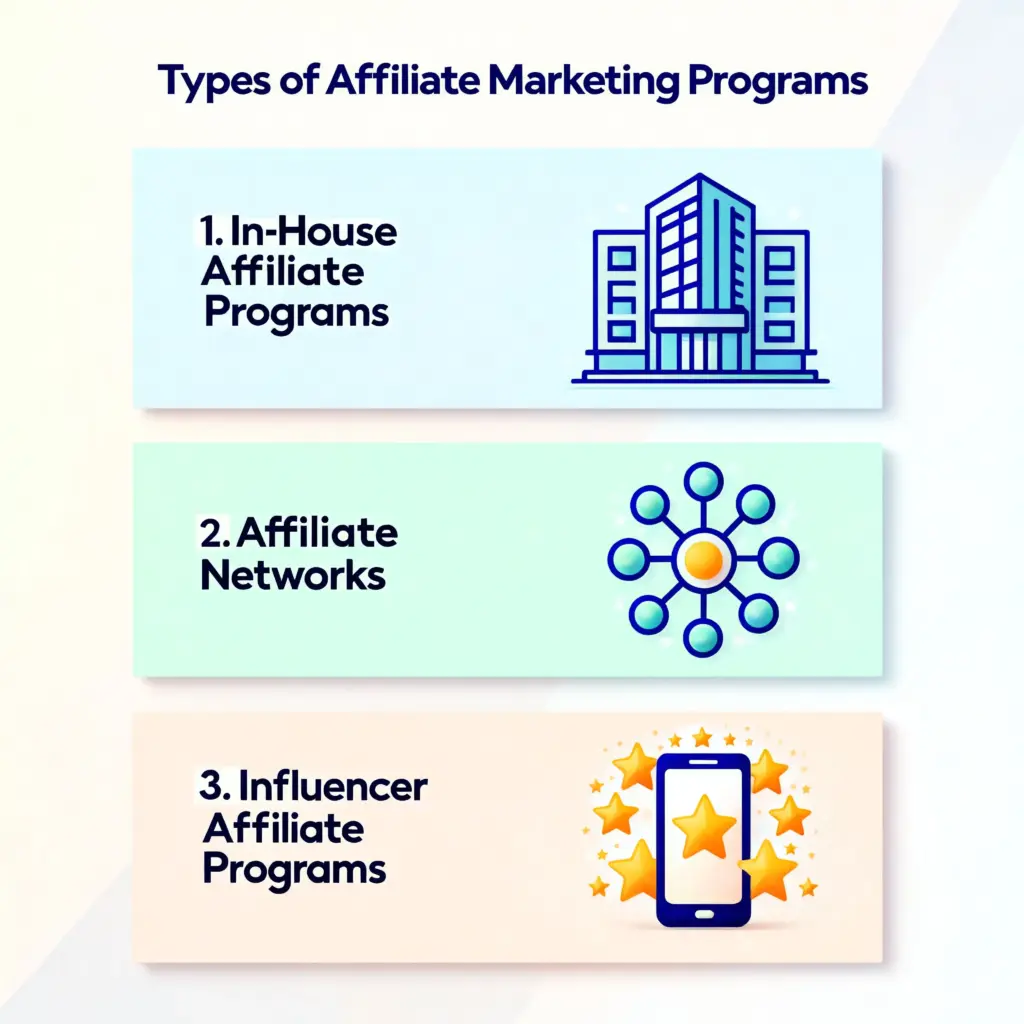
1. In-House Affiliate Programs
This is where you run everything yourself. From tracking sales to managing affiliates, it’s all under your control.
Why small businesses like it:
- Full control over commissions and rules
- Direct relationship with affiliates
- No middleman fees
You can customize everything. Want to offer higher commissions to top performers? Go for it. Want to create special campaigns? Easy.
But here’s the catch. You’ll need the right tools and a bit of setup effort.
Think of it like owning your own store instead of renting space. More control, but more responsibility too.
2. Affiliate Networks
If in-house feels overwhelming, affiliate networks are a great starting point.
These platforms connect you with ready-to-go affiliates who are already looking for products to promote.
Popular examples include:
- ShareASale
- CJ Affiliate
- ClickBank
Why they’re appealing:
- Super easy setup
- Built-in tracking and payments
- Instant access to a large pool of affiliates
The downside? You’ll usually pay platform fees or a percentage of your sales.
Still, for many small businesses, the convenience is worth it.
3. Influencer Affiliate Programs
This one’s booming right now.
Instead of traditional affiliates, you partner with influencers who promote your products on platforms like Instagram, TikTok, or YouTube.
Why it works so well:
- Built on trust and personal recommendations
- Highly engaged audiences
- Great for brand awareness and quick sales
According to Influencer Marketing Hub, influencer-driven campaigns often deliver higher engagement rates compared to traditional ads.
Think of it like word-of-mouth marketing, but amplified through social media.
How to Choose the Right Affiliate Program
Picking the right affiliate program isn’t about going with the most popular option. It’s about choosing what actually fits your business. What works for a big brand might not work for you.
So let’s break it down in a simple, practical way.
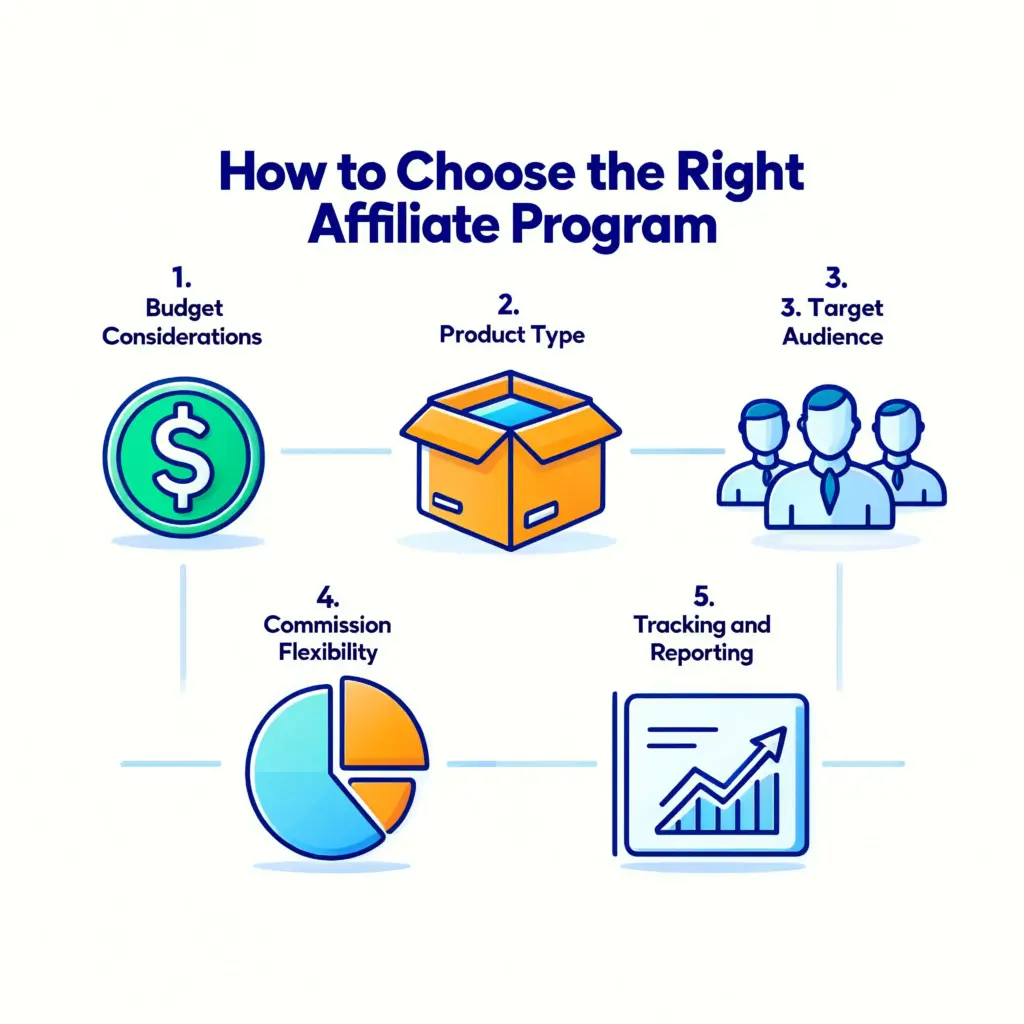
1. Budget Considerations
Start here. Always.
Ask yourself, how much can you realistically afford to pay per sale?
Affiliate marketing is low risk, but it’s not zero cost. You’ll still need to pay commissions and possibly platform fees.
A good rule:
- Lower margins → offer smaller commissions
- Higher margins → you can go more generous
The goal is to stay profitable while still motivating affiliates to promote you.
2. Product Type
Not all products perform the same in affiliate marketing.
For example:
- Digital products often work great because margins are high
- Physical products can work well but may need lower commissions
- Subscription services are powerful because they allow recurring commissions
Think about this. Would someone feel excited recommending your product? If yes, you’re on the right track.
3. Target Audience
This is where many businesses mess up.
You need to match your affiliate program with where your audience already spends time.
- Selling to professionals? Blogs and email affiliates work well
- Selling trendy products? Influencers and social media shine
- Niche audience? Smaller, specialized affiliates are gold
If your affiliates don’t reach your ideal customers, nothing else matters.
4. Commission Flexibility
One fixed commission rate can limit your growth.
Instead, think flexible:
- Higher commissions for top performers
- Special bonuses during campaigns
- Tiered rewards based on sales volume
This keeps affiliates motivated and loyal.
Honestly, a little creativity here can make a huge difference.
5. Tracking and Reporting
This is non-negotiable.
If you can’t track performance properly, you’re basically guessing.
Make sure your system can:
- Track clicks and conversions accurately
- Show which affiliate made the sale
- Provide clear reports
Tools and platforms recommended by HubSpot emphasize that data-driven decisions lead to better marketing ROI.
Without good tracking, you won’t know what’s working. And if you don’t know that, you can’t grow.
Quick reality check:
The “best” affiliate program is the one that aligns with your budget, product, and audience.
Get those three right, and everything else becomes much easier.
How to Start Your Own Affiliate Program (Step by Step)
Starting your own affiliate program might sound technical, but it’s actually pretty manageable when you break it into small steps. You do not need a huge team. You do not need a massive budget either. You just need a clear plan, the right setup, and a way to keep things organized.
Here’s how to do it.
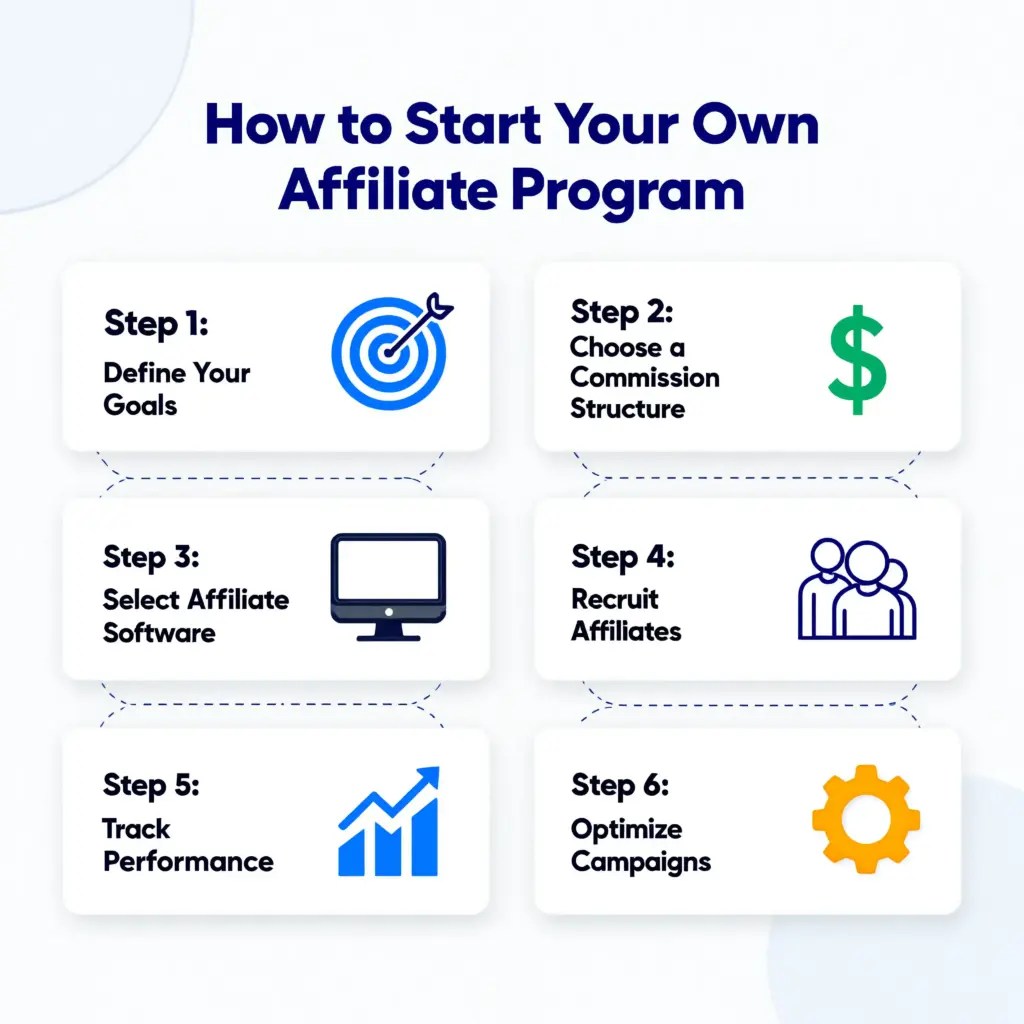
Step 1: Define Your Goals
Before you set up anything, pause for a second and ask yourself one simple question:
What do I want this affiliate program to achieve?
Your answer will shape everything else.
Maybe you want to:
- Get more sales
- Bring in first time customers
- Grow brand awareness
- Promote a specific product
- Increase repeat purchases
Be specific. “I want more sales” is okay, but “I want 30 new sales a month from affiliates” is much better. Clear goals help you measure success without guessing.
Think of it like taking a road trip. If you do not know the destination, every road feels confusing.
Step 2: Choose a Commission Structure
Now it’s time to decide how you’ll reward affiliates.
This part matters a lot because your commission needs to be attractive enough to motivate people, but still profitable for your business.
Common options include:
- Percentage-based commission
Great for most ecommerce stores. For example, 10% per sale. - Flat rate commission
You pay a fixed amount, like $15 per sale. - Recurring commission
Best for subscriptions or membership products. - Tiered commission
Affiliates earn more once they hit certain sales targets.
If you are just starting, keep it simple. A clear and fair commission model is better than a fancy one that confuses people.
And be honest here. If your profit margin is tight, do not promise commissions that will hurt your business later. A sustainable program always beats an overly generous one that falls apart in three months.
Step 3: Select Affiliate Software
This is where the real setup begins.
You need software that can:
- Track affiliate links
- Record sales correctly
- Manage commissions
- Handle affiliate applications
- Show reports in one place
Trying to do all of this manually is like using a notebook to run a whole sales team. Technically possible, but very messy.
If your store runs on WordPress, using a dedicated affiliate management plugin can make the process much smoother. For example, tools like FluentAffiliate help business owners manage affiliates, track referrals, and handle payouts without turning everything into a spreadsheet nightmare.
The key is to choose software that feels easy to use. If the dashboard confuses you on day one, that is a red flag.
Look for something that gives you:
- Simple setup
- Clear reporting
- Easy affiliate onboarding
- Flexible commission settings
Because honestly, the easier your system is, the more likely you are to stick with it.
Step 4: Recruit Affiliates
Once your system is ready, you need people to promote your products.
And no, affiliates will not magically appear just because your program is live. You need to invite the right people in.
Start with:
- Existing customers
- Bloggers in your niche
- Content creators
- Micro influencers
- Industry experts
- Email partners
- Loyal brand fans
A lot of small businesses make the mistake of chasing huge influencers first. But smaller creators often work better because their audience trusts them more and their recommendations feel personal.
When reaching out, keep your message simple:
- What your product does
- Who it helps
- How much commission you offer
- Why your product is worth promoting
Make it easy for them to say yes. Give them a reason to care.
And once they join, support them with swipe copy, banners, product images, and basic promotion tips. The easier you make their job, the better they’ll perform.
Step 5: Track Performance
This step separates smart affiliate programs from messy ones.
You need to know:
- Which affiliates bring clicks
- Which ones bring sales
- Which products perform best
- Which traffic sources convert well
Without this data, you are just hoping things work.
Tracking helps you spot:
- Your top performers
- Weak campaigns
- Fraud risks
- Missed growth opportunities
For example, if one affiliate sends lots of traffic but no sales, something may be off. Maybe their audience is not the right fit. Maybe the landing page needs work. Maybe the offer is unclear.
On the other hand, if another affiliate brings fewer clicks but more conversions, that’s your clue to build a stronger partnership with them.
Good affiliate software makes this much easier by showing referrals, conversions, and commissions in one dashboard. That saves time and helps you make better decisions fast.
Step 6: Optimize Campaigns
Here’s the truth. Your affiliate program will not be perfect on day one. That’s normal.
What matters is improving it as you go.
Look at your data regularly and ask:
- Which affiliates are performing best?
- Which products get the most conversions?
- Are my commissions competitive?
- Do affiliates have enough marketing materials?
- Is the sign-up process too complicated?
Then adjust.
You might:
- Increase commission for top performers
- Create special offers for seasonal campaigns
- Improve product pages
- Give affiliates better creatives
- Remove friction from the onboarding process
Think of your affiliate program like a small garden. You cannot just plant seeds and walk away. You need to water it, trim it, and give attention to what’s growing.
That’s how it starts producing real results.
Common Mistakes Small Businesses Make
Starting an affiliate program is exciting, but small mistakes can quietly kill your results. Let’s keep this simple so you can avoid the most common ones.
- Poor Commission Rates
If your commission is too low, affiliates won’t bother. Too high, and you lose profit.
Find a balance that motivates affiliates while keeping your business sustainable.
- No Clear Guidelines
Confused affiliates don’t sell.
Make sure you clearly explain:
- How to promote
- What’s allowed
- When and how they get paid
Clarity makes everything easier.
- Lack of Tracking
Without proper tracking, you’re guessing.
You won’t know what’s working or who deserves credit. Tools recommended by HubSpot show that tracking is key to improving results.
- Ignoring Affiliate Relationships
Affiliates are partners, not just promoters.
Stay in touch, support them, and appreciate their work. A strong relationship often leads to better performance.
Best Practices to Make Your Affiliate Program Successful
Setting up your affiliate program is one thing. Making it actually work? That’s where these best practices come in.
1. Offer Competitive Commissions
Affiliates have options. Lots of them.
If your commission isn’t attractive, they’ll promote someone else. Take time to research your niche and offer a rate that feels worth their effort while still keeping your margins healthy.
2. Build Strong Relationships
This part is often overlooked, but it matters a lot.
Stay in touch with your affiliates. Check in, share updates, and appreciate their efforts. Even a quick message can make them feel valued and more motivated to promote your product.
3. Provide Marketing Materials
Don’t make affiliates do all the heavy lifting.
Give them:
- Banners and images
- Email templates
- Product descriptions
- Social media ideas
The easier you make it for them, the faster they can start driving results.
4. Track and Improve Performance
Your first version won’t be perfect. That’s normal.
Use data to improve over time:
- Identify top-performing affiliates
- See which products convert best
- Adjust commissions or offers if needed
Insights from HubSpot show that businesses that track and refine their strategies consistently perform better.
Simple truth:
A successful affiliate program isn’t built overnight. But with the right approach, it can turn into one of your most reliable growth channels.
Closing Notes
Affiliate marketing gives small businesses a smart way to grow without risking big budgets. You learned what it is, how it works, the best program types, and how to start your own step by step.
Now it’s your move. Start small, stay consistent, and improve as you go.
Ready to build your own affiliate program? Give it a shot today.
And hey, what’s your biggest challenge with affiliate marketing right now? Let’s talk in the comments.




Add your first comment to this post