

10 Key Affiliate Program Challenges [How to Overcome]
![10 Key Affiliate Program Challenges [How to Overcome]](https://fluentaffiliate.com/wp-content/uploads/2026/03/Frame-2147238353-scaled.webp)
Running an affiliate program sounds easy.
Recruit affiliates. Give them links.
Watch the sales roll in.
Well… not exactly.
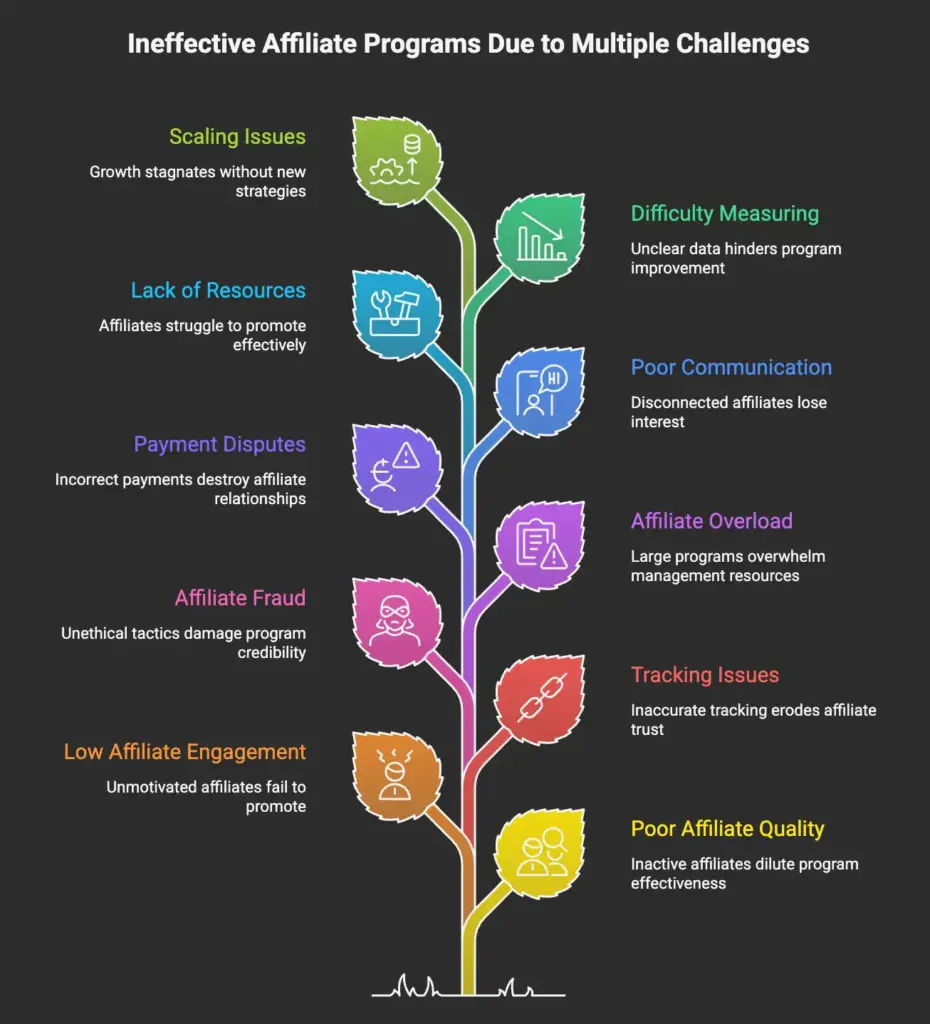
In reality, affiliate program managers deal with dozens of problems like fraud, inactive affiliates, tracking issues, and payment headaches.
The good news?
Every challenge has a solution.
In this guide, we will break down 10 of the most common affiliate program challenges and how you can solve them.
Key Takeaways: Affiliate Program Challenges
- High quality affiliates matter more than quantity. Focus on targeted recruitment, not open signups.
- Most affiliates stay inactive without guidance. A strong onboarding process fixes this quickly.
- Accurate tracking builds trust. Poor tracking leads to disputes and lost partners.
- Affiliate fraud is real but preventable with tools, reviews, and clear rules.
- Managing many affiliates requires automation and smart segmentation.
- Payment transparency is critical. Clear reporting and timely payouts keep affiliates loyal.
- Scaling success comes from data driven decisions, better incentives, and new partnerships.
10 Key Affiliate Program Challenges & the Fixes
Here are the most common challenges and the fixes you need to know to run your affiliate program properly.
1. Finding High Quality Affiliates
Launching an affiliate program is exciting. You open the doors, share the signup link, and wait for affiliates to join.
And they do.
But here is the catch. Many of them never promote your product.
Some sign up just to see what happens. Others drop their link once and disappear. Inactive affiliates are one of the most common challenges affiliate managers face.
The real goal is not more affiliates. The goal is better affiliates.
Let’s look at why this happens and how you can fix it.
The Problem
Many affiliate programs attract affiliates who:
- Never promote the product
- Have no real audience
- Use low-quality traffic sources
- Sign up only for curiosity
This happens because most programs rely on passive recruitment. They simply add a signup page and hope the right affiliates show up.
Unfortunately, high-quality affiliates rarely appear by accident. You need a strategy to find and attract them.
The Solution
Here are four proven ways to recruit affiliates who actually drive results.
1. Use a Smart Outreach Strategy
Instead of waiting for affiliates to discover your program, go find them.
Look for creators, bloggers, YouTubers, and niche website owners who already talk about products similar to yours. Reach out with a short and friendly message explaining why your product could benefit their audience.
For example, if you run a WooCommerce plugin, look for:
- WordPress bloggers
- YouTube tutorial creators
- Website builders
- Digital marketing educators
Personal outreach often brings in the most valuable affiliates because they already have trust with their audience.
2. Partner With Influencers in Your Niche
Influencers are powerful affiliate partners because they already have engaged communities.
A single influencer with a loyal audience can outperform dozens of random affiliates.
Look for:
- Micro influencers in your niche
- Industry educators
- Newsletter creators
- Podcast hosts
Even small creators with 5,000 to 20,000 followers can generate strong affiliate sales if their audience trusts them.
3. Join Affiliate Marketplaces
Affiliate marketplaces help connect businesses with affiliates who are actively looking for programs.
Platforms like ShareASale, Impact, and CJ Affiliate host thousands of experienced affiliates who promote products regularly.
Listing your program on these platforms can expose your brand to affiliates who are already skilled at driving traffic and conversions.
4. Build an Affiliate Recruitment Funnel
Treat affiliate recruitment like marketing.
Instead of a simple signup page, create a funnel that attracts serious affiliates.
For example:
- Write blog posts about affiliate marketing opportunities
- Share success stories from existing affiliates
- Offer onboarding resources for new partners
- Provide clear earning potential examples
This approach filters out casual signups and attracts people who genuinely want to promote your product.
When you focus on quality over quantity, your affiliate program becomes much easier to manage and far more profitable.
And honestly, a few great affiliates can outperform hundreds of inactive ones.
2. Low Affiliate Engagement
Getting affiliates to sign up is one thing. Getting them to actually promote your product is another.
Many affiliate programs have hundreds of registered affiliates, but only a small percentage actively promote. The rest simply stay inactive.
This usually happens when affiliates feel lost, unmotivated, or unsupported.
The Problem
Many affiliates join a program but never start promoting because:
- They do not know where to begin
- They lack marketing resources
- They forget about the program
- They do not see strong incentives
Without guidance and motivation, even good affiliates can become inactive.
The Solution
Here are a few simple ways to keep affiliates engaged and active.
1. Create an Onboarding Sequence
Welcome new affiliates with a short email series that explains:
- How the program works
- How to get their affiliate links
- The best ways to promote your product
Clear guidance helps affiliates start faster.
2. Provide Ready-to-Use Promotional Materials
Make promotion easier by giving affiliates:
- Banners and graphics
- Email templates
- Social media captions
- Product images
The easier you make promotion, the more affiliates will participate.
Explore 15 Affiliate Creatives that Benefit Both Your Partners and Your Brand!
3. Run Affiliate Contests
Contests can quickly boost affiliate motivation.
Examples include:
- Monthly sales competitions
- Bonus commissions for top performers
- Limited-time reward campaigns
Small incentives often create big results.
4. Send Regular Affiliate Newsletters
Stay connected with affiliates through short updates.
Share things like:
- product updates
- new promotional materials
- seasonal campaigns
- success stories from top affiliates
Regular communication keeps your program fresh in their minds and encourages continued promotion.
3. Tracking Issues and Attribution Problems
Accurate tracking is the backbone of any affiliate program.
If tracking fails, everything falls apart. Affiliates lose confidence, commissions get disputed, and program managers spend hours trying to resolve complaints.
Even small tracking errors can damage trust between you and your affiliates.
The Problem
Tracking issues usually appear in forms like:
- Missing or unrecorded affiliate sales
- Incorrect commission attribution
- Broken affiliate links
- Confusion about which affiliate drove the sale
When affiliates feel their efforts are not properly credited, they quickly stop promoting.
The Solution
To prevent tracking disputes, focus on these key improvements.
1. Use Reliable Tracking Tools
Choose a trusted affiliate tracking system that records:
- clicks
- conversions
- commissions
- referral sources
Reliable tracking software reduces errors and keeps data consistent.

Get the Most Reliable Affiliate Tracker for WordPress
2. Implement Cookie Tracking
Affiliate cookies help track users after they click an affiliate link.
For example:
- A visitor clicks an affiliate link
- A cookie stores the affiliate ID
- If the visitor purchases later, the affiliate still receives credit
This ensures affiliates are rewarded even if the purchase happens later.
3. Use Server Side Tracking
Server-side tracking improves accuracy by recording conversions directly from the server instead of relying only on browser cookies.
This helps prevent tracking loss caused by:
- ad blockers
- browser privacy settings
- cookie restrictions
It creates a more reliable attribution system.
4. Maintain Transparency
Clear reporting builds affiliate trust.
Make sure affiliates can easily see:
- clicks generated
- sales recorded
- commissions earned
When affiliates trust the tracking system, they feel confident investing more effort into promoting your product.
4. Affiliate Fraud
Affiliate programs can drive serious revenue. But they can also attract the wrong kind of attention.
Some affiliates try to game the system using unethical tactics to earn commissions they did not truly generate. If left unchecked, this can cost businesses money and damage the credibility of the entire program.
The Problem
Common forms of affiliate fraud include:
- Cookie stuffing to claim unearned commissions
- Fake leads or bot traffic
- Self-referrals to earn commissions on personal purchases
- Brand bidding or misleading promotions
These tactics create inaccurate data and unfair advantages over honest affiliates.
The Solution
Preventing fraud requires a mix of tools, monitoring, and clear rules.
1. Use Fraud Detection Tools
Modern affiliate platforms often include fraud detection features that can identify suspicious activity such as:
- abnormal click spikes
- duplicate leads
- unusual conversion patterns
These alerts help catch fraud early.
2. Perform Manual Reviews
Automation helps, but human review is still important.
Regularly check:
- top performing affiliates
- unusual traffic sources
- sudden sales spikes
A quick manual audit can reveal patterns that automated tools might miss.
3. Set Clear Affiliate Policies
Every affiliate program should have clear rules.
Your policy should define:
- allowed promotional methods
- prohibited tactics
- consequences for violations
When affiliates understand the rules from the start, it reduces confusion and discourages dishonest behavior.
Starting From Scratch? Kickstart
with Affiliate Marketing 101 Guide!
5. Managing Too Many Affiliates
Growth is great. But managing a large affiliate program can quickly become overwhelming.
As your program scales, you may end up dealing with hundreds or even thousands of affiliates. Without proper systems in place, things can become messy fast. Tracking performance, answering questions, and managing payouts can consume a huge amount of time.
The Problem
When the number of affiliates grows, managers often struggle with:
- Handling large volumes of affiliate data
- Responding to affiliate requests
- Tracking performance manually
- Maintaining program organization
Without structure, affiliate management can turn into daily chaos.
The Solution
A few simple systems can make large programs much easier to manage.
1. Use Automation Tools
Automation can handle repetitive tasks like:
- tracking referrals
- calculating commissions
- generating reports
This saves time and reduces human error.
2. Provide Affiliate Dashboards
Give affiliates access to a dashboard where they can see:
- their referral links
- clicks and sales
- commission earnings
This reduces support requests and keeps affiliates informed.
Explore what makes a great affiliate dashboard!
3. Segment Your Affiliates
Not all affiliates perform the same.
Group them based on factors like:
- top performers
- new affiliates
- inactive affiliates
Segmentation helps you communicate better and manage the program more efficiently.
6. Payment and Commission Disputes
Nothing damages an affiliate relationship faster than payment confusion.
Affiliates invest time and effort promoting your product. If they feel their commissions are incorrect or delayed, trust disappears quickly. Even small misunderstandings can lead to frustration and negative feedback.
The Problem
Payment disputes usually happen because:
- affiliates cannot verify their commissions
- sales tracking looks unclear
- payouts are delayed
- program terms are misunderstood
When affiliates doubt the accuracy of payments, they often stop promoting altogether.
The Solution
Clear systems and communication can prevent most payment issues.
1. Use Transparent Reporting
Give affiliates clear access to data such as:
- clicks
- conversions
- approved commissions
When affiliates can easily verify their earnings, disputes become rare.
2. Automate Affiliate Payouts
Manual payments increase the risk of mistakes.
Automated payouts help:
- calculate commissions accurately
- send payments on time
- reduce administrative work
Consistent payouts build long-term trust with affiliates.
3. Set Clear Program Terms
Every affiliate program should clearly explain:
- commission structure
- payment schedule
- refund or cancellation policies
When expectations are clear from the start, misunderstandings become much less common.
7. Poor Communication with Affiliates
Affiliates are partners, not just traffic sources. But many programs forget to stay in touch with them.
When affiliates feel ignored or disconnected, they slowly lose interest. Over time, promotion stops and engagement drops.
Strong communication keeps affiliates informed, motivated, and loyal to your program.
The Problem
Poor communication can lead to:
- affiliates forgetting about the program
- missed promotional opportunities
- confusion about campaigns or offers
- reduced affiliate motivation
Without regular interaction, affiliates may shift their attention to other programs.
The Solution
Keeping affiliates engaged often requires simple but consistent communication.
1. Send Affiliate Newsletters
A short newsletter can keep affiliates updated about:
- new promotions
- product launches
- seasonal campaigns
Regular emails remind affiliates that opportunities are always available.
2. Create Community Groups
Affiliate communities help build stronger relationships.
You can create groups on platforms like:
- Slack
- Discord
These spaces allow affiliates to ask questions, share ideas, and stay connected with your brand.
3. Share Regular Updates
Keep affiliates informed about important changes, such as:
- new marketing materials
- commission updates
- upcoming campaigns
Frequent updates help affiliates stay prepared and confident when promoting your products.
8. Lack of Marketing Resources
Even motivated affiliates struggle to promote a product if they do not have the right materials.
Many affiliates join a program ready to promote, but they quickly lose momentum when they cannot find banners, product details, or ready-made content. The harder the promotion becomes, the less likely affiliates are to take action.
The Problem
Affiliates often face challenges such as:
- no banners or graphics to share
- lack of product information
- difficulty creating promotional content
- no ready made marketing assets
Without proper resources, affiliates must build everything themselves, which slows down promotion.
The Solution
Providing simple marketing materials can significantly increase affiliate activity.
1. Provide Promo Kits
Create a resource library that includes:
- banners and graphics
- product images
- social media creatives
Affiliates can quickly grab what they need and start promoting.
2. Offer Email Templates
Many affiliates use email marketing.
Provide ready-to-use templates such as:
- product promotion emails
- launch announcements
- special offer messages
This saves affiliates time and improves campaign consistency.
3. Create Simple Product Guides
Help affiliates understand your product better.
Share guides that explain:
- key features
- main benefits
- common use cases
When affiliates clearly understand the product, they can promote it with more confidence.
Explore 15 Affiliate Creatives that Benefit Both Your Partners and Your Brand!
9. Difficulty Measuring Program Performance
Running an affiliate program without clear data is like driving without a dashboard. You might be moving forward, but you have no idea what is actually working.
Many affiliate managers struggle to understand which affiliates generate real value and which campaigns bring the best results.
Without proper analysis, it becomes difficult to improve the program.
The Problem
Program managers often face issues such as:
- unclear affiliate performance data
- difficulty identifying top affiliates
- lack of insight into conversion rates
- uncertainty about program profitability
Without meaningful metrics, decision-making becomes guesswork.
The Solution
Focusing on a few key measurements can make performance analysis much easier.
1. Track Key Metrics
Start by monitoring essential metrics such as:
- clicks generated by affiliates
- conversion rates
- total sales from referrals
- average order value
These indicators show which affiliates and campaigns perform best.
2. Analyze Conversion Performance
Look beyond traffic and focus on conversions.
Compare:
- traffic vs sales
- affiliate conversion rates
- landing page performance
This helps identify where improvements are needed.
3. Measure Return on Investment
Evaluate how much revenue your affiliate program generates compared to the commissions paid.
A clear ROI calculation helps you understand:
- program profitability
- which affiliates deliver the most value
- where to scale your efforts
When performance data becomes clear, managing and growing the affiliate program becomes much easier.
10. Scaling the Affiliate Program
Many affiliate programs start strong. Early affiliates bring in sales, momentum builds, and everything looks promising.
But after a while, growth slows down.
The same affiliates keep promoting, new affiliates stop joining, and sales begin to plateau. Without new strategies, affiliate programs can easily hit a growth ceiling.
The Problem
Growth stagnation often happens because:
- the program relies on the same affiliates
- commission incentives remain unchanged
- recruitment efforts slow down
- expansion into new audiences stops
To keep the program growing, you need to create new opportunities for affiliates.
The Solution
Here are a few simple ways to scale your affiliate program.
1. Introduce Tiered Commissions
Reward top-performing affiliates with higher commission rates.
For example:
- 10% base commission
- 15% after reaching a sales milestone
- 20% for top performers
Tiered rewards motivate affiliates to promote more actively.
Read In-depth: Affiliate Commission Structure: Choose the best model for your Business
2. Partner with Influencers
Influencers can introduce your product to entirely new audiences.
Look for:
- niche creators
- industry educators
- YouTube reviewers
- newsletter writers
These partnerships can quickly expand your reach.
3. Expand to International Affiliates
Growth often comes from new markets.
Recruit affiliates who target different regions and languages. This allows your affiliate program to reach audiences that your current partners may not cover.
With the right incentives and partnerships, scaling an affiliate program becomes much more achievable.
New to affiliate marketing arena? Here’s a complete affiliate marketing beginners guide for you!
Affiliate Marketing Trends Affecting Affiliate Programs
Affiliate marketing keeps evolving. What worked five years ago may not work the same way today.
New technologies, creator platforms, and partnership models are changing how affiliate programs operate. If program managers want long-term growth, it is important to stay aware of these shifts.
Here are a few trends shaping modern affiliate programs.

1. AI-Powered Affiliate Management
Artificial intelligence is beginning to play a bigger role in affiliate program management.
AI tools can help with:
- detecting fraudulent activity
- analyzing affiliate performance
- identifying high-potential partners
- predicting campaign performance
These insights allow program managers to make faster and smarter decisions.
2. The Rise of the Creator Economy
Content creators are becoming powerful marketing partners.
Bloggers, YouTubers, TikTok creators, and newsletter writers now influence buying decisions for millions of people. Many brands are shifting their affiliate strategies toward creator partnerships because creators build strong trust with their audiences.
3. Growth of Influencer Affiliates
Influencers are increasingly joining affiliate programs instead of relying only on sponsorship deals.
Affiliate partnerships allow influencers to earn commissions based on real sales rather than one-time payments. This performance-based model benefits both the brand and the influencer.
4. Performance-Based Partnerships
More companies are moving toward performance-driven partnerships where payments depend on results.
Instead of paying upfront for exposure, brands reward affiliates when they generate measurable outcomes such as:
- sales
- leads
- subscriptions
This model reduces marketing risk and encourages long-term collaboration between brands and affiliates.
Staying aware of these trends helps affiliate managers build programs that remain competitive and sustainable in the long run.
Read In-depth: 25 Affiliate Marketing Trends [Latest Strategies & Statistics]
Conclusion
Affiliate programs can become powerful growth engines for businesses. They help you reach new audiences, increase sales, and build long-term partnerships.
But running a successful affiliate program is not always simple.
Challenges like inactive affiliates, tracking issues, fraud, and communication gaps can slow down your progress. The key is to build systems that help you recruit the right affiliates, manage them effectively, track performance accurately, and keep them motivated.
Take a moment to review your current affiliate program. Audit what is working, fix weak areas, and strengthen your relationships with your affiliates.
Small improvements can lead to significant growth over time.
Now over to you. Which affiliate program challenge are you facing right now?






Add your first comment to this post