

What Is Affiliate Marketing? And What It Means in 2026

Affiliate marketing has been around for decades. Yet many people still picture it as bloggers placing random links on websites and earning easy money.
That version is outdated.
Today, affiliate marketing looks very different. It is shaped by creators, communities, AI tools, privacy regulations, and platforms people actually own. Businesses now treat affiliates as long-term partners, not just traffic sources. Creators focus on trust instead of volume.
In 2026, affiliate marketing is no longer a side tactic. It has become one of the most reliable growth channels for online businesses and independent creators.
To understand why, we first need to start with the basics.
What Is Affiliate Marketing? (Simple Explanation)
Affiliate marketing is a partnership where someone promotes a product or service and earns a commission when a sale or action happens through their recommendation.
There are four main roles involved:
- The Business (Merchant)
The company that sells a product or service. - The Affiliate (Promoter
A creator, marketer, or customer who recommends the product. - The Customer
The person who purchases through the recommendation. - The Tracking System
Technology that records referrals and attributes commissions correctly.
Read More: Best Affiliate Tracking System for WordPress
A simple example
Imagine you run a YouTube channel about online business tools. You recommend a website builder you genuinely use. You share a special link provided by the company. When someone buys through that link, you earn a commission.
The customer pays the same price. The business gains a new customer. The affiliate earns a reward for the recommendation.
Everyone benefits.
How Affiliate Marketing Works
The process is simple when broken down clearly.
Step 1: Join an affiliate program
An affiliate signs up for a company’s program.
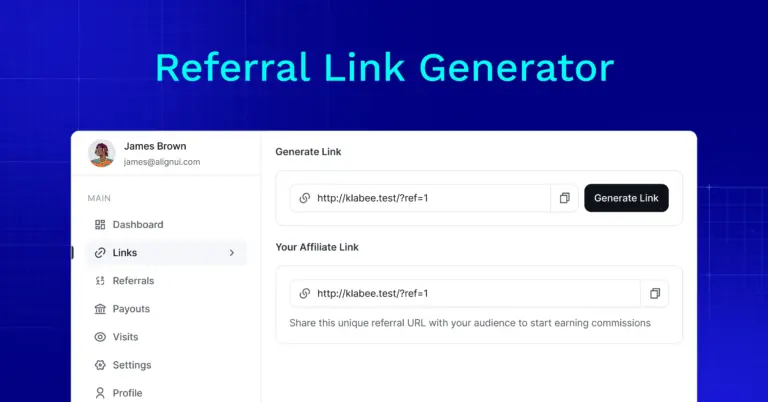
Step 2: Receive a tracking link
The system generates a unique referral link.
Step 3: Promote the product
The affiliate shares it through content such as blogs, videos, newsletters, or communities.
Step 4: Customer makes a purchase
A user clicks the link and buys the product.
Step 5: Commission is recorded and paid
The tracking system attributes the sale and the affiliate receives a commission.
Behind the scenes, technology handles attribution and reporting, but from a user perspective, the process remains straightforward.
The Evolution of Affiliate Marketing
Affiliate marketing did not appear overnight. It evolved alongside the internet itself.
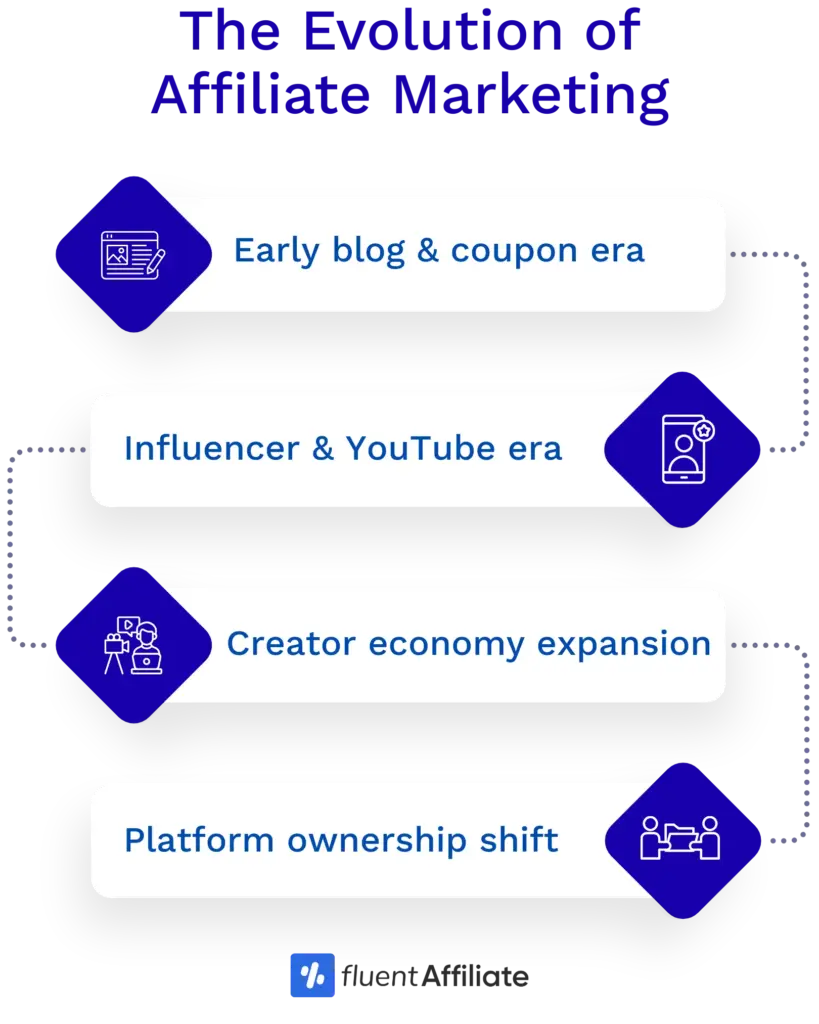
Early blog and coupon era
In the early 2000s, affiliates mainly relied on blogs, review sites, and coupon platforms. Search engines drove most traffic.
Influencer and YouTube era
As social platforms grew, creators began recommending products through videos and social media content. Personality and storytelling started to matter more than SEO alone.
Creator economy expansion
Podcasters, educators, and niche creators entered the space. Audiences followed trusted voices rather than anonymous websites.
Platform ownership shift
Recently, creators and businesses began prioritizing owned platforms such as websites, email lists, and communities. This reduced dependence on changing algorithms.
This shift set the foundation for affiliate marketing as we see it today.
What Has Changed in Affiliate Marketing
Affiliate marketing still follows the same core idea, but the environment around it has changed dramatically.
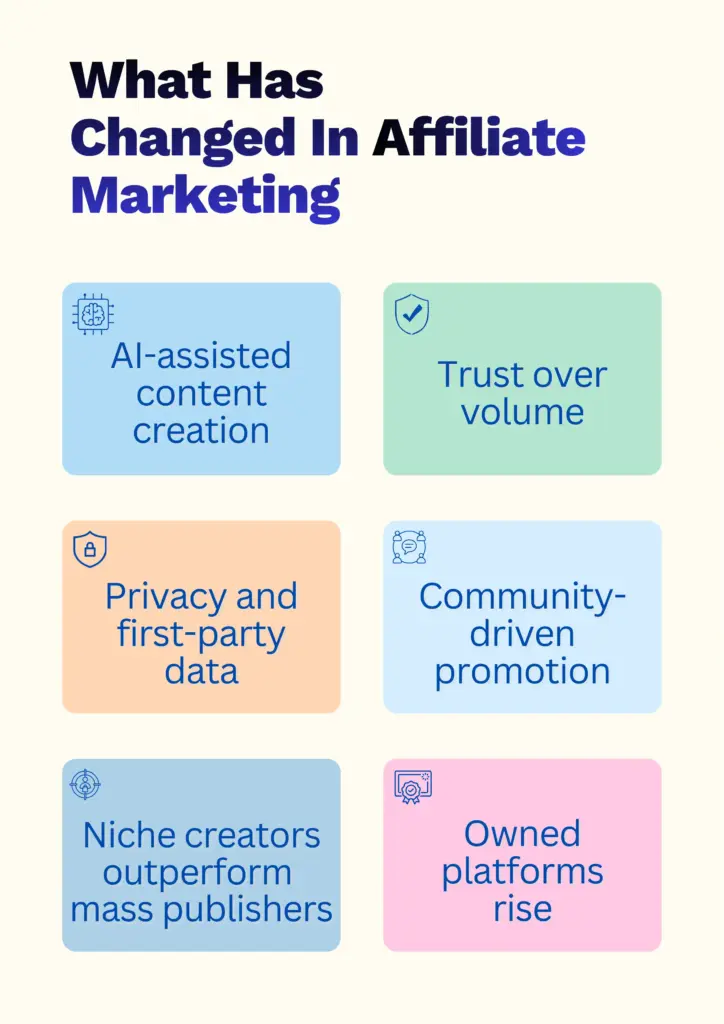
AI-assisted content creation
AI tools help creators research, outline, and produce content faster. However, human experience and authenticity now matter more than ever.
Trust over volume
Audiences are more skeptical. Recommendations only work when they come from genuine use and transparent opinions.
Privacy and first-party data
Browser restrictions and privacy laws reduced traditional tracking methods. Businesses increasingly rely on first-party relationships through websites and email lists.
Community-driven promotion
Communities, membership platforms, and private groups drive higher conversions because trust already exists.
Niche creators outperform mass publishers
Smaller creators with focused audiences often convert better than large, generic sites.
Owned platforms rise
Websites built on platforms like WordPress, email newsletters, and owned communities provide stability that social algorithms cannot guarantee.
Why Affiliate Marketing Still Works
Despite constant changes in digital marketing, affiliate marketing continues to grow because its foundation is simple and sustainable. It aligns the interests of businesses, creators, and customers in a way few marketing channels can.
1. Performance-based by nature
Unlike traditional advertising, businesses only pay when a real result happens. This could be a sale, signup, or qualified lead. Because costs are directly tied to outcomes, affiliate marketing remains one of the most efficient customer acquisition strategies.
2. Lower risk for businesses
Paid ads require upfront investment with no guarantee of return. Affiliate marketing reduces that risk. Brands expand their reach through partners without committing large budgets before results appear.
3. Accessible for creators and entrepreneurs
Affiliate marketing allows individuals to earn by sharing knowledge, experiences, or recommendations without building their own products. This makes it one of the easiest entry points into online business when done ethically and consistently.
4. Built on trust and real recommendations
Modern consumers trust people more than advertisements. When affiliates promote products they genuinely use, recommendations feel natural rather than promotional. This trust-driven approach leads to higher conversion rates.
5. Scales through partnerships
A successful affiliate program grows as more partners join. Each affiliate brings a new audience, new content, and new distribution channels. Over time, this creates a compounding growth effect that paid campaigns alone struggle to achieve.
In short, affiliate marketing still works because it rewards value creation. Businesses gain customers, creators earn fairly, and customers discover solutions through trusted voices.
Affiliate Marketing Models in 2026
Affiliate marketing now appears across many business types.
- Content creators and educators: Bloggers, YouTubers, and course creators recommend tools they actively use.
- Micro-influencers: Smaller audiences with strong trust deliver consistent conversions.
- SaaS and software referrals: Software companies rely heavily on affiliate partnerships for customer acquisition.
- Digital products and courses: Creators promote training programs, templates, and memberships.
- Community-driven affiliate programs: Online communities recommend products internally, creating high-trust referral environments.
Affiliate vs Ads vs Influencer Marketing
Understanding how affiliate marketing compares with other channels helps clarify its value.
| Factor | Affiliate Marketing | Paid Ads | Influencer Marketing |
|---|---|---|---|
| Cost Structure | Pay for results | Pay upfront | Fixed sponsorship fees |
| Risk Level | Low | High | Medium |
| Longevity | Long-term | Stops when budget ends | Short campaign cycles |
| Trust Factor | High when authentic | Often low | Depends on creator credibility |
Affiliate marketing combines performance marketing with authentic recommendations, which is why many businesses prioritize it alongside ads.
Common Myths About Affiliate Marketing
Affiliate marketing is widely discussed, but much of what people believe about it comes from outdated information or unrealistic online promises. Clearing up these misconceptions helps set realistic expectations.
Myth 1: Affiliate marketing is saturated
Many assume the market is already overcrowded. In reality, new products, niches, and audiences appear every year. Success today comes from specialization, not scale. Niche creators who focus on specific problems often perform better than large generic websites.
Myth 2: Only bloggers can succeed
Affiliate marketing is no longer limited to blog posts. Today’s successful affiliates include YouTubers, educators, community builders, podcasters, and newsletter creators. Any platform where trust and education exist can support affiliate marketing.
Myth 3: You need a huge audience
A large following is not required. A smaller audience that trusts your recommendations can generate stronger results than massive but disengaged traffic. Relevance matters more than reach.
Myth 4: It creates instant passive income
Affiliate marketing is often marketed as effortless income, which creates unrealistic expectations. In reality, it requires consistent content, audience trust, and long-term effort. Over time, content can continue generating results, but it is built through ongoing work.
Myth 5: Affiliate marketing feels spammy
This perception comes from early low-quality tactics. Modern affiliate marketing focuses on transparency, education, and genuine product use. When done responsibly, it enhances user experience rather than interrupting it.
Understanding these myths helps people approach affiliate marketing with the right mindset. It is not a shortcut to success, but it is a sustainable model when built on value and trust.
The Future Outlook (2026 to 2030)
Affiliate marketing is entering a new phase. The fundamentals will remain the same, but how partnerships are built, tracked, and scaled will continue to evolve. The next few years will focus less on tactics and more on sustainable relationships between brands and creators.
1. AI-supported but human-driven marketing
AI will help affiliates research topics, analyze data, and produce content faster. However, audiences are becoming more sensitive to generic or automated messaging. Human experience, real testing, and personal insight will become the main differentiators. The most successful affiliates will combine AI efficiency with authentic expertise.
2. Creator-owned ecosystems will grow
Creators are increasingly moving toward platforms they control, such as websites, email newsletters, and private communities. This reduces reliance on changing social media algorithms and builds stronger long-term audience relationships. Affiliate marketing fits naturally into these ecosystems because recommendations happen within trusted environments.
3. Long-term performance partnerships
Brands are shifting away from one-time promotions toward ongoing collaborations. Affiliates are becoming educators, ambassadors, and strategic partners rather than temporary promoters. This creates more stable revenue opportunities for creators and more predictable growth for businesses.
4. Privacy-first tracking and first-party data
As privacy regulations expand, traditional tracking methods will continue to change. Businesses will rely more on first-party data, consent-based tracking, and integrated platforms. Affiliate programs will become more transparent and privacy-conscious while still maintaining accurate attribution.
5. Niche expertise over mass reach
The future favors specialists. Smaller creators with deep knowledge in a specific area will outperform broad publishers targeting everyone. Trust and relevance will matter more than traffic volume.
Looking ahead to 2030, affiliate marketing is expected to become more professional, more partnership-focused, and more trust-driven. Rather than fading away, it is evolving into a core growth strategy for modern digital businesses.
Who Should Start Affiliate Marketing Today
Affiliate marketing offers two main paths.
A. Becoming an affiliate
Ideal for creators, educators, bloggers, and professionals who want to monetize knowledge without building products.
B. Running an affiliate program
Perfect for businesses looking to grow through partnerships instead of relying only on paid advertising.
Both sides benefit from the same ecosystem.
Conclusion
Affiliate marketing is not disappearing. It is evolving.
What started as blog links has become a modern partnership model powered by creators, communities, and owned platforms. In 2026, it stands as one of the most sustainable ways for businesses to grow and for creators to build income around trust.
If you are curious about the next step, explore how affiliate programs work and how businesses launch their own partner systems. Understanding the structure behind affiliate programs is the natural continuation of this journey.



Leave a Reply