

Why Performance-Based Affiliate Marketing Drives Growth
Ever spent hundreds or even thousands of dollars on ads… and got almost nothing back? No real sales. Just a lighter wallet and a lot of frustration.
Honestly, it happens more often than most people admit.
Now imagine a different approach. What if you only paid for marketing after a real sale happens? No wasted ad spend. No paying for clicks that go nowhere.
Sounds a lot better, right?
That is the idea behind performance-based affiliate marketing.
Instead of paying upfront for traffic, businesses partner with affiliates who promote their products to their audience. When a sale or lead happens, the affiliate earns a commission. If nothing converts, you pay nothing.
Simple. Fair. And surprisingly powerful.
Let’s take a closer look at how this model works and why so many online businesses are starting to rely on it.
Let’s start with the basics.
Key Takeaways: Benefits of Performance-Based Affiliate Marketing
- Performance based affiliate marketing means businesses pay only for results, such as sales or qualified leads, rather than paying upfront for clicks or impressions.
- It reduces marketing risk because companies only pay commissions after a successful conversion happens.
- Affiliate marketing delivers strong ROI. Many businesses earn significantly more from affiliate driven sales compared to traditional advertising channels.
- Affiliates help businesses reach new audiences through blogs, social media, YouTube, and niche communities.
- The model is highly scalable. As more affiliates promote your products, your potential traffic and sales increase.
- It works for many industries, including ecommerce, SaaS, WordPress products, online courses, and digital products.
- Affiliate marketing is a rapidly growing industry, generating billions of dollars globally and driving a significant share of ecommerce sales.
- With the right strategy and tools, businesses can build long term affiliate partnerships that generate consistent revenue.
What Is Performance-Based Affiliate Marketing
Performance-based affiliate marketing is a marketing model where businesses only pay when a specific action happens. That action could be a sale, a lead, or a signup. In simple terms, you reward partners for the results they bring.
Unlike traditional advertising, where you pay for clicks, impressions, or reach, this model focuses on actual outcomes.
Think of it like hiring a salesperson who gets paid only when they close a deal. No sale means no commission. That is why many businesses see affiliate marketing as a low-risk and high-return marketing strategy.
How the Model Works
The process is surprisingly simple.
A business partners with affiliates who promote their products or services to their audience. These affiliates could be bloggers, YouTubers, influencers, or niche website owners.
Here is the basic flow:
Merchant → Affiliate → Customer → Commission
Read In-detail: How Affiliate Marketing Works (Ultimate Clarity Guide)
Why Businesses Are Switching to Performance Based Marketing
Marketing has become more competitive and expensive. Many businesses are now looking for strategies that deliver results without wasting large advertising budgets. That is why performance-based affiliate marketing is gaining popularity.
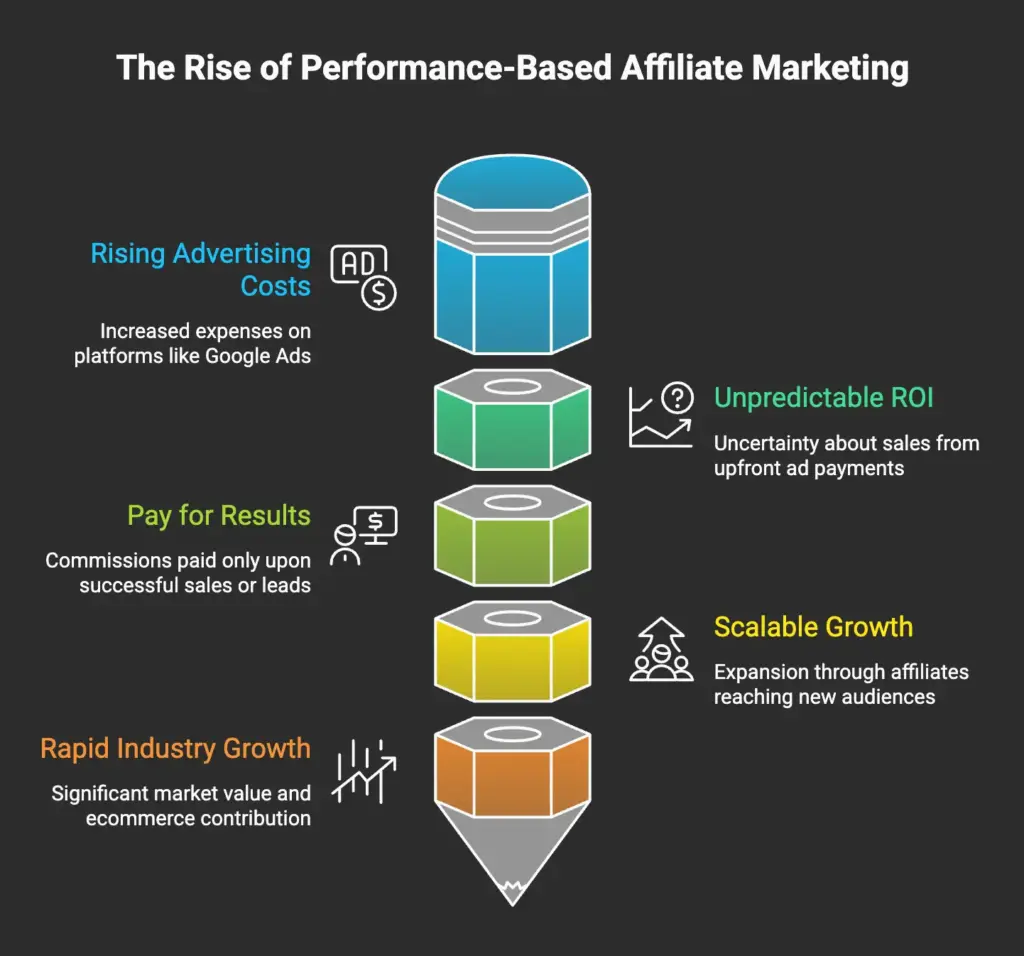
Here are the main reasons businesses are making the switch:
- Rising advertising costs: Platforms like Google Ads and social media are getting more expensive, increasing customer acquisition costs.
- Unpredictable ROI from ads: Businesses often pay upfront for clicks or impressions without knowing if those visits will turn into sales.
- Pay only for real results: With affiliate marketing, companies pay commissions only when a sale or lead actually happens.
- Scalable growth through partners: Affiliates promote products to their own audiences, helping businesses reach new customers.
- Rapid industry growth: The affiliate marketing industry is worth over $17 billion and drives around 16% of e-commerce sales worldwide.
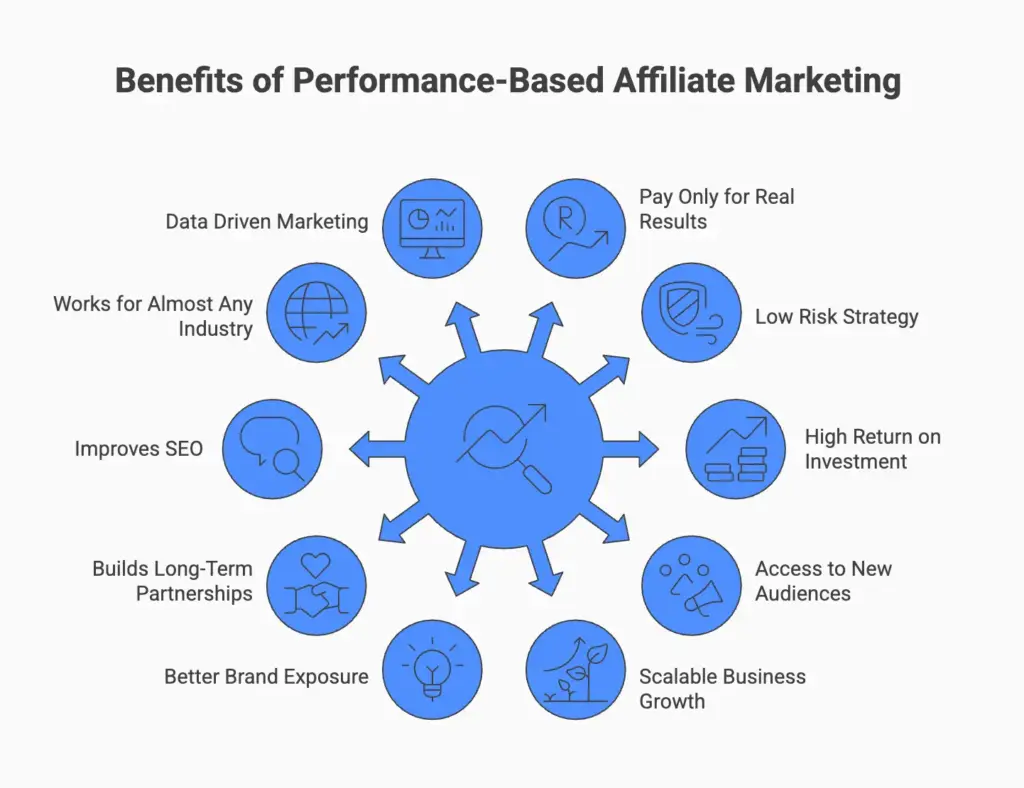
10 Benefits of Performance-Based Affiliate Marketing
Performance-based affiliate marketing has become one of the most powerful growth strategies for modern businesses. Instead of pouring money into ads and hoping for results, companies partner with affiliates and reward them only when real outcomes happen.
That simple shift makes a huge difference.
Let’s explore the biggest benefits that make this model so attractive for businesses today.
1. Pay Only for Real Results
One of the biggest advantages of performance-based affiliate marketing is simple. You only pay when a result happens.
There is no upfront ad spend and no paying for empty clicks that never convert.
In traditional advertising, you might spend hundreds or thousands of dollars just to get traffic. But traffic alone does not guarantee sales.
Affiliate marketing changes that.
You pay affiliates only after a successful action, such as:
- A product purchase
- A lead submission
- A free trial signup
That means every commission is tied directly to real value for your business.
It is marketing that focuses on outcomes instead of guesses.
2. Low Risk Marketing Strategy
Because you only pay after results, affiliate marketing is considered one of the lowest-risk marketing strategies available.
This makes it especially attractive for:
- Startups
- Small businesses
- New e-commerce stores
- SaaS founders launching a product
Instead of investing heavily in uncertain advertising campaigns, businesses can build partnerships with affiliates who promote their products.
If the affiliate generates sales, they earn commissions. If not, the business does not lose money.
That makes affiliate marketing budget-friendly and sustainable, even for companies with limited marketing budgets.
3. High Return on Investment
Affiliate marketing consistently ranks as one of the highest ROI marketing channels.
According to reports from Influencer Marketing Hub, businesses earn an average of $15 for every $1 spent on affiliate marketing. That is an impressive return compared to many other marketing channels.
Another report shows that affiliate marketing drives around 16 percent of global ecommerce sales, making it one of the top revenue-generating channels for online businesses.
Why is the ROI so strong?
Because affiliate marketing aligns incentives perfectly:
- Businesses want more sales
- Affiliates want more commissions
Both sides benefit from driving real conversions.
4. Access to New Audiences
Growing a business often means reaching new audiences. But building those audiences from scratch takes time.
Affiliates already have communities that trust them.
These audiences may include:
- Blog readers
- YouTube subscribers
- Social media followers
- Email newsletter subscribers
When affiliates promote a product, they introduce it to people who are already engaged in that niche.
For example:
A tech blogger might promote software tools.
A fitness influencer might promote health products.
This allows businesses to reach highly targeted audiences that they may not have access to otherwise.
5. Scalable Business Growth
Affiliate marketing is naturally scalable.
The more affiliates promoting your brand, the more opportunities you have to generate sales.
Think of each affiliate as a small marketing channel working on your behalf.
When your affiliate program grows:
- More content gets created
- More traffic flows to your website
- More customers discover your brand
Unlike paid ads that require constant budget increases, affiliate marketing can scale without dramatically increasing costs.
More partners simply means more growth potential.
6. Better Brand Exposure
Even when affiliate promotions do not immediately convert into sales, they still provide something valuable.
Brand exposure.
Affiliates create content that introduces your brand to new audiences through channels like:
- Blog articles and product reviews
- YouTube tutorials and comparisons
- Social media recommendations
- Email newsletters
Every piece of content helps increase awareness.
Over time, this repeated exposure builds trust and recognition. Customers may see your product multiple times before making a purchase.
Affiliate marketing quietly builds brand visibility across the internet.
7. Builds Long-Term Partnerships
The best affiliates do more than promote products once. They build long-term relationships with the brands they trust.
When affiliates see consistent results from promoting a product, they often become strong advocates for that brand.
They may:
- Create multiple reviews
- Recommend the product repeatedly
- Include it in comparison guides
- Share updates with their audience
These ongoing partnerships are extremely valuable because affiliates continue promoting your products long after the initial campaign.
In many cases, top affiliates become loyal brand ambassadors.
8. Improves SEO and Organic Visibility
Affiliate marketing can also help improve your website’s presence in search engines.
When affiliates create content about your products, they often link back to your website. These links act as backlinks, which are an important factor in search engine optimization.
Affiliate content can generate:
- Product reviews
- Comparison articles
- Tutorials
- Case studies
These pieces of content increase:
- Brand mentions
- Website visibility
- Referral traffic
Over time, this can strengthen your overall organic search presence and help new customers discover your brand.
9. Works for Almost Any Industry
Another advantage of affiliate marketing is its flexibility.
It works well across many different industries.
For example:
- SaaS companies: Software tools often offer recurring commissions for affiliates who bring new subscribers.
- E-commerce stores: Online stores use affiliates to promote physical products through reviews and recommendations
- Digital products: Creators selling ebooks, templates, or digital downloads frequently rely on affiliates to expand their reach.
- Online courses: Educators and course creators partner with influencers and bloggers who recommend learning platforms.
Because of this flexibility, affiliate marketing has become a popular strategy for businesses of all sizes.
10. Data Driven Marketing
Modern affiliate programs rely on powerful tracking tools that provide detailed insights into performance.
Businesses can track metrics such as:
- Number of clicks
- Conversion rates
- Sales generated by each affiliate
- Commission payouts
- Campaign performance
These insights help businesses understand which affiliates, products, and campaigns perform best.
With the right tracking system, companies can easily:
- reward top performing affiliates
- optimize commission structures
- improve marketing strategies
This makes affiliate marketing a data-driven and measurable growth channel, which is something every business needs.
Real World Examples of Performance-Based Affiliate Marketing
The easiest way to understand performance-based affiliate marketing is to see how businesses use it in the real world. Many major companies rely on this model to generate consistent sales through partners.
Here are a few common examples.
A. Amazon Associates
One of the most popular affiliate programs is Amazon Associates.
Bloggers, YouTubers, and website owners promote Amazon products using special affiliate links. When someone clicks the link and buys a product, the affiliate earns a commission.
For example, a tech blogger might publish an article like “Best Budget Laptops for Students.” If readers purchase a laptop through the affiliate link, the blogger earns a percentage of the sale. Amazon gains sales while affiliates earn commissions.
B. SaaS Affiliate Programs
Many software companies use affiliate marketing to attract new users.
Affiliates promote SaaS tools through blog reviews, tutorials, comparison articles, and productivity guides. When someone signs up through their referral link, the affiliate earns a commission.
Some SaaS companies even offer recurring commissions, meaning affiliates earn money every month while the customer keeps their subscription.
C. E-commerce Referral Programs
E-commerce brands also run affiliate or referral programs to encourage creators and customers to promote their products.
Affiliates share referral links or discount codes with their audience. When someone makes a purchase using that link, the affiliate earns a commission.
For example, a fitness influencer might recommend a protein brand to their followers and earn a commission for every sale generated.
How Affiliates Drive Sales
Affiliates usually promote products through helpful content, such as:
- product reviews
- tutorials
- comparison guides
- recommendation lists
This type of content builds trust with readers and helps them make informed buying decisions. As a result, affiliate marketing connects businesses with audiences through creators who already have credibility and influence.
Performance Marketing vs Affiliate Marketing
Many people use performance marketing and affiliate marketing interchangeably, but they are not exactly the same.
Affiliate marketing is actually one type of performance marketing. Both focus on paying for measurable results instead of paying for exposure.
The main difference is who promotes the product. Performance marketing can include channels like paid ads or influencer campaigns. Affiliate marketing specifically involves independent partners who promote products using tracking links and earn commissions for conversions.
Here is a quick comparison:
| Factor | Affiliate Marketing | Traditional Ads |
| Cost | Pay per sale or lead | Pay per click or impression |
| Risk | Low since payment happens after results | Higher since payment happens upfront |
| Scalability | High through affiliate partners | Medium and limited by ad budgets |
Unlike traditional advertising, affiliate marketing only costs money when real conversions happen, making it a more predictable and cost-efficient strategy.
When Should Businesses Use Performance-Based Affiliate Marketing
Performance-based affiliate marketing works for many types of online businesses. If you sell products or services online and want to grow without taking big marketing risks, this model can be a powerful channel.
Here are some businesses that benefit the most.
1. E-commerce Stores
E-commerce brands widely use affiliate marketing to increase product visibility and sales. Stores partner with bloggers, influencers, and review sites that recommend products to their audiences.
For example, a fashion blogger might promote clothing items while a tech reviewer recommends gadgets. When readers purchase through affiliate links, the affiliate earns a commission, and the store only pays for actual sales.
This makes it a cost-effective way for e-commerce brands to reach new customers.
2. WordPress Businesses
Companies that sell WordPress plugins, themes, or digital tools also benefit greatly from affiliate programs.
The WordPress community includes bloggers, developers, and educators who publish tutorials and resource lists. These creators often recommend tools they trust in articles such as:
- Best WordPress plugins for e-commerce
- Essential tools for growing a blog
- Must have plugins for small businesses
When readers buy through affiliate links, the creators earn commissions while the business gains targeted customers.
3. SaaS Companies
Software as a Service companies frequently use affiliate marketing to grow their user base.
Affiliates promote software through comparison articles, YouTube tutorials, and productivity blogs. They explain how the tool works and show real use cases.
Many SaaS programs offer recurring commissions. Affiliates continue earning as long as the customer keeps the subscription, which encourages consistent promotion.
4. Online Courses
Course creators and online education platforms also rely on affiliate marketing to expand their reach.
Bloggers, influencers, and industry experts recommend courses to their audiences. Since these creators already have trust with their followers, their recommendations often lead to strong conversions.
This makes affiliate marketing a powerful channel for selling educational content.
5. Digital Products
Digital products are another great fit for affiliate marketing. Examples include:
- ebooks
- templates
- design resources
- productivity tools
- digital downloads
Because digital products have low distribution costs, businesses can offer attractive commissions. This motivates affiliates to promote them through reviews, tutorials, and recommendation lists.
When the right affiliates promote the right products to the right audience, it creates a steady flow of traffic and recurring sales.
Bonus Tips for Running a Successful Affiliate Program
Launching an affiliate program is a great start. But success depends on how well you support and manage your affiliates. The best programs focus on strong relationships and giving affiliates the tools they need to promote effectively.
Here are a few practical tips.
1. Offer Competitive Commissions
Affiliates often promote several brands in the same niche. If your commission is too low, they may choose your competitors.
Research industry standards and offer fair commissions that motivate affiliates to promote your products. You can also boost engagement with incentives like higher commissions for top performers, limited-time bonuses, or recurring commissions for subscription products.
2. Provide Marketing Materials
Make promotion easy for your affiliates by providing ready-to-use resources. Helpful materials can include product images, banners, email templates, promotional graphics, and demo videos.
When affiliates have the right assets, they can create content faster and promote your products more effectively.
3. Track Performance Carefully
Reliable tracking is essential for a successful affiliate program. Use tracking tools to monitor clicks, conversions, affiliate-generated sales, and campaign performance.
These insights help you identify top-performing affiliates and improve your commission strategy over time.
4. Communicate With Your Affiliates
Do not treat affiliates like anonymous partners. Stay connected by sharing updates, promotions, and helpful guidance.
Regular communication keeps affiliates motivated and helps build long-term partnerships with people who genuinely support your brand.
Conclusion
Performance-based affiliate marketing offers a smarter way to grow a business. Instead of spending money upfront and hoping for results, companies only pay when real outcomes happen. This makes it a low-risk marketing strategy with strong ROI potential. At the same time, affiliate partnerships help businesses reach new audiences and scale growth through trusted recommendations.
As more companies look for reliable and cost-effective marketing channels, affiliate programs continue to gain popularity. If you want a performance-driven and scalable growth strategy, launching an affiliate program could be the next step for your business.



Leave a Reply