
Is Affiliate Marketing Legal & Ethical in 2026?

Let’s be honest. If you have ever looked into affiliate marketing, you probably wondered: “Is affiliate marketing actually legal, or is it some kind of scam?”
Many beginners assume it is shady or too good to be true.
But the reality is different.
Affiliate marketing is a multi-billion-dollar industry used by companies like Amazon and Shopify to reach new customers and grow their sales.
So why do people still question its legality and ethics?
The confusion usually comes from misleading practices and a lack of transparency.
In this guide, we will explain whether affiliate marketing is legal in 2026 and how to do it ethically and safely.
Key Takeaways: Affiliate Marketing Legal & Ethical Issues
- Affiliate marketing is legal in most countries. It is a widely used marketing model adopted by companies like Amazon and Shopify to drive sales through referrals.
- Regulations must be followed. Affiliates should comply with rules such as disclosure guidelines from the Federal Trade Commission and privacy regulations like the General Data Protection Regulation.
- Transparency is essential. Clearly disclosing affiliate relationships helps build trust and ensures readers understand when a recommendation may generate a commission.
- Ethical practices matter for long term success. Honest reviews, truthful claims, and promoting valuable products strengthen credibility with your audience.
- Avoid deceptive tactics. Practices like fake reviews, hidden affiliate links, or misleading promises can harm trust and may violate advertising or consumer protection laws.
- Choose trustworthy affiliate programs. Partnering with reputable brands and platforms helps maintain credibility and ensures you promote products that provide real value.
- Focus on long term audience trust. Affiliates who prioritize helpful content, honest recommendations, and genuine problem solving are more likely to build a sustainable and profitable affiliate business.
Is Affiliate Marketing Legal in 2026?
Short answer: Yes, affiliate marketing is legal in most countries.
But like many forms of online marketing, it comes with rules. If you follow the proper regulations and stay transparent with your audience, affiliate marketing is completely legitimate and widely accepted.
In fact, many global companies rely heavily on affiliate partnerships to grow their business. Platforms like Amazon and Shopify run large affiliate programs that generate billions in revenue each year.
So the issue is not legality. The real issue is compliance.
Affiliate marketers must follow advertising and consumer protection regulations designed to protect buyers from misleading promotions. Let’s look at the most important ones.
FTC Guidelines (United States)
If your audience includes users in the United States, you must follow rules set by the Federal Trade Commission (FTC).
The FTC requires affiliates to clearly disclose when they earn a commission from a recommendation. This means readers should immediately know that you may earn money if they click your link and make a purchase.
A simple disclosure often looks like this:
“This post contains affiliate links. If you purchase through these links, I may earn a small commission at no extra cost to you.”
The key idea here is transparency. Hidden affiliate links or misleading promotions can violate FTC rules.
GDPR Rules (European Union)
If you have visitors from Europe, your site must also respect the General Data Protection Regulation (GDPR).
GDPR focuses on data privacy and user consent. Since many affiliate links rely on tracking cookies to attribute sales, websites must inform visitors that cookies are being used.
This usually means adding:
- A cookie consent banner
- A clear privacy policy
- Information about tracking technologies
Failing to follow these rules can lead to heavy penalties for businesses operating in the EU.
Advertising Standards
Affiliate marketing is also governed by general advertising laws in many countries.
The core principle is simple: do not mislead your audience.
That means you should avoid:
- False product claims
- Fake reviews
- Exaggerated promises
- Hidden sponsored content
Honest promotion builds trust and keeps your marketing compliant with advertising standards.
Consumer Protection Laws
Most countries also have consumer protection laws that apply to online promotions.
These laws ensure that consumers receive accurate information before making a purchase. Affiliates must avoid deceptive tactics such as fake scarcity, misleading pricing, or pretending to be an official brand representative.
When done properly, affiliate marketing benefits everyone involved. Businesses gain customers, affiliates earn commissions, and consumers discover useful products.
The key is simple. Stay transparent, follow the rules, and promote products responsibly.
Ever thought if affiliate marketing is still worth it or not?
Key Laws That Govern Affiliate Marketing
Affiliate marketing is legal, but it is not a free-for-all. There are several laws and regulations that marketers must follow to keep promotions fair, transparent, and safe for consumers.
These rules mainly focus on honesty, transparency, and data protection. If you follow them properly, you can run an affiliate business without legal issues.
Let’s look at the most important ones.
1. FTC Disclosure Rules
One of the most important regulations comes from the Federal Trade Commission in the United States.
The FTC requires affiliates to clearly disclose when they earn a commission from a recommendation. In simple terms, readers must know that you may get paid if they click your affiliate link and buy something.
This disclosure should be easy to notice and written in simple language. It should appear before or near the affiliate link, not hidden at the bottom of a page.
A common example looks like this:
“This post contains affiliate links. If you buy through these links, I may earn a commission at no extra cost to you.”
This rule exists to protect consumers. When people know there is a financial relationship, they can evaluate recommendations more fairly.
Many websites, bloggers, and creators follow these rules when promoting products from companies like Amazon or other affiliate programs.
2. GDPR and Data Privacy
If your audience includes visitors from Europe, you also need to comply with the General Data Protection Regulation, commonly known as GDPR.
GDPR focuses on how websites collect, store, and use personal data. Since many affiliate links use tracking cookies to record referrals, website owners must inform users about this tracking.
To stay compliant, most affiliate websites include:
- A cookie consent banner
- A detailed privacy policy
- Clear information about tracking technologies
Visitors must also have the option to accept or reject tracking cookies.
Ignoring these requirements can lead to serious penalties, especially for businesses operating in the European Union.
3. Truth in Advertising Laws
Another important legal principle is truth in advertising.
Most countries enforce advertising laws that prohibit misleading or deceptive promotions. Affiliate marketers must make sure that product claims are accurate and honest.
For example, affiliates should avoid:
- Fake product reviews
- Exaggerated income promises
- Misleading product benefits
- Pretending to be the official brand
Instead, focus on sharing genuine experiences, honest opinions, and clear product information.
When affiliates follow these laws, everyone benefits. Consumers get reliable recommendations, businesses gain real customers, and affiliates build long-term trust with their audience.
Is Affiliate Marketing Ethical?
This is where things get interesting.
Affiliate marketing itself is not unethical. In fact, it is simply a referral system. A business rewards someone for recommending a product that leads to a sale. That idea has existed for decades.
But like any marketing method, problems appear when people try to cut corners or mislead their audience.
Ethics in affiliate marketing comes down to one simple principle: honesty with your audience. When affiliates promote products transparently and provide real value, the system works well for everyone involved.
Let’s look at what ethical affiliate marketing actually looks like.
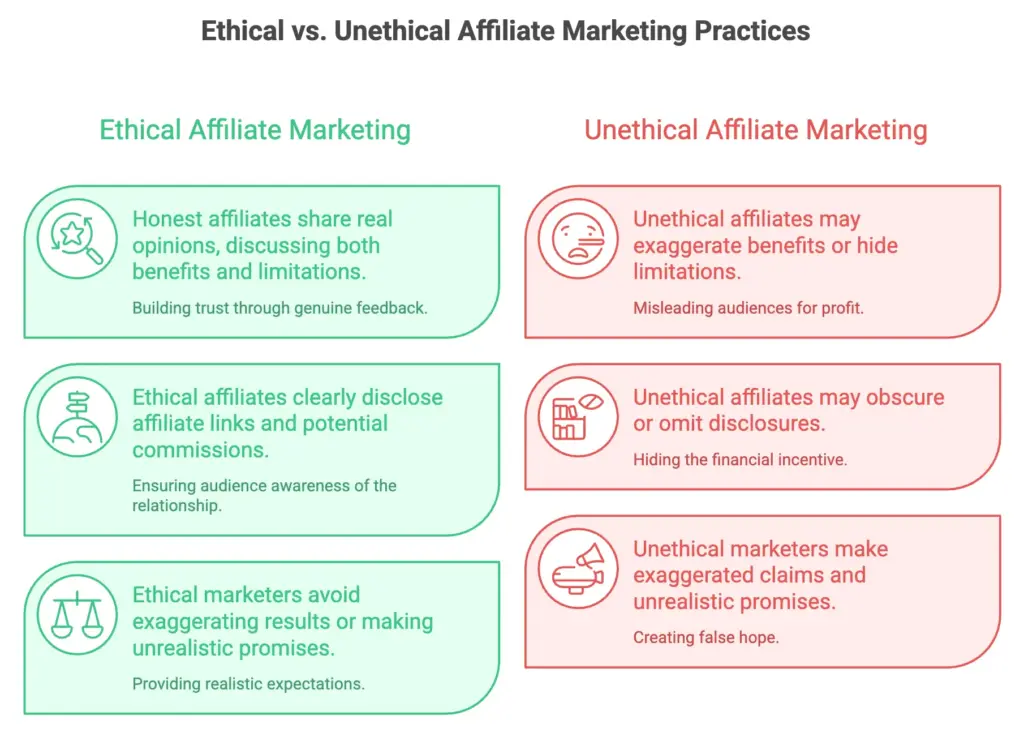
A. Ethical Affiliate Marketing Includes
Ethical affiliates focus on building trust with their audience. They recommend products responsibly and make sure readers understand the relationship behind the promotion.
Here are some practices that define ethical affiliate marketing:
- Honest Reviews
Ethical affiliates share real opinions about the products they recommend. Instead of blindly praising everything, they discuss both the benefits and limitations of a product. This helps readers make informed decisions.
- Clear Disclosures
Transparency is essential. Affiliates should clearly tell readers when a link is an affiliate link and when they may earn a commission. Following guidelines from organizations like the Federal Trade Commission helps ensure readers understand the relationship.
- No Misleading Claims
Ethical marketers avoid exaggerating results or making unrealistic promises. If a product has limitations, those should be mentioned honestly.
- Promoting Useful Products
Responsible affiliates recommend products that genuinely solve problems for their audience. Instead of promoting random offers just for commission, they focus on tools and services that deliver real value.
When affiliates follow these principles, they create long-term credibility and loyal audiences.
B. Unethical Practices to Avoid
Unfortunately, some marketers prioritize quick profits over honesty. These practices damage the reputation of affiliate marketing and create distrust among consumers.
Here are a few unethical practices that should always be avoided:
- Fake Reviews
Some affiliates publish glowing reviews without ever testing the product. Others copy reviews from different websites. This misleads readers and undermines trust.
- Hidden Affiliate Links
Trying to hide affiliate links or disguising them as regular links is deceptive. Readers deserve to know when a recommendation may generate a commission.
- Spam Promotions
Flooding social media, forums, or email inboxes with affiliate links can annoy users and violate platform rules.
- False Promises
Claims like “guaranteed income” or “instant success” are common in shady promotions. Ethical affiliates avoid these tactics and focus on realistic expectations.
In the long run, ethical affiliate marketing always wins. When audiences trust your recommendations, they are far more likely to return, engage with your content, and follow your future suggestions.
Common Affiliate Marketing Scams to Avoid
Affiliate marketing itself is legitimate. But unfortunately, the industry has also attracted people who try to exploit beginners or manipulate the system for quick profits.
Let’s look at some of the most common affiliate marketing scams you should watch out for.
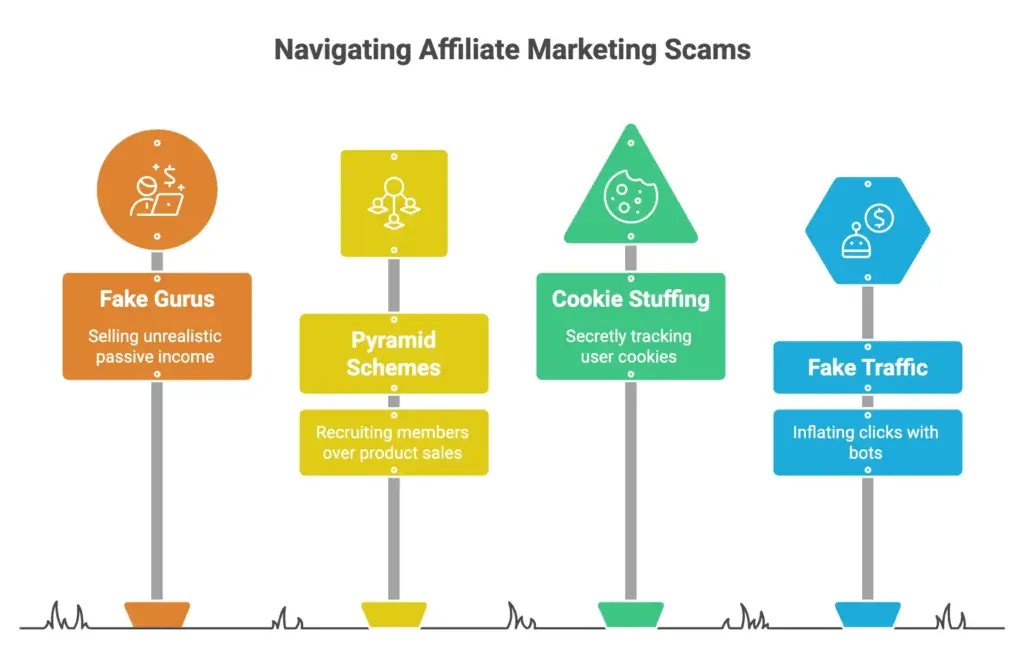
1. Fake Gurus Selling Expensive Courses
One of the most common scams involves so-called “affiliate marketing gurus.”
These individuals promise unrealistic results like “Make $10,000 in your first month” or “Passive income with zero effort.” Then they sell expensive courses that claim to reveal secret strategies.
The truth is that affiliate marketing takes time, effort, and real marketing skills. There are no magic shortcuts.
While education can be valuable, many of these programs focus more on selling the dream than teaching practical skills. Beginners who fall for these promises often lose money and become skeptical of the entire industry.
2. Pyramid Style Schemes
Another dangerous trap is pyramid-style programs disguised as affiliate marketing.
In a legitimate affiliate program, you earn commissions by promoting real products or services. However, in pyramid schemes, the main focus is on recruiting new members rather than selling actual products.
These schemes often collapse quickly because the model is unsustainable. Most participants lose money, while only a few people at the top profit.
This is why regulators like the Federal Trade Commission closely monitor programs that resemble pyramid structures.
3. Cookie Stuffing
Cookie stuffing is a deceptive tactic where affiliates secretly place tracking cookies on a user’s browser without their knowledge.
This means that even if the affiliate did not actually refer the customer, they might still receive credit for the sale.
Some unethical marketers use hidden scripts, pop-ups, or invisible links to trigger these cookies. This practice is considered fraud and violates the terms of most affiliate networks.
Businesses lose revenue, and honest affiliates lose commissions they rightfully earned.
4. Fake Traffic
Another common issue is fake or low-quality traffic.
Some affiliates try to inflate clicks using bots, click farms, or automated software. This traffic looks like real visitors, but never converts into real customers.
For businesses running affiliate programs, this leads to wasted marketing budgets and inaccurate performance data.
Most modern affiliate platforms now use advanced fraud detection to identify suspicious traffic patterns and prevent abuse.
Also read: 12 Misconceptions About Affiliate Marketing [Debunked]
Why These Practices Damage Trust
These scams create a ripple effect across the entire affiliate ecosystem.
When consumers encounter fake reviews, spam promotions, or misleading income claims, they start to doubt affiliate recommendations altogether. Businesses also become more cautious about launching affiliate programs.
In contrast, ethical affiliates focus on transparency, honest recommendations, and genuine value. Over time, this approach builds credibility and long-term success.
How to Do Affiliate Marketing Legally (Step by Step)
Running an affiliate business legally is not complicated. Most rules simply focus on honesty, transparency, and responsible marketing.
If you follow a few basic practices, you can promote affiliate products confidently without worrying about legal issues. Here are the key steps every affiliate marketer should follow.
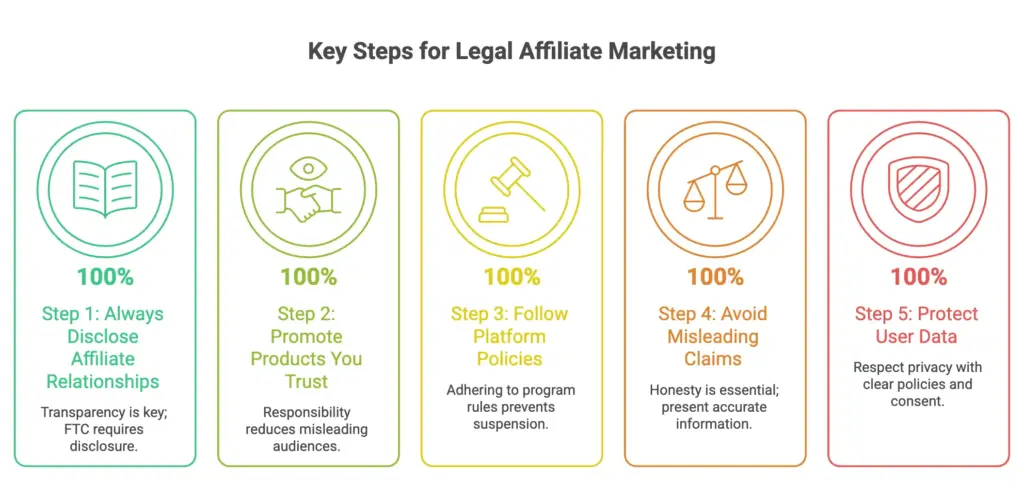
Step 1: Always Disclose Affiliate Relationships
Transparency is one of the most important rules in affiliate marketing.
If you earn a commission from a product recommendation, your audience must know about it. Regulations from the Federal Trade Commission require affiliates to clearly disclose their financial relationship with brands.
Your disclosure should be simple and easy to understand. For example:
“This article contains affiliate links. If you purchase through these links, I may earn a commission at no extra cost to you.”
Place this disclosure near the beginning of your content or before affiliate links, so readers can see it immediately.
Clear disclosure builds trust and keeps your promotions compliant with advertising regulations.
Step 2: Promote Products You Trust
Legal compliance is not just about rules. It is also about responsibility.
Promoting products you genuinely believe in reduces the risk of misleading your audience. If you recommend low-quality or questionable products just to earn commissions, it can damage your credibility.
Whenever possible:
- Test the product yourself
- Research customer reviews
- Understand the product’s strengths and limitations
Authentic recommendations create stronger relationships with your audience and lead to better long-term results.
Step 3: Follow Platform Policies
Most affiliate programs have their own policies that affiliates must follow.
For example, companies like Amazon provide detailed guidelines for their affiliate partners. These rules explain where affiliate links can be placed, how they should be used, and which promotional methods are allowed.
Common restrictions may include:
- Not using affiliate links in certain advertisements
- Avoiding misleading product claims
- Following brand guidelines when using logos or images
Breaking these rules can lead to account suspension or loss of commissions. Always review the terms of the affiliate program before promoting its products.
Step 4: Avoid Misleading Claims
Honesty is essential in marketing.
Avoid making exaggerated promises such as guaranteed results, unrealistic income claims, or misleading product benefits. Advertising laws in many countries require marketers to present accurate and truthful information.
Instead of hype, focus on clear explanations and real experiences. If a product has limitations, mentioning them can actually increase credibility.
Readers appreciate honest reviews far more than exaggerated marketing language.
Step 5: Protect User Data
Many affiliate websites use tracking technologies such as cookies to record referrals. Because of this, affiliates must respect user privacy and data protection rules.
Regulations like the General Data Protection Regulation require websites to inform users about data collection and tracking practices.
To stay compliant, your website should include:
- A clear privacy policy
- Cookie consent notifications
- Information about how user data is handled
Protecting user data is not just a legal requirement. It also shows your audience that you respect their privacy and value their trust.
New to affiliate marketing? Here’s complete startar guide for you!
Ethical Affiliate Marketing Best Practices
Legal compliance keeps you safe, but ethical practices help you succeed in the long run. The most successful affiliates are not the ones chasing quick commissions. They are the ones who build trust with their audience.
When readers believe your recommendations are honest and helpful, they are far more likely to return to your content and follow your advice.
Here are some best practices that help affiliates build credibility and maintain ethical standards.
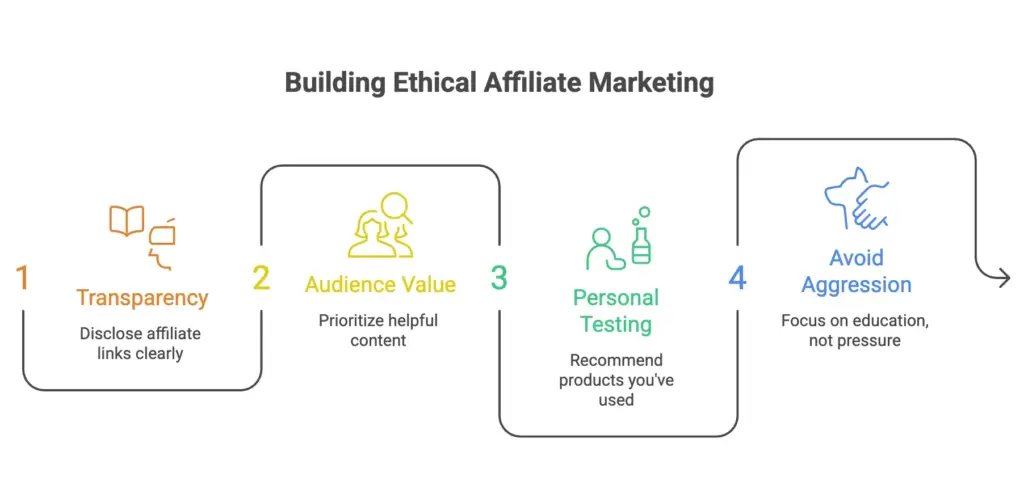
1. Transparency Builds Trust
Transparency is the foundation of ethical affiliate marketing.
Your audience should always know when a recommendation includes an affiliate link. Clear disclosures show that you are honest about your relationship with brands and not trying to hide anything.
Following disclosure guidelines from organizations like the Federal Trade Commission also protects you legally.
But beyond legal compliance, transparency strengthens your relationship with readers. When people know you are open about how you earn money, they tend to trust your content more.
2. Focus on Audience Value
Ethical affiliates prioritize helping their audience solve problems rather than pushing products for quick commissions.
Before recommending any product, ask yourself a simple question:
Will this actually help my readers?
If the answer is yes, your recommendation will feel natural and useful. If not, promoting it just for the commission can hurt your credibility.
Great affiliate content often focuses on:
- Educational guides
- Honest comparisons
- Helpful tutorials
- Real-world use cases
This type of content builds long-term authority and attracts loyal readers.
3. Recommend Products You Personally Tested
Whenever possible, recommend products you have actually used.
Personal experience allows you to provide authentic insights that generic reviews cannot match. You can explain how the product works, what problems it solves, and where it may fall short.
Readers appreciate this kind of honesty.
For example, many bloggers who review ecommerce tools often test platforms like Shopify themselves before recommending them. This helps them create more trustworthy reviews and tutorials.
Even if you cannot test every product, thorough research and real customer feedback can still help you provide balanced recommendations.
4. Avoid Aggressive Sales Tactics
Aggressive marketing can damage trust quickly.
Techniques such as constant pop-ups, exaggerated claims, or pressure-driven messaging might generate short-term clicks, but they rarely build long-term relationships with readers.
Instead of pushing people to buy immediately, focus on educating them and helping them make informed decisions.
A helpful article that genuinely solves a problem will naturally lead to conversions without forcing the sale. Over time, this approach creates a loyal audience that values your recommendations.
The Future of Ethical Affiliate Marketing
Affiliate marketing is evolving as technology and regulations change. In the coming years, the industry will focus more on transparency, smarter tracking, and audience trust.
- AI-Driven Affiliate Tracking: Artificial intelligence is improving how affiliate programs track performance. AI tools can detect fraud, identify fake traffic, and analyze user behavior to help businesses and affiliates make better decisions.
- Increased Regulations: Regulators like the Federal Trade Commission are tightening rules around disclosures and online promotions. Privacy laws such as the General Data Protection Regulation are also shaping how websites handle user data.
- Transparency Becoming Mandatory: Clear disclosures and honest promotions are becoming industry standards. Consumers expect transparency when content includes affiliate links.
- Trust-Based Marketing: The future of affiliate marketing will rely heavily on trust. Affiliates who focus on helpful content, honest reviews, and real value will build stronger relationships with their audience and achieve long-term success.
Read More: 25 Affiliate Marketing Trends [Latest Strategies & Statistics]
Final Notes
Affiliate marketing is legal and widely used by major companies like Amazon and Shopify. The key is following the rules and being honest with your audience.
When you disclose affiliate links, share truthful recommendations, and respect user privacy, affiliate marketing becomes a trustworthy and sustainable business model.
If you want long-term success, focus on helping your audience first and earning commissions second. Stay transparent, promote valuable products, and you can build a profitable affiliate business the right way.






Leave a Reply