

Affiliate Marketing vs Referral Marketing Explained

Ever tried to grow your business without spending a fortune on ads? Most business owners start looking for cost-effective marketing channels and quickly stumble upon two popular strategies: affiliate marketing and referral marketing.
At first glance, they sound almost the same. Both rely on people promoting your product and earning rewards. But here is the catch. They work in very different ways.
Many beginners mix them up and end up choosing the wrong strategy for their growth stage.
In this guide, we will break down affiliate marketing vs referral marketing, explain how each works, and help you decide which one fits your business best.
Key Takeaways: Affiliate Marketing vs Referral Marketing
- Affiliate marketing uses external partners such as bloggers, influencers, and publishers to promote products and earn commissions.
- Referral marketing relies on existing customers recommending products to friends and receiving rewards.
- Affiliate marketing is ideal for reaching new audiences and scaling traffic quickly.
- Referral marketing works best for building trust, loyalty, and word of mouth growth.
- Affiliates usually earn commission per sale, while referral programs often offer discounts, credits, or rewards for both parties.
- Affiliate marketing can deliver large reach, while referral marketing usually provides higher conversion rates due to trust.
- Businesses often get the best results by combining both strategies. Affiliates bring new customers, and referral programs turn those customers into advocates.
- Using the right affiliate management tools can help businesses track performance, manage partners, and scale their affiliate programs more effectively.
What Is Affiliate Marketing?
Let’s keep this simple.
Affiliate marketing is a system where individuals or partners promote a company’s product and earn a commission when their promotion leads to a sale or desired action.
Think of it like this.
Someone recommends a product to their audience. If people buy through their unique link, they get rewarded.
Simple. Fair. Performance driven.
If you want a deeper explanation, strategies, and how the model is evolving, check out our full guide on “What is affiliate marketing and what it means in 2026.”
How Affiliate Marketing Works
Most affiliate programs follow a straightforward process.
- A business creates an affiliate program: The company sets commission rules and invites affiliates to join.
- Affiliates promote the product: They share the product through blogs, videos, social media, or email.
- Tracking happens through unique links or cookies: Every affiliate gets a special link that tracks clicks and sales.
- The affiliate earns a commission: When a purchase happens through that link, the affiliate gets paid.
This model makes it attractive for both sides. Businesses get new customers. Affiliates earn income.
Read in-deatil: How Affiliate Marketing Works (Ultimate Clarity Guide)
Common Affiliate Marketing Channels
Affiliates promote products through many types of platforms, including:
- Bloggers writing product reviews or tutorials
- Influencers sharing products on social media
- Niche websites focused on specific industries
- Email marketers recommending tools to subscribers
- YouTube creators making product reviews or walkthroughs
Each channel reaches a different audience, which is why affiliate marketing can scale quickly.
Real Example of Affiliate Marketing
Imagine a WordPress blogger who writes about ecommerce tools.
They publish a guide like “Best Plugins for Online Stores.” Inside the article, they recommend a tool and include their affiliate link.
A reader clicks the link, signs up, and purchases the product.
Because the sale came through that tracked link, the blogger earns a commission from the company.
This win-win system is exactly why affiliate marketing has become a multi-billion-dollar industry today.
Want to kick-start in affiliate marketing? Here’s an A to Z guide for you beginners like you!
What Is Referral Marketing?
Referral marketing is often simpler and more personal than affiliate marketing. Instead of outside partners promoting your product, your own customers spread the word.
Think about the last time a friend recommended a tool, app, or online store to you. Chances are, you trusted that suggestion more than a random advertisement. That trust is exactly what referral marketing taps into.
Brands encourage happy customers to invite their friends and reward both sides when a purchase happens.
Simple Definition
Referral marketing is a strategy where existing customers recommend a product to their friends or network and receive rewards when those referrals turn into customers.
In short, it turns satisfied customers into brand advocates.
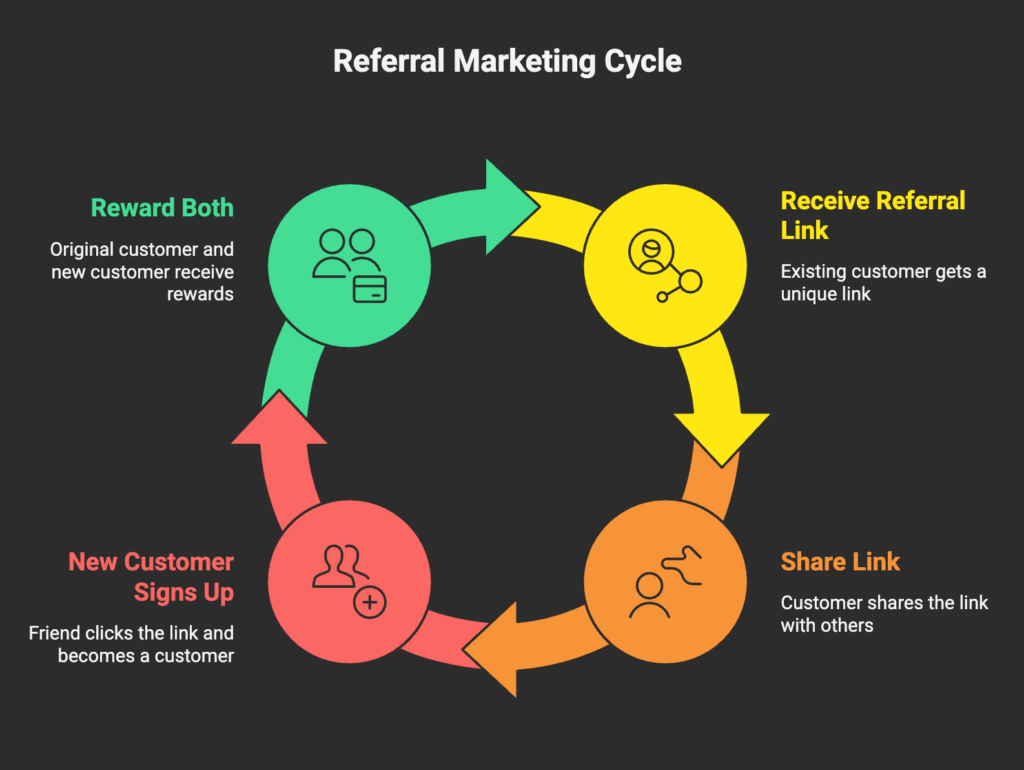
How Referral Marketing Works
Most referral programs follow a simple process.
- An existing customer receives a referral link or code: After purchasing or signing up, the customer gets a unique referral link they can share.
- The customer shares it with friends or colleagues: This often happens through social media, WhatsApp, email, or direct conversations.
- A friend signs up or makes a purchase: The friend clicks the referral link and becomes a new customer.
- Both people receive a reward: The original customer gets a reward for the referral, and the new customer usually receives a welcome incentive.
This system creates a win-win situation.
The customer gets rewarded, the friend gets a benefit, and the business gains a new customer.
Common Referral Incentives
To encourage customers to share referrals, companies offer rewards such as:
- Discounts on the next purchase
- Store credit for future orders
- Cash rewards or gift cards
- Free products or service upgrades
The reward does not always have to be large. Even small incentives can motivate customers if the product already delivers value.
Real Example of Referral Marketing
Let’s imagine a simple ecommerce scenario.
You purchase from an online skincare store and receive an email after checkout:
“Invite your friends and both of you get rewards.”
Here is how the program works:
- You receive a personal referral link.
- If your friend uses that link to buy, your friend gets 15% off their first order.
- After the purchase, you receive $10 store credit for the referral.
Because the recommendation comes from someone the new customer already trusts, they are far more likely to try the product.
This is why many fast-growing companies use referral marketing to scale. Brands like Dropbox, Uber, and Airbnb have used referral programs to acquire millions of users through simple word of mouth.
Affiliate Marketing vs Referral Marketing (Key Differences)
At first glance, affiliate marketing and referral marketing look very similar. In both strategies, someone promotes your product and earns a reward when a sale happens.
But the people promoting the product, the audience relationship, and the growth potential are quite different.
Let’s break down the key differences side by side.
| Factor | Affiliate Marketing | Referral Marketing |
| Who Promotes the Product | External partners such as bloggers, influencers, publishers, and marketers | Existing customers who already use and trust the product |
| Audience Relationship | Affiliates promote to their audience or followers, who may not know the brand | Customers recommend the product to friends, family, or colleagues they personally know |
| Reward Type | Usually a commission per sale or lead, often a percentage of the purchase | Often discounts, store credit, or rewards for both the referrer and the new customer |
| Marketing Reach | Potentially very large reach because affiliates may have large audiences or websites | Usually smaller but more trusted reach because referrals happen within personal networks |
| Tracking System | Uses affiliate tracking links, cookies, and affiliate software to track clicks and sales | Uses referral links or codes connected to customer accounts |
| Business Use Cases | Ideal for scaling traffic, reaching new markets, and partnering with creators or publishers | Ideal for improving customer loyalty and encouraging word of mouth growth |
The Core Difference
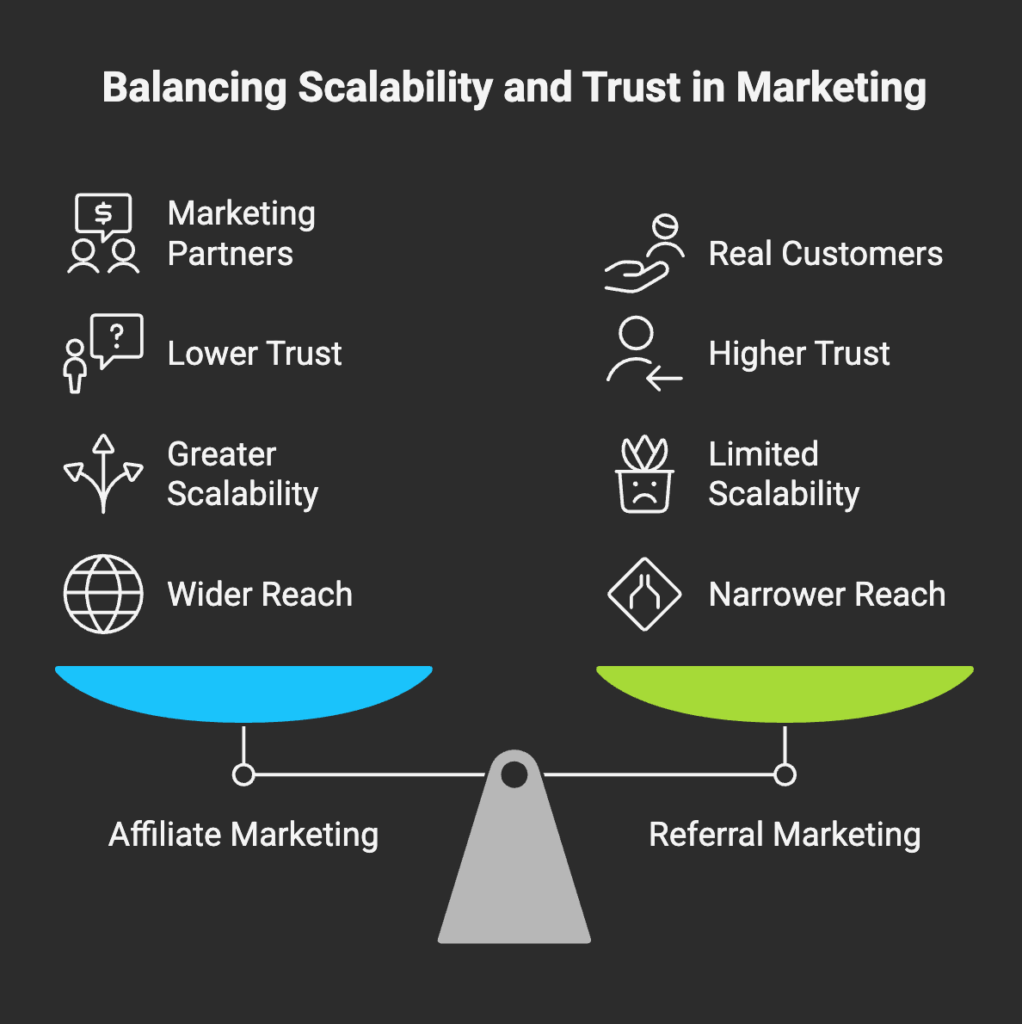
The biggest difference comes down to who is promoting the product.
In affiliate marketing, the promoters are marketing partners who may or may not have used the product themselves.
In referral marketing, the promoters are real customers who already have experience with the product.
Because of that, referral marketing usually benefits from higher trust, while affiliate marketing offers greater scalability and reach.
In many cases, businesses actually combine both strategies to create a powerful growth engine. Affiliates bring new traffic, and referral programs turn satisfied customers into advocates.
Pros and Cons of Affiliate Marketing
Affiliate marketing can be a powerful growth channel, but it comes with both advantages and challenges.
Pros
Here are some of the advantages come with affiliate marketing:
- Large marketing reach
Affiliates promote your product across blogs, social media, YouTube, and email lists, helping you reach wider audiences. - Scalable traffic source
As you add more affiliates, your promotional network grows and brings more potential customers. - Performance-based payouts
Businesses usually pay affiliates only when a sale or lead happens, which reduces marketing risk. - Access to niche audiences
Many affiliates operate in specific industries, helping you reach highly targeted customers.
Cons
Here are some of the constrains come with affiliate marketing:
- Requires management
Businesses need to recruit affiliates, monitor performance, and manage commissions. - Risk of fraud
Some affiliates may attempt spam or fake traffic, which requires proper tracking and monitoring. - Commission costs
Paying commissions on every sale can reduce profit margins if the rates are too high.
Pros and Cons of Referral Marketing
Referral marketing relies on happy customers recommending your product to people they know. This creates strong trust but also comes with limitations.
Pros
Here are some of the advantages come with referral marketing:
- High trust level
Recommendations from friends or colleagues are far more trusted than traditional ads. - Higher conversion rates
Because referrals come from trusted sources, new customers are more likely to make a purchase. - Low marketing cost
Businesses typically reward customers only when a successful referral happens. - Strong customer loyalty
Referral programs encourage customers to stay engaged and advocate for the brand.
Cons
Here are some of the shortcomings of affiliate marketing:
- Limited reach
Referrals usually spread within personal networks, which may limit growth compared to affiliates. - Depends on existing customers
Without a strong customer base, referral programs may struggle to generate results. - Slower scaling
Referral marketing often grows gradually because it relies on word-of-mouth sharing.
When Should Businesses Use Affiliate Marketing?
Affiliate marketing is ideal when businesses want to reach new audiences and grow faster. Since affiliates already have their own platforms and followers, they can introduce your product to people who may not know your brand yet.
Here are some common situations where affiliate marketing works best.
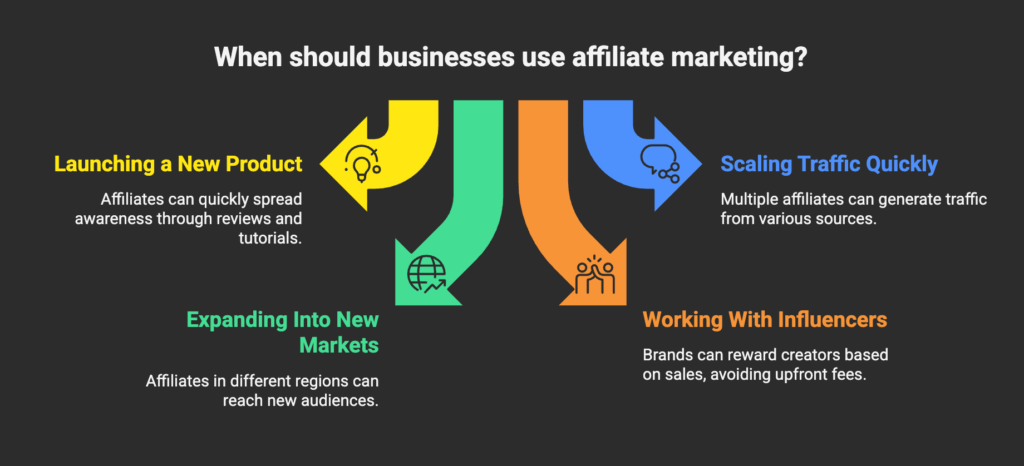
A. Launching a New Product
Affiliates like bloggers, reviewers, and YouTubers can quickly spread awareness about a new product through reviews, tutorials, and comparisons.
B. Scaling Traffic Quickly
By partnering with multiple affiliates, businesses can generate traffic from many sources at once such as blogs, social media, and email lists.
C. Expanding Into New Markets
Affiliates in different industries or regions help brands reach audiences that traditional ads may not easily reach.
D. Working With Influencers or Bloggers
Instead of paying upfront sponsorship fees, brands can reward creators only when their promotion generates sales.

Launch Your Own Affiliate Program!
When Should Businesses Use Referral Marketing?
Referral marketing works best when businesses already have satisfied customers who trust the product. These customers can naturally recommend the product to people they know.
Here are some situations where referral marketing is most effective.
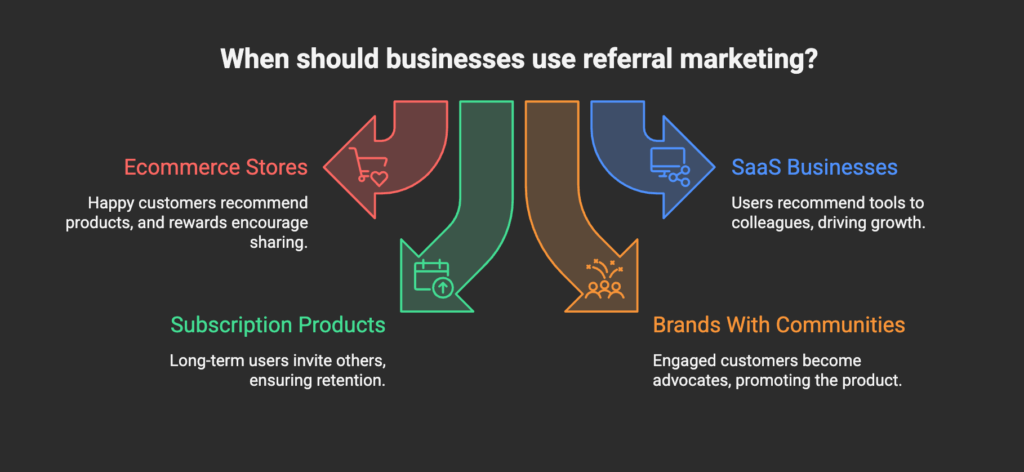
A. Ecommerce Stores With Loyal Customers
Happy customers often recommend products to friends. Referral rewards simply encourage them to share more.
B. SaaS Businesses
Users frequently recommend useful tools to colleagues or teammates, making referrals a strong growth channel.
C. Subscription Products
Services like apps, memberships, and software subscriptions benefit from referrals because long-term users often invite others.
D. Brands With Strong Communities
Brands with engaged communities can turn loyal customers into advocates who actively promote the product.
Can Businesses Use Both Together?
Yes. In fact, many successful companies combine affiliate marketing and referral marketing to build a stronger growth engine.
Think of it this way. Affiliate marketing helps you bring new people into your ecosystem, while referral marketing helps you turn happy customers into promoters.
This hybrid strategy allows businesses to grow both externally and internally.
Here is a simple way the system usually works.
1. Affiliates Bring New Traffic
Affiliates such as bloggers, influencers, and niche publishers introduce your product to new audiences. Their content, reviews, and tutorials attract potential customers who may have never heard about your brand.
2. Referral Programs Turn Customers Into Advocates
Once those new users become satisfied customers, referral programs encourage them to invite friends. This creates a cycle where customers help generate even more customers.
Real World Growth Example
Many SaaS and ecommerce companies use this combined strategy.
For example, a SaaS company may partner with tech bloggers and YouTubers as affiliates to drive new signups. After users start using the product, the company introduces a referral program that rewards users for inviting coworkers or friends.
Ecommerce brands often follow a similar model. Influencers and affiliates bring in first-time buyers, while referral rewards encourage those buyers to recommend the store to their friends.
The result is a powerful loop:
Affiliates attract new customers → customers love the product → customers refer more people.
When both systems work together, businesses create a sustainable and scalable growth strategy.
Affiliate vs Referral Marketing: Which One Is Better?
The honest answer? It depends.
Both affiliate marketing and referral marketing can drive growth. The better option usually depends on your business goals, growth stage, and available resources.
Instead of choosing one blindly, it helps to look at your situation first.
1. Your Business Goals
Ask yourself what you want most right now.
- If your goal is getting new customers quickly, affiliate marketing usually works better because affiliates promote your product to large audiences.
- If your goal is building trust and loyalty, referral marketing often performs better since recommendations come from real customers.
2. Your Growth Stage
Your business stage also matters.
- New businesses often benefit from affiliate marketing because it helps them reach new audiences faster.
- Established brands with happy customers can unlock powerful growth through referral programs.
3. Your Audience Size
Referral marketing relies heavily on existing users.
- If you already have a strong customer base, referrals can generate steady word-of-mouth growth.
- If your audience is still small, affiliates can help bring in the initial traffic.
4. Your Marketing Resources
Affiliate programs usually require more management, including recruiting partners and monitoring performance.
Referral programs are typically simpler to run but depend on customers actively sharing your product.
A Simple Decision Framework
You can use this quick guide:
- Need fast customer acquisition? → Affiliate marketing
- Have loyal customers already? → Referral marketing
- Want long-term scalable growth? → Combine both strategies
For many businesses, the smartest move is not choosing one over the other. Instead, they start with affiliates to attract new users and then use referrals to turn those users into advocates.
That combination creates a growth loop that keeps bringing in new customers over time.
Final Thoughts
Affiliate marketing and referral marketing may look similar, but they serve different purposes. Affiliate marketing helps businesses reach new audiences through partners, while referral marketing turns happy customers into brand advocates.
The best strategy often depends on your goals, growth stage, and customer base.
If possible, test both. Affiliates can bring in new traffic, and referral programs can turn those customers into loyal promoters.
When combined, they create a powerful growth loop for your business. And if you plan to launch an affiliate program, exploring the right affiliate management tools can make the process much easier and more scalable.






Leave a Reply