

Affiliate Marketing vs Influencer Marketing: Which One Is Better for Your Business?
Choosing the right marketing strategy can feel confusing, especially when affiliate marketing and influencer marketing look so similar on the surface.
Both rely on partnerships. Both promote products.
But the way they generate results and revenue is very different. Pick the wrong one, and you might waste budget. Pick the right one, and you can unlock a powerful growth channel.
In this guide, we will break down affiliate marketing vs influencer marketing so you can decide which strategy fits your business best.
Key Takeaways: Affiliate Marketing vs Influencer Marketing
- Affiliate marketing is performance-based marketing. Businesses only pay affiliates when a sale or conversion happens, making it a low risk growth strategy.
- Influencer marketing focuses on brand visibility and audience trust. Influencers promote products to their followers through sponsored posts, reviews, or social media content.
- The biggest difference between affiliate marketing vs influencer marketing is the payment model. Affiliates earn commissions per sale, while influencers are often paid upfront for promotion.
- Affiliate marketing usually generates higher direct ROI because payments are tied to measurable conversions.
- Influencer marketing is powerful for brand awareness, product launches, and reaching new audiences quickly.
- Affiliate marketing is highly scalable for ecommerce and SaaS businesses because multiple affiliates can promote the same product simultaneously.
- Influencer marketing works best for visual and lifestyle products, such as fashion, beauty, fitness, and consumer gadgets.
- Many successful brands combine both strategies using influencer affiliate marketing, where influencers also earn commissions through referral links.
- A hybrid marketing strategy allows influencers to build awareness while affiliate links track conversions and generate revenue.
- For long term growth, businesses often use affiliate marketing for consistent sales and influencer marketing for brand exposure.
What Is Affiliate Marketing?
Affiliate marketing is a performance-based marketing strategy where businesses reward partners (called affiliates) for driving sales, leads, or traffic. Instead of paying for ads upfront, brands only pay when a specific action happens, such as a purchase or sign-up.
In simple terms, affiliates promote a product using a unique referral link. When someone clicks that link and completes a purchase, the affiliate earns a commission. Here’s how it actually works!
This model makes affiliate marketing attractive for businesses because it reduces risk and focuses on results. You only pay when the marketing actually works.
Read In-detail: What Is Affiliate Marketing? And What It Means in 2026
What Is Influencer Marketing?
Influencer marketing is a strategy where brands partner with content creators who have a loyal audience on social media. These creators promote products through posts, videos, reviews, or tutorials to influence their followers’ purchasing decisions.
Instead of paying only for sales like affiliate marketing, influencer marketing usually involves paid collaborations, free products, or sponsorship deals.
The power of influencer marketing comes from trust. Followers often view influencers as relatable experts. When an influencer recommends a product, their audience is more likely to check it out or buy it.
This approach has grown rapidly in recent years. In fact, the global influencer marketing industry is estimated to exceed $24 billion, showing how much brands value creator partnerships.
Let’s break down how influencer marketing works in practice.
How Influencer Marketing Works
Influencer marketing may look simple on the surface, but successful campaigns follow a clear process.
Here is how it typically works.
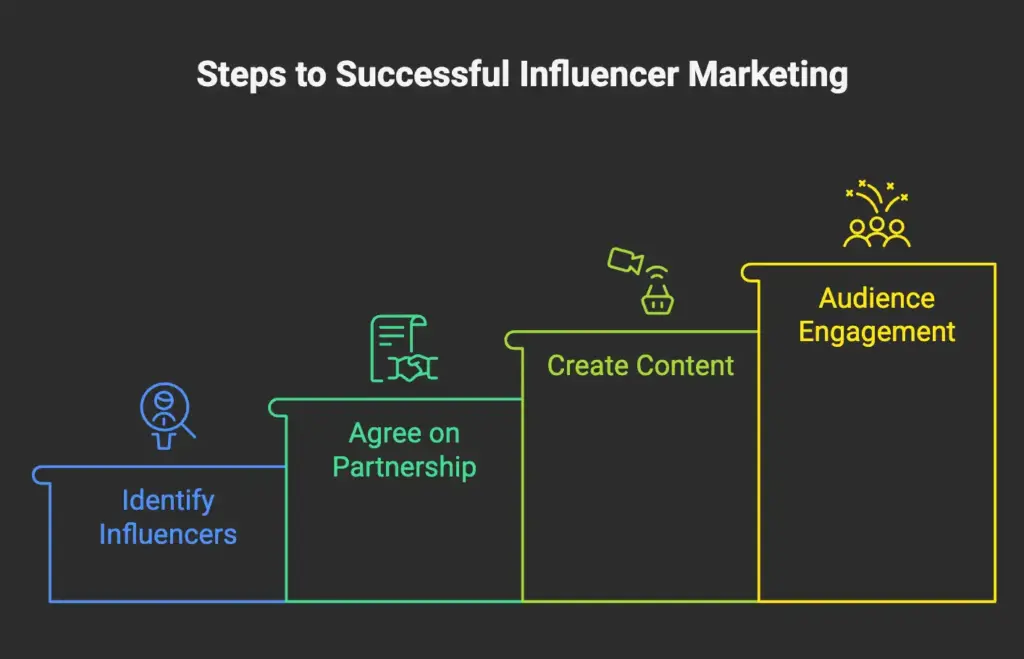
Step 1: A brand identifies the right influencers
Companies look for influencers whose audience matches their target customers. For example, a fitness brand might collaborate with workout coaches or lifestyle creators.
Brands usually evaluate:
- Audience demographics
- Engagement rate
- Content quality
- Niche relevance
Step 2: The brand and influencer agree on a partnership
The collaboration terms are decided. This may include:
- Sponsored posts
- Product reviews
- Giveaways
- Unboxing videos
- Tutorial content
Influencers may receive a fixed payment, free products, or commission-based rewards.
Step 3: The influencer creates promotional content
The influencer shares the product with their audience in an authentic way. This could be a video review, Instagram story, or lifestyle post showing the product in use.
Authenticity matters here. Audiences respond better when promotions feel natural instead of overly scripted.
Step 4: The audience engages with the content
Followers like, comment, share, or click links to explore the product. If the campaign resonates with the audience, it can drive traffic, brand awareness, and sales.
Types of Social Media Influencers
Not all influencers operate at the same scale. Brands usually categorize influencers based on their follower count and reach.
Here are the most common types.
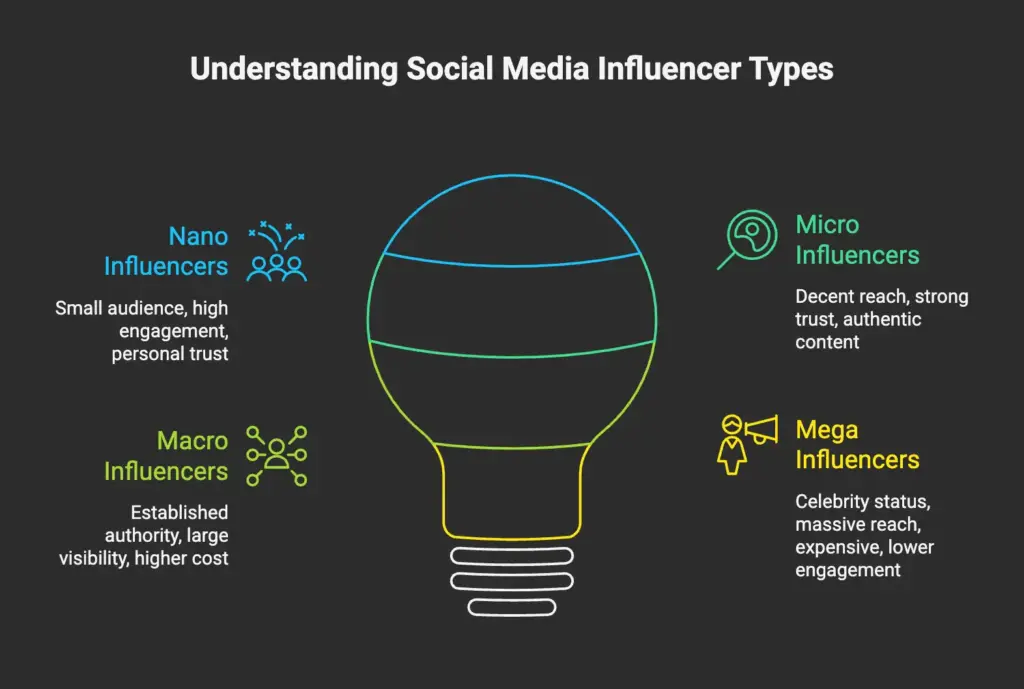
1. Nano Influencers (1K to 10K followers)
Nano influencers have smaller audiences but often enjoy very high engagement rates. Their followers tend to trust their recommendations because the relationship feels personal.
They are often affordable and effective for niche campaigns.
2. Micro Influencers (10K to 100K followers)
Micro influencers are considered the sweet spot for many brands.
They combine decent reach with strong audience trust. Many ecommerce brands prefer working with micro influencers because their content feels more authentic.
3. Macro Influencers (100K to 1M followers)
Macro influencers usually have established authority in a niche such as fitness, travel, tech, or fashion.
Their campaigns can generate large-scale visibility, although partnerships tend to cost more.
4. Mega Influencers (1M+ followers)
Mega influencers include celebrities, famous YouTubers, or widely recognized personalities.
While they can reach millions of people, their campaigns are typically expensive and may not always deliver the highest engagement rates.
Popular Platforms for Influencer Marketing
Different platforms attract different audiences and content styles. Brands usually select platforms based on where their target customers spend time.
Here are some of the most popular influencer marketing channels.
A. Instagram
Instagram remains one of the top platforms for influencer collaborations. Brands often run campaigns using:
- sponsored posts
- reels
- story promotions
- product showcases
Lifestyle, fashion, and beauty brands perform especially well here.
B. YouTube
YouTube is powerful for long-form content such as product reviews, tutorials, and comparisons.
Many tech brands rely on YouTube creators to demonstrate products in detail.
C. TikTok
TikTok has rapidly become a major platform for influencer marketing. Short-form videos can quickly go viral and reach large audiences.
Product demonstrations, quick tips, and trends often perform well.
D. LinkedIn
For B2B companies, LinkedIn creators and industry experts can influence purchasing decisions through professional insights and recommendations.
Example of a Successful Influencer Campaign
Imagine a skincare brand launching a new moisturizer.
Instead of running traditional ads, the company partners with five beauty influencers on Instagram and YouTube.
Each influencer creates content showing how they use the product in their daily routine. Some post tutorials. Others share before and after results.
Here is what happens:
- Thousands of followers watch the videos
- Many viewers visit the brand’s website
- The product gains social proof through reviews and comments
Within weeks, the campaign generates strong brand awareness and a spike in product sales.
This type of collaboration is a classic influencer marketing example, where creators help brands reach audiences that traditional advertising might struggle to access.
Affiliate Marketing vs Influencer Marketing: Key Differences
At first glance, affiliate marketing and influencer marketing may look similar. Both rely on partnerships. Both promote products through third parties. And both can drive sales.
However, the strategy, payment structure, and long-term impact are very different.
Understanding the difference between affiliate marketing and influencer marketing helps businesses choose the right approach for their goals. Some brands want performance-driven growth. Others want quick brand exposure.
Let’s compare the two across the most important factors.
1. Payment Model: Commission vs Sponsored Content
One of the biggest differences between affiliate marketing vs influencer marketing is how partners get paid.
In affiliate marketing, the payment model is performance-based. Affiliates earn a commission only when a specific action happens, usually a sale.
For example:
- An affiliate promotes a product with a unique referral link
- A customer clicks the link and makes a purchase
- The affiliate earns a percentage of the sale
If no sales happen, the business pays nothing.
Influencer marketing works differently. Most influencer partnerships involve upfront payments or sponsored content deals.
For example, a brand might pay an influencer:
- $500 for an Instagram post
- $1,500 for a YouTube review
- Free products plus a promotion fee
The influencer gets paid whether the campaign generates sales or not.
This is why affiliate marketing is often considered lower risk for businesses.
2. Performance Tracking and Attribution
Tracking results is another major difference.
Affiliate marketing relies on precise tracking technology. Each affiliate receives a unique referral link that records:
- clicks
- conversions
- sales value
- commissions earned
This makes it easy for businesses to measure the exact return on investment.
Influencer marketing can be harder to track. While brands may use promo codes, custom links, or analytics tools, it is often difficult to attribute every sale to a specific influencer post.
Many influencer campaigns focus more on visibility and engagement rather than direct conversions.
Because of this, affiliate marketing tends to be more data-driven and measurable.
3. Scalability and Long-Term Growth
When it comes to growth potential, affiliate marketing usually scales more easily.
A brand can recruit dozens, hundreds, or even thousands of affiliates promoting the same product at the same time. Each partner drives traffic from their own audience.
This creates a network effect where sales continue to grow as more affiliates join the program.
Influencer marketing typically works on a campaign-by-campaign basis. Brands collaborate with a limited number of creators for specific promotions.
While a successful influencer campaign can generate a huge spike in attention, the impact often fades once the promotion ends.
Affiliate marketing, on the other hand, can produce consistent long-term revenue when affiliates continue promoting products.
4. Cost and Risk Comparison
From a financial perspective, the two strategies carry different levels of risk.
With affiliate marketing:
- Businesses pay only after a conversion happens
- Marketing costs are tied directly to revenue
- Risk remains relatively low
For example, if an affiliate program offers a 20% commission per sale, the business keeps the remaining revenue.
Influencer marketing usually requires upfront investment. Brands may spend hundreds or thousands of dollars on a single collaboration.
If the campaign performs well, the investment can pay off. But if engagement or conversions are low, the budget may not deliver strong returns.
Because of this, many businesses prefer affiliate marketing when they want predictable, performance-based spending.
5. Audience Trust and Engagement
Influencer marketing often has an advantage when it comes to emotional connection and audience trust.
Followers usually build strong relationships with influencers over time. When an influencer recommends a product, it can feel like advice from a trusted friend.
This makes influencer marketing powerful for:
- product launches
- brand storytelling
- lifestyle products
Affiliate marketing relies more on content-driven recommendations, such as blog reviews, tutorials, and comparison articles.
For example:
- A tech blogger reviewing software
- A fitness website recommending supplements
- A niche site comparing online tools
While affiliates can still build trust with their audience, the relationship is usually based on useful information and product research rather than personal influence.
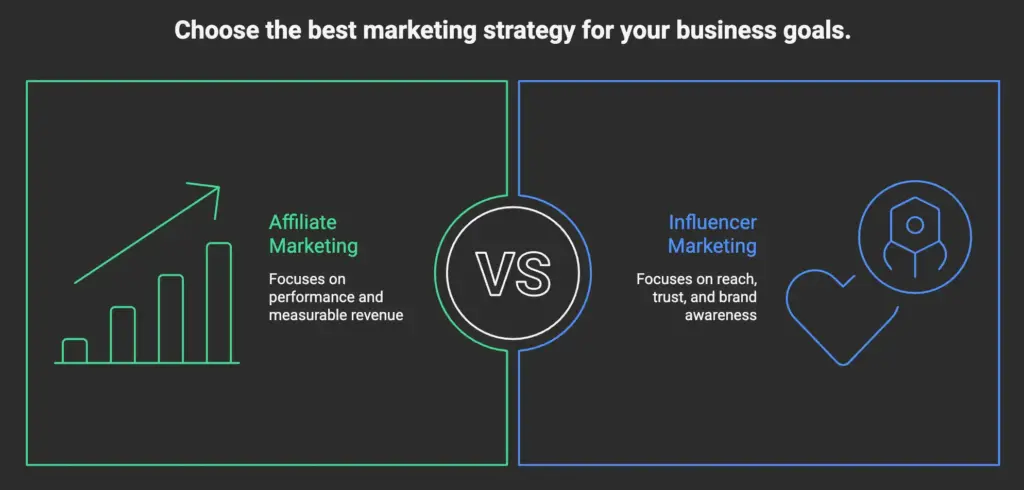
In short, the affiliate marketing vs influencer marketing comparison comes down to this:
- Affiliate marketing focuses on performance and measurable revenue
- Influencer marketing focuses on reach, trust, and brand awareness
Many modern businesses combine both strategies to get the best of each approach.
Pros and Cons of Affiliate Marketing
Affiliate marketing is popular because it allows businesses to grow through partnerships while controlling marketing costs. Still, like any strategy, it comes with both advantages and challenges.
Advantages of Affiliate Marketing for Businesses
One of the biggest benefits of affiliate marketing is its performance based model. Businesses only pay commissions when affiliates generate real results such as sales or leads. This reduces marketing risk and makes budgeting easier.
Other affiliate marketing advantages include:
- Low upfront marketing cost
- Scalable growth through many partners
- Access to new audiences and niche communities
- Measurable performance through tracking systems
For many ecommerce brands, affiliate programs become a reliable source of recurring revenue.
Challenges of Running an Affiliate Program
Running an affiliate program also requires proper management. Businesses need to recruit quality affiliates, monitor performance, and prevent fraudulent activities such as fake referrals.
Other challenges include:
- Finding trustworthy affiliates
- Managing commission structures
- Maintaining consistent communication with partners
Without the right tools or strategy, managing affiliates can become time-consuming.
When Affiliate Marketing Works Best
Affiliate marketing works best for businesses that sell digital products, SaaS tools, online services, or ecommerce items. It is especially effective when products solve clear problems, and affiliates can easily demonstrate their value through reviews or tutorials.
Pros and Cons of Influencer Marketing
Influencer marketing focuses on building visibility and trust through creators who already have loyal audiences. While it can generate strong brand exposure, it also requires careful planning.
Benefits of Influencer Marketing for Brand Awareness
One of the biggest influencer marketing benefits is instant reach. Influencers can introduce products to thousands or even millions of followers in a short time.
This makes influencer marketing powerful for:
- launching new products
- building brand recognition
- creating social proof through authentic content
A strong influencer marketing strategy can quickly place a brand in front of a highly engaged audience.
Common Risks in Influencer Campaigns
Despite its advantages, influencer marketing carries certain risks. Many campaigns require upfront payments, which means results are not always guaranteed.
Other risks include:
- low engagement rates
- mismatched audiences
- difficulty measuring exact conversions
Choosing the wrong influencer can lead to wasted marketing budget.
When Influencer Marketing Is Most Effective
Influencer marketing works best for visual or lifestyle-driven products, such as fashion, beauty, fitness, or travel items. It is also highly effective for product launches where brands want quick exposure and audience excitement.
Affiliate Marketing vs Influencer Marketing ROI
When comparing affiliate marketing ROI vs influencer marketing ROI, the main difference comes down to how businesses spend money and measure results.
Affiliate marketing focuses on paying for actual conversions, while influencer marketing often focuses on reach and brand exposure.
Here is how they compare.
1. Which Strategy Generates More Sales
Affiliate marketing usually drives more direct sales.
Affiliates often create reviews, tutorials, and comparison articles that target people who are already ready to buy.
Influencer marketing helps people discover products, but followers may not purchase immediately.
Quick takeaway:
Affiliate marketing = stronger for conversions
Influencer marketing = stronger for awareness
2. Cost Per Acquisition Comparison
Affiliate marketing typically has lower and more predictable acquisition costs.
Why? Because businesses only pay after a sale happens.
Influencer marketing often requires upfront payments, and results are not always guaranteed.
Example
- Affiliate commission: 15 percent per sale
- Influencer campaign: $1000 sponsored post
If the post does not convert well, the cost per customer increases.
3. Long-Term Revenue Potential
Affiliate marketing is better for long-term revenue growth.
Affiliate content like blog reviews, YouTube videos, and tutorials can generate sales for months or even years.
Influencer campaigns usually create short bursts of attention.
Quick summary
- Affiliate marketing builds ongoing revenue streams
- Influencer marketing creates short-term visibility
That is why many smart brands combine both strategies to maximize results.
When to Choose Affiliate Marketing for Your Business
Affiliate marketing works best when your goal is consistent, performance-driven growth. If you want partners who actively promote your product and only get paid after results, this strategy fits well.
Best Industries for Affiliate Programs
Affiliate marketing performs particularly well in industries where people research before buying.
Best industries include:
- Ecommerce stores selling physical products
- SaaS and software tools
- Online courses and digital products
- Web hosting and tech services
- Finance and productivity tools
These industries benefit from reviews, comparisons, and tutorials, which affiliates often create.
Businesses That Benefit Most from Affiliate Marketing
Some businesses gain more value from affiliate marketing for ecommerce and digital services.
You should consider it if you:
- Sell products with clear value and demand
- Want performance based marketing instead of ad spending
- Need to reach new niche audiences
- Want scalable growth through partners
Affiliate programs are especially effective for online businesses looking to grow without large ad budgets.
Signs Your Business Is Ready for an Affiliate Program
You may be ready to start an affiliate program if:
- Your product already has consistent sales
- Customers actively recommend your product
- You have clear commission margins
- Your website can track referrals and conversions
- You want a long term marketing channel
If these boxes are checked, an affiliate program can become a powerful growth engine.
New to Affiliate arena? Here’s Affiliate Marketing Kick-start Guide for Beginners!
When to Choose Influencer Marketing
Influencer marketing works best when your goal is visibility, trust, and audience engagement. It helps brands reach large communities quickly through creators people already follow.
Best Products for Influencer Promotion
Some products naturally perform better with influencer marketing for ecommerce.
These usually include:
- Beauty and skincare products
- Fashion and lifestyle brands
- Fitness and wellness products
- Travel and experience based services
- Consumer gadgets and accessories
These products are easy to show, demonstrate, and review on social media.
When Brand Awareness Is the Priority
An influencer marketing strategy is ideal when you want to:
- Introduce your brand to new audiences
- Build social proof and credibility
- Generate buzz on social media
- Reach communities that trust specific creators
Influencers can quickly amplify brand visibility through authentic recommendations.
Influencer Marketing for Product Launches
Influencer marketing is also powerful for launch campaigns.
Brands often partner with creators to:
- Reveal new products
- Share first impressions and reviews
- Run giveaways or limited promotions
- Create excitement around a launch
This approach helps products gain attention and momentum faster than traditional ads.
Why Smart Brands Combine Affiliate and Influencer Marketing
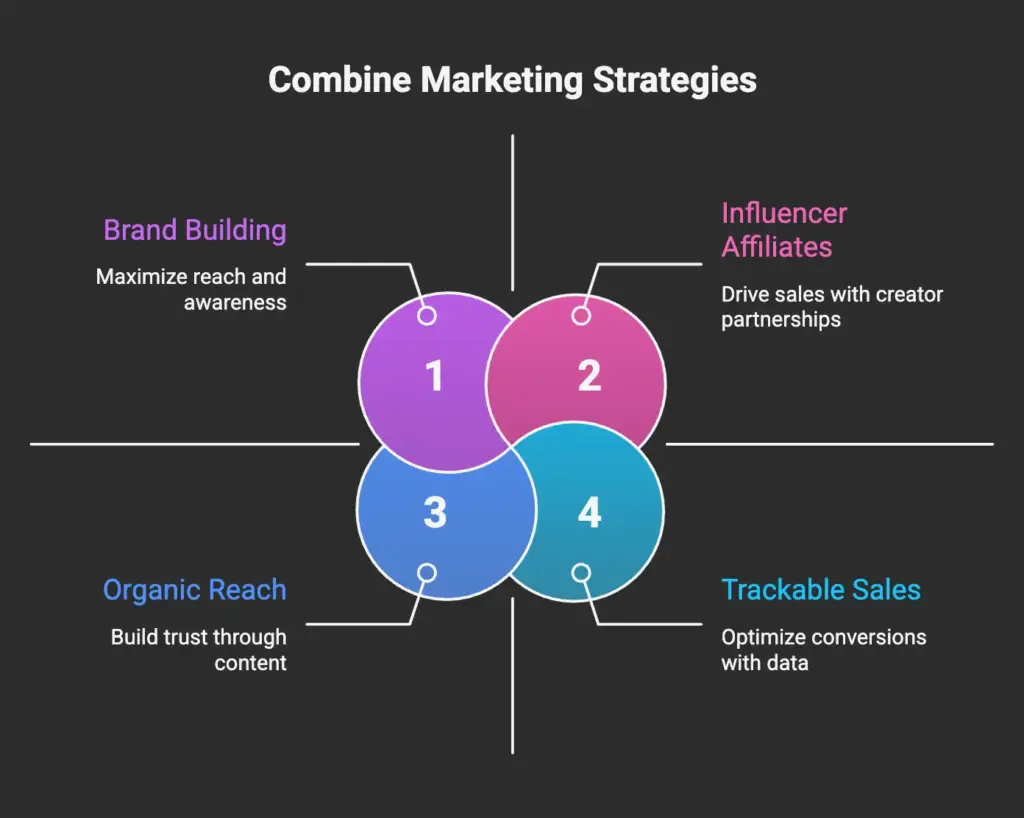
Many successful companies no longer treat affiliate marketing and influencer marketing as separate strategies. Instead, they combine them to create a stronger and more measurable growth system.
Influencers help generate attention and trust, while affiliate programs help convert that attention into trackable sales. This approach is often called influencer affiliate marketing, and it allows brands to benefit from both reach and performance.
Here is how smart brands make it work.
Turning Influencers Into Affiliates
A growing trend is converting influencers into commission-earning partners.
Instead of paying only for a sponsored post, brands also provide:
- Unique affiliate links
- Discount codes for followers
- Commission for every sale generated
This model benefits both sides.
- Influencers earn ongoing commissions
- Brands pay more for results rather than exposure
It also helps track exactly which creator drives revenue.
Building Long-Term Partnerships
Short one-time campaigns often fade quickly. Smart brands focus on long-term collaborations with creators.
This can include:
- Monthly affiliate promotions
- Product review updates
- Ongoing tutorials or recommendations
- Exclusive partnerships with top creators
When influencers repeatedly promote a product, it builds stronger trust with their audience and leads to better conversions.
Creating a Hybrid Marketing Strategy
A hybrid marketing strategy combines the strengths of both approaches.
A typical strategy might look like this:
- Influencers introduce the product to their audience
- Followers learn about the brand through engaging content
- Affiliate links track purchases and reward the creator
This structure creates a powerful funnel:
- Influencers create awareness
- Affiliate links drive measurable sales
For many ecommerce and SaaS brands, this combination delivers both brand visibility and predictable revenue growth.
Bonus Tips to Maximize Results From Both Strategies
Using affiliate marketing or influencer marketing alone can work well. But if you want the best results, you need the right systems and partnerships in place.
Here are a few practical tips to help you get more value from both strategies.
1. Track Performance With Affiliate Software
If you want to scale partnerships, accurate tracking is essential.
Affiliate tracking software helps you monitor:
- clicks and referral traffic
- sales generated by partners
- commission payouts
- top performing affiliates or creators
This data helps you understand which partners actually drive revenue. Without proper tracking, it becomes difficult to measure campaign success or optimize your strategy.
2. Choose the Right Creators and Partners
Not every affiliate or influencer will be the right fit for your brand.
Focus on partners who:
- have an audience that matches your target market
- create content related to your product niche
- maintain good engagement with followers
- genuinely believe in your product
A smaller creator with high audience trust often performs better than someone with a huge but less engaged following.
3. Focus on Long-Term Partnerships
The most successful programs are built on long-term relationships, not one-time promotions.
When affiliates and influencers promote your brand consistently, their audience becomes more familiar with your product.
This can lead to:
- stronger credibility
- higher conversion rates
- steady traffic and sales
Instead of chasing short campaigns, aim to build lasting partnerships that grow with your business.
Conclusion: Affiliate Marketing vs Influencer Marketing
Choosing between affiliate marketing and influencer marketing depends on your business goals.
Affiliate marketing is best for businesses that want performance-driven growth. You pay commissions only when sales happen, which makes it a low-risk and scalable strategy. It works especially well for ecommerce stores, SaaS companies, and digital products.
Influencer marketing is ideal when the goal is brand awareness and audience trust. Creators can quickly introduce your product to large communities and build social proof.
The smartest brands do not choose just one. They combine both. Influencers create visibility and excitement, while affiliate programs turn that attention into measurable sales and long-term revenue.
If you want sustainable growth, the real opportunity lies in using both strategies together to build a powerful partnership-driven marketing engine.




Leave a Reply