

12 Misconceptions About Affiliate Marketing [Debunked]

Let’s be honest. When most people hear the phrase affiliate marketing, they imagine two extremes.
Some think it is the easiest way to make money online. Just drop a few links, sit back, and watch the commissions roll in. Others see it as something shady or outdated. Spammy links, fake reviews, and sketchy marketing tactics.
But the truth sits somewhere in the middle.
Affiliate marketing is not a magic money machine. It is also not the shady practice many people assume it is. In reality, it is one of the most powerful growth channels for online businesses when done the right way.
In this article, we will break down the biggest misconceptions about affiliate marketing, uncover the truth behind them, and show what affiliate marketing really looks like in practice.
What Is Affiliate Marketing (Quick Explanation)!
Affiliate marketing is a performance based marketing model where businesses reward partners called affiliates for promoting their products or services. Affiliates share special tracking links, and when someone makes a purchase through those links, the affiliate earns a commission.In simple terms, it is a partnership where businesses gain new customers and affiliates earn money for recommending products they trust. What more details? Here you go: What Is Affiliate Marketing? And What It Means in 2026!
Key Takeaways: Affiliate Marketing Misconceptions
- Affiliate marketing is often misunderstood. Many people believe it is easy passive income or a quick way to get rich, but in reality it requires strategy, consistent effort, and audience trust.
- Most misconceptions come from influencer hype and fake gurus. Oversimplified tutorials and exaggerated success stories often create unrealistic expectations about how affiliate marketing actually works.
- Affiliate marketing is a long term marketing channel. Successful affiliates build traffic, create valuable content, and develop strong relationships with their audience over time.
- You do not need massive traffic to succeed. A smaller audience with high buying intent can often generate better results than large but unfocused traffic.
- Affiliate marketing is not spam when done correctly. Ethical affiliates focus on honest recommendations, helpful content, and transparent disclosures.
- Strong partnerships are the foundation of successful affiliate programs. Businesses and affiliates must work together to create value for customers.
- Proper tracking systems are essential. Accurate tracking ensures that affiliates are rewarded fairly and helps businesses measure performance.
- Fair commissions motivate affiliates to promote consistently. Balanced incentives create a win win relationship between brands and partners.
- Good affiliate management improves program growth. Recruiting quality affiliates, providing marketing resources, and maintaining communication can significantly improve results.
- Trust and transparency drive long term success. When businesses, affiliates, and customers trust each other, affiliate marketing becomes a sustainable growth channel.
Why So Many Affiliate Marketing Misconceptions Exist
If affiliate marketing is such a powerful business model, why do so many people misunderstand it?
The confusion did not appear out of nowhere. Over the years, influencer hype, fake gurus, and oversimplified tutorials have created a lot of noise around affiliate marketing. And that noise often turns into myths.
Let’s look at the main reasons behind these misconceptions.
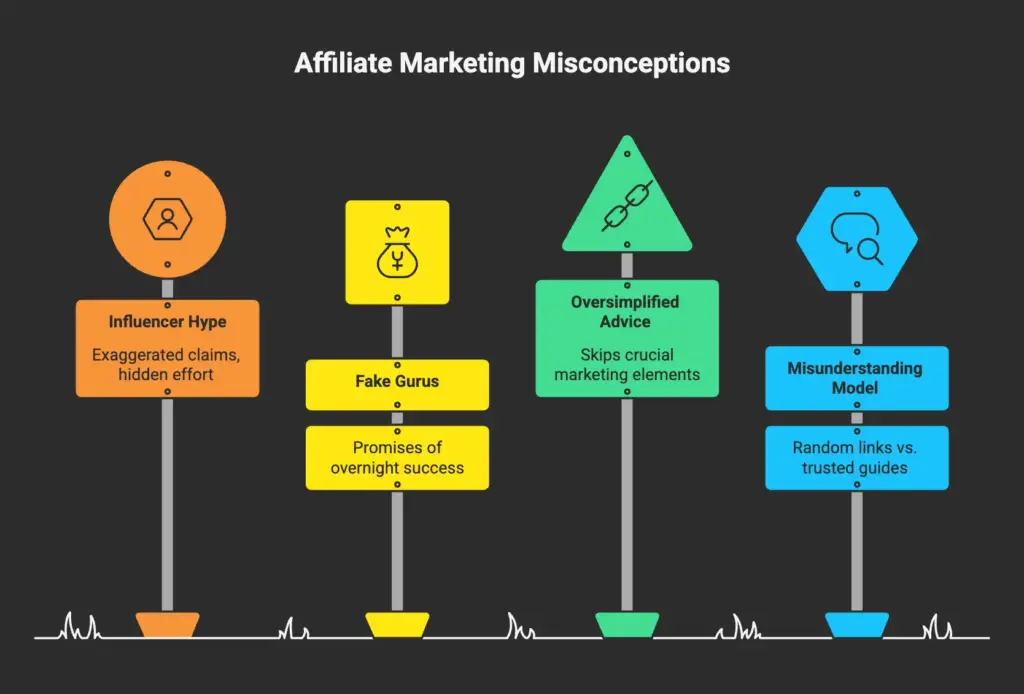
1. Influencer Hype
Scroll through social media, and you will see bold claims everywhere.
“Make $10,000 a month with affiliate marketing.”
“Earn passive income while you sleep.”
Sounds exciting, right?
The problem is that many influencers only show the results, not the effort behind them. They rarely talk about the months spent building traffic, testing products, and earning audience trust.
This creates the illusion that affiliate marketing is easy money. In reality, it is still marketing, and marketing always requires time, strategy, and consistency.
2. Fake Gurus Selling Dreams
Another major source of confusion is the rise of so-called online gurus.
Many sell expensive courses promising overnight success with affiliate marketing. The message is simple: buy the course and unlock the secret formula.
But the truth is that most of these promises are exaggerated.
Affiliate marketing does work. However, it requires building content, attracting the right audience, and recommending products that genuinely help people.
When beginners expect instant results, they often end up disappointed, which leads to even more misconceptions.
3. Oversimplified YouTube Advice
YouTube is full of affiliate marketing tutorials. Some are useful, but many oversimplify the process.
You will often hear advice like:
- Find a product
- Share a link
- Make money
If only it were that simple.
What these tutorials usually skip are the important parts, such as audience building, SEO, trust, email marketing, and content strategy. Without these elements, affiliate marketing rarely works.
4. Misunderstanding the Business Model
At its core, affiliate marketing is simply a partnership.
A business rewards partners for promoting its products and bringing in customers. That is it.
However, many people imagine affiliate marketing as random links being posted everywhere online.
In reality, successful affiliates act more like trusted guides. They review products, create tutorials, compare tools, and help people make informed buying decisions.
When done properly, affiliate marketing is about providing real value to the audience, not just sharing links.
12 Common Misconceptions About Affiliate Marketing
Affiliate marketing has grown massively over the past decade. But along with that growth came a lot of confusion.
Some people think it is a shortcut to easy money. Others assume it is outdated or even spammy. The truth is that most of these beliefs are simply myths.
Let’s clear things up by breaking down the most common misconceptions about affiliate marketing and what the reality actually looks like.
Myth 1: Affiliate Marketing Is Easy Passive Income
This is probably the biggest myth floating around the internet.
You have likely seen claims like:
“Set up a few links and earn money while you sleep.”
While passive income is possible, it rarely happens without effort.
Successful affiliates spend time on things like:
- Creating helpful content
- Building traffic through SEO or social media
- Testing different products and offers
- Building trust with their audience
Think of affiliate marketing like planting a garden. You plant seeds today, water them consistently, and eventually the results start growing.
Without strategy, traffic, and trust, those “passive” commissions rarely appear.
Myth 2: Affiliate Marketing Is a Get Rich Quick Scheme
Another common misunderstanding is that affiliate marketing is a shortcut to instant wealth.
In reality, affiliate marketing works much more like a long-term marketing channel.
Most successful affiliates spend months or even years building:
- A website or content platform
- A loyal audience
- Consistent traffic sources
According to industry reports from Influencer Marketing Hub, affiliate marketing continues to grow globally and is expected to exceed $15 billion in market size. That growth happens because businesses treat it as a serious marketing strategy, not a quick cash grab.
Like any real business model, affiliate marketing rewards consistency and patience.
Myth 3: Only Influencers Can Make Money with Affiliate Marketing
Many people assume that you need thousands of followers to succeed.
That is not true.
While influencers do use affiliate marketing, they are not the only ones who benefit from it. In fact, many profitable affiliates operate through:
- Niche blogs
- Product comparison websites
- Email newsletters
- Tutorial-based YouTube channels
A small but targeted audience can often perform better than a massive but unfocused one.
For example, a website reviewing WordPress plugins for small businesses may only get a few thousand monthly visitors, yet those visitors are highly interested in the tools being recommended.
Quality of traffic matters far more than audience size.
Myth 4: Affiliate Marketing Is Dead
You might occasionally hear someone say, “Affiliate marketing does not work anymore.”
But the data tells a very different story.
Affiliate marketing continues to expand as more businesses look for performance-based marketing channels. Instead of paying upfront for ads, companies only pay commissions when a sale or action happens.
Major companies like Amazon, Shopify, and thousands of SaaS platforms still rely heavily on affiliate partnerships.
What has changed is the approach.
The old tactics of thin content and random links no longer work. Modern affiliate marketing focuses on:
- Helpful content
- Honest product reviews
- Educational guides
- Building audience trust
So no, affiliate marketing is far from dead. It is simply evolving.
Myth 5: Affiliate Marketing Is Only for Bloggers
Bloggers are certainly a big part of the affiliate ecosystem, but they are not the only players.
Today, affiliate marketing happens across many platforms, including:
- YouTube channels
- Podcasts
- Social media pages
- Email newsletters
- Online communities
For example, a YouTube creator might earn commissions by recommending tools in tutorial videos. A newsletter writer might promote helpful products to their subscribers.
Affiliate marketing is simply a recommendation-based business model. And recommendations can happen anywhere people consume content.
Myth 6: You Need Huge Traffic to Succeed
Traffic definitely helps, but massive traffic is not required.
What really matters is intent.
Imagine two websites:
- Site A gets 100,000 visitors, but they are casually browsing
- Site B gets 5,000 visitors who are actively searching for product recommendations
Site B often converts better because the audience is already interested in buying.
This is why many successful affiliates focus on high-intent content like:
- product comparisons
- “best tools for…” guides
- tutorials and walkthroughs
A smaller but targeted audience can generate surprisingly strong results.
Myth 7: Affiliate Marketing Is Spammy
This myth comes from the early days of internet marketing when people flooded forums and comment sections with affiliate links.
That approach no longer works and most platforms actively block it.
Modern affiliate marketing is built on trust and transparency. Successful affiliates focus on:
- honest reviews
- clear disclosures
- helpful recommendations
In fact, many countries legally require affiliates to disclose affiliate relationships to maintain transparency.
When done correctly, affiliate marketing is simply helpful recommendations with tracking.
Myth 8: Managing Affiliates Is Too Complicated
Many businesses avoid affiliate programs because they assume managing affiliates will be overwhelming.
In the past, this might have been true. Tracking links, commissions, and referrals manually could become messy.
Today, however, dedicated affiliate management tools automate most of the process.
These tools help businesses:
- track affiliate referrals
- manage commissions
- monitor performance
- communicate with partners
Instead of complicated spreadsheets, companies can manage everything from a single dashboard.
Myth 9: Affiliate Programs Are Only for Big Brands
Another misconception is that affiliate marketing only works for large companies.
But in reality, small businesses often benefit the most.
Affiliate marketing allows smaller brands to compete without massive advertising budgets. Instead of paying upfront for ads, they reward partners only when results happen.
This performance-based model makes affiliate marketing especially attractive for:
- ecommerce stores
- SaaS companies
- digital product creators
Even startups use affiliate partnerships to expand their reach quickly.
Myth 10: Affiliate Marketing Has Low ROI
Some marketers assume affiliate marketing generates small returns.
However, many businesses consider it one of the most cost-effective marketing channels available.
Why?
Because affiliate marketing is performance-based. Companies only pay commissions after a sale or conversion happens.
This reduces advertising risk and often leads to a strong return on investment compared to traditional advertising.
For many online businesses, affiliate programs become one of the most reliable revenue drivers.
Myth 11: Affiliates Only Care About Money
Of course, affiliates want to earn commissions. But the best affiliates care deeply about their audience.
Why?
Because trust directly affects long term income.
If an affiliate promotes low-quality products just to earn commissions, their audience quickly loses confidence. Once that trust disappears, so do the sales.
Successful affiliates usually focus on:
- recommending products they actually use
- testing tools before promoting them
- sharing honest pros and cons
In other words, good affiliates think like educators and advisors, not just promoters.
Myth 12: Affiliate Marketing Works Automatically
Some people assume affiliate marketing runs on autopilot once the links are placed.
In reality, it requires ongoing improvement.
Successful affiliates regularly:
- update content
- test new offers
- improve SEO rankings
- analyze conversion data
Affiliate marketing is closer to running a small digital business than flipping a switch.
The good news is that once the system is built, the effort becomes more manageable. But it never becomes completely automatic.
The Real Truth About Affiliate Marketing
After clearing up all those myths, one question remains.
What actually makes affiliate marketing work?
The answer is surprisingly simple. Successful affiliate programs are built on strong relationships, clear systems, and mutual trust. When those pieces come together, affiliate marketing becomes one of the most powerful growth channels for online businesses.
Let’s look at the key factors that make it work.
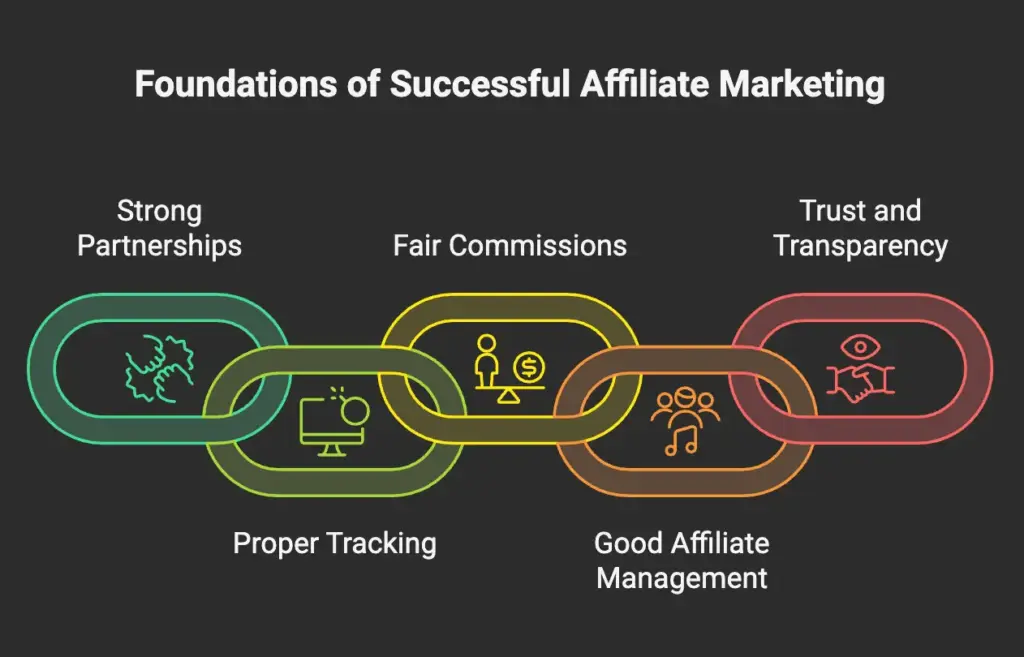
A. Strong Partnerships
At its core, affiliate marketing is a partnership.
Businesses collaborate with creators, bloggers, marketers, and educators who already have an audience. Those partners introduce the product to people who trust their recommendations.
When both sides benefit, the partnership becomes powerful.
Affiliates earn commissions for their efforts, while businesses gain new customers without spending money upfront on ads. The stronger the relationship between the brand and the affiliate, the better the results tend to be.
Successful affiliate programs often treat affiliates like real partners rather than just traffic sources.
B. Proper Tracking
Imagine running an affiliate program without knowing who referred each customer.
That would quickly become chaotic.
This is where proper tracking comes in. Affiliate tracking systems monitor clicks, referrals, and conversions so businesses know exactly which partner generated each sale.
Accurate tracking helps businesses:
- reward affiliates fairly
- analyze performance
- identify top performing partners
- prevent fraud or errors
Without reliable tracking, affiliate marketing would simply not work.
Meet the Best Affiliate Tracker for WordPress
C. Fair Commissions
A healthy affiliate program needs a fair reward structure.
If commissions are too low, affiliates have little motivation to promote the product. If commissions are too high, the business may struggle to maintain profitability.
The best affiliate programs find the right balance.
They offer commissions that are attractive enough to motivate affiliates while still maintaining a sustainable business model. Some programs even introduce performance bonuses or tiered rewards to encourage long-term partnerships.
Fair incentives create a win-win situation for everyone involved.
D. Good Affiliate Management
Affiliate programs do not grow on autopilot. They require active management.
Strong affiliate managers focus on things like:
- recruiting quality affiliates
- providing marketing resources
- answering partner questions
- monitoring performance
- maintaining relationships
Think of it like managing a team. When affiliates feel supported and valued, they are far more likely to promote the product consistently.
Good management turns occasional promoters into long-term partners.
E. Trust and Transparency
Trust is the foundation of affiliate marketing.
Audiences trust affiliates to recommend products honestly. Affiliates trust businesses to track and pay commissions accurately. Businesses trust affiliates to represent their brand responsibly.
Transparency keeps this entire system healthy.
That means:
- clear commission structures
- honest product recommendations
- transparent affiliate disclosures
- reliable payment systems
When trust is present, affiliate marketing becomes more than just promotion. It becomes a sustainable ecosystem where businesses, affiliates, and customers all benefit.
New to ffiliate arena? Here’s your guide to get started fast
Bonus Tips for Running a Successful Affiliate Program
Now that we have cleared up the myths and explored what makes affiliate marketing work, let’s talk about something practical.
If you are planning to launch or improve an affiliate program, a few simple practices can make a huge difference. The most successful programs are not just about commissions. They are built on strong relationships, clear communication, and the right support system.
Here are a few proven tips that can help your affiliate program grow faster and perform better.
1. Choose the Right Affiliates
Not every affiliate is the right fit for your brand.
Many businesses make the mistake of accepting anyone who signs up for their program. But quality matters far more than quantity.
The best affiliates usually:
- create content related to your niche
- have an audience that trusts their recommendations
- understand your product or industry
- genuinely believe in the value of your product
For example, if you run a WordPress plugin business, a blogger who writes tutorials about WordPress tools would be a far better partner than a random coupon site.
The closer the audience matches, the higher the chances of conversions.
2. Provide Marketing Resources
Even the best affiliates need the right tools to promote your product effectively.
Providing ready-to-use resources can make their job much easier and increase your program’s success.
Helpful resources may include:
- product images and banners
- email templates
- promotional copy
- demo videos or tutorials
- feature explanations and product updates
Think of it this way. When affiliates have better materials, they can create better promotions. And better promotions lead to better results.
3. Track Performance Consistently
Affiliate marketing works best when decisions are based on real data.
Tracking performance allows you to understand what is working and what needs improvement. It also helps you identify your top-performing partners.
Some key metrics to monitor include:
- clicks on affiliate links
- conversion rates
- top performing affiliates
- revenue generated from referrals
With this information, you can reward high-performing affiliates, improve weak areas, and refine your strategy over time.
Without proper tracking, it becomes almost impossible to grow your affiliate program effectively.

Get the Best Affiliate Performance Tracker for WordPress!
4. Maintain Regular Communication
One of the most overlooked parts of affiliate marketing is communication.
Affiliates are not just promoters. They are partners. And like any partnership, communication plays a big role in long-term success.
Successful affiliate managers regularly:
- share product updates
- inform affiliates about new features or offers
- provide promotional tips
- celebrate top performers
Even simple things like monthly newsletters or quick check-in messages can keep affiliates engaged.
When affiliates feel supported and informed, they are far more likely to stay active and promote your product consistently.
Conclusion
Affiliate marketing is one of the most powerful growth strategies in digital marketing today. Yet, as we have seen, it is also one of the most misunderstood.
Many people believe it is easy money, a get-rich-quick scheme, or even an outdated tactic. The reality is very different. When done correctly, affiliate marketing is a strategic partnership between businesses and creators who help connect products with the right audience.
Success comes from building trust, choosing the right partners, offering fair incentives, and managing the program effectively. It takes effort, but the long-term rewards can be significant.
If you focus on transparency, value, and strong relationships, affiliate marketing can become a reliable channel for sustainable growth.






Leave a Reply